A Hymn to Frugal Love
Will composes and sings a little hymn that fits his Sunday experience: “O me, O me, what frugal cheer/My love doth feed upon!” The verses capture the meager nourishment of unrequited devotion—a touch that is not here, a shadow that is gone, a dream of breath that might be near. He sings with his hat off, shaking his head backward, looking like an incarnation of spring itself—a bright creature abundant in uncertain promises, his face breaking into a merry smile at the thought of vexing Mr. Casaubon.
Among the Congregation
At Lowick Church, Will enters the curate’s pew before others arrive, but the Tuckers are absent and he finds himself alone there when the congregation assembles. He looks round at the familiar rural faces—year after year the same Waules, the same Powderells, brother Samuel’s familiar purple cheeks. Mr. Rigg’s frog-face appears as something alien and unaccountable. The congregation regards Mr. Casaubon, in his black gown in the highest box, as the chief of all betters and most awful if offended. No one takes much note of Will, who had attended this church in former days. He fears Dorothea may not come.
Dorothea’s Arrival
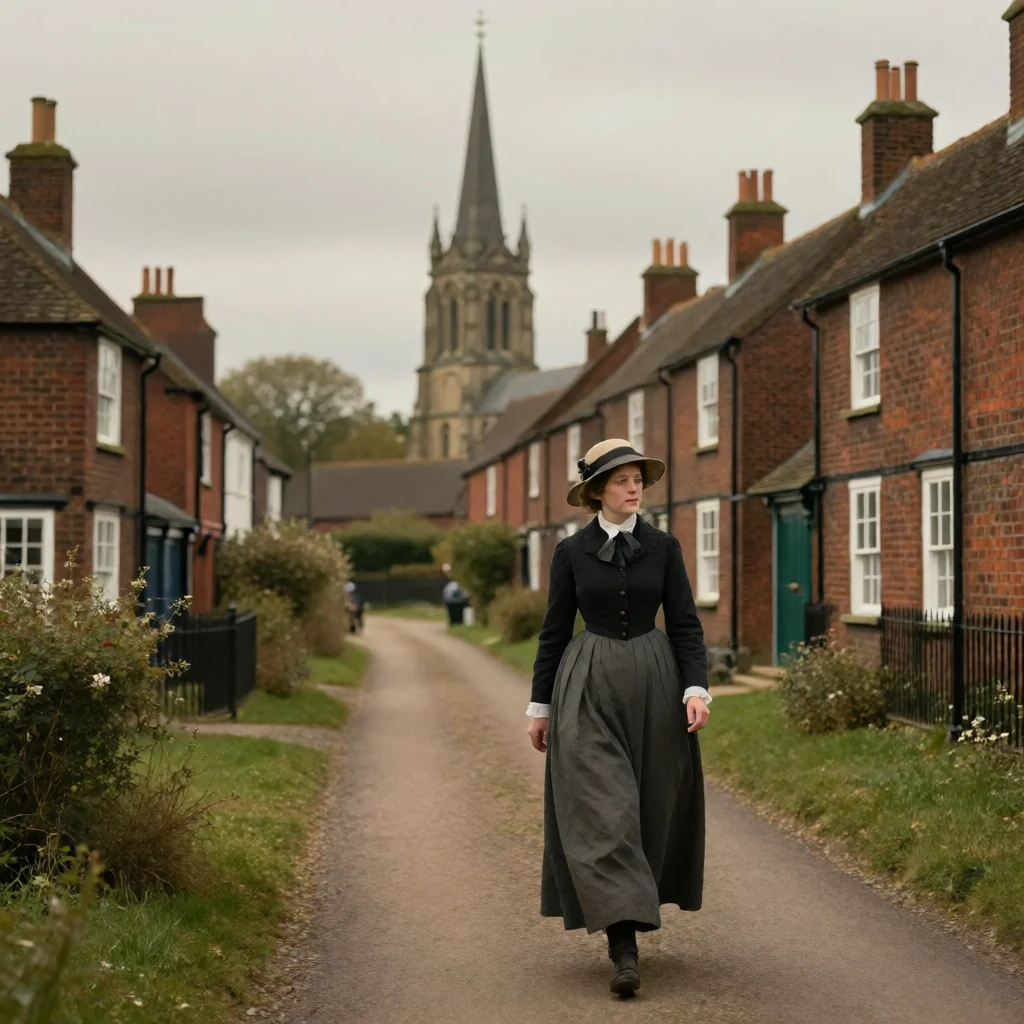
Dorothea appears at last, walking up the short aisle in her white beaver bonnet and gray cloak—the same she wore in the Vatican. Her shortsighted eyes soon discern Will, and she responds with only a slight paleness and a grave bow as she passes him. Will is surprised to feel suddenly uncomfortable and dares not look at her after they bow to each other.
A Wretched Blunder
Two minutes later, Mr. Casaubon emerges from the vestry, enters the pew, and seats himself facing Dorothea. Will feels his paralysis become complete. He can look nowhere except at the choir in the gallery, realizing he has made a wretched blunder. The occasion is no longer amusing—Casaubon likely watches him and sees that he dares not turn his head. Why had he not foreseen this impossibility? He cannot look toward Dorothea, and she might feel his coming an impertinence. He finds his places in his book as if he were a schoolmistress, feeling the morning service has never been so immeasurably long. He is ridiculous, out of temper, and miserable. The clerk notices he does not join in the tune of Hanover and thinks he might have a cold.
The Lights All Changed
When the blessing is pronounced and everyone rises, Will determines to break the spell and looks straight at Mr. Casaubon. But Casaubon’s eyes are only on the button of the pew-door. He opens it, allows Dorothea to pass, and follows immediately without raising his eyelids. Will’s glance catches Dorothea’s as she turns out of the pew, and she bows again—but this time with a look of agitation, as if she were repressing tears. They walk toward the little gate leading out of the churchyard into the shrubbery, never looking round. Will cannot follow them. He walks back sadly at mid-day along the same road he had traveled hopefully in the morning. The lights are all changed for him, both without and within.
CHAPITRE XLVIII.
After Sunday church, Dorothea returns home in low spirits, despairing over Mr. Casaubon’s renewed estrangement from Will Ladislaw and feeling increasingly trapped in a marriage where her natural affinities are continually suppressed. That evening Mr. Casaubon, feeling his mortality in his ailing breath and his long-deferred scholarly ambitions, proposes a new arrangement that reverses his former reluctance: he asks Dorothea to read aloud from his manuscripts and mark passages according to his directions, and then, after they have worked late into the night, he demands that she pledge herself to fulfill his wishes after his death without disclosing what those wishes are. The chapter traces Dorothea’s long nocturnal struggle between pity for her husband and a desperate need for freedom, ending with her exhaustion and reluctant submission as she goes out to the Yew-tree Walk to give him the answer he seeks.
The original text of this work is in the public domain. This page focuses on a guided summary article, reading notes, selected quotes, and visual learning materials for educational purposes.