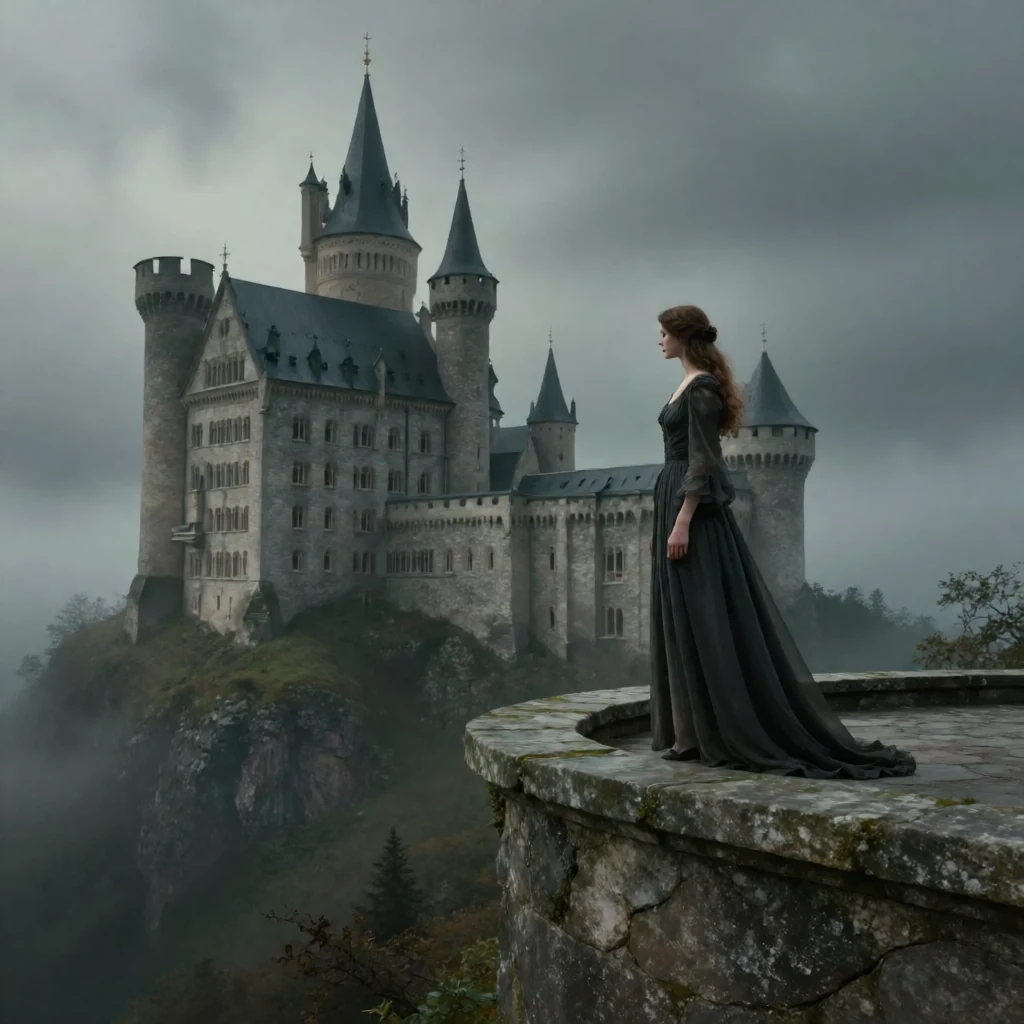
A Visit to La Voisin’s Cottage
In the evening, Lady Blanche and Monsieur Du Pont accompany Emily to visit La Voisin at his cottage, which Emily approaches with mixed emotions—melancholy pleasure softened by time’s healing of her grief for St. Aubert. La Voisin, still alive and enjoying the peaceful evening of a virtuous life, sits at his cottage door watching his grandchildren play on the grass before him. He immediately recognizes Emily and is delighted to see her, confirming that none of his family has been lost since her departure. Emily, however, cannot bring herself to enter the room where St. Aubert died. After a half-hour conversation with La Voisin and his family, she departs, leaving the cottage with memories of her father and the difficult journey they took together years before.
Du Pont’s Melancholy and Departure
During her first days at Château-le-Blanc, Emily observes Du Pont’s deep but silent melancholy. Pitying his self-deception and his inability to will himself away from her presence, Emily decides to withdraw from the château as soon as propriety permits. When Du Pont’s depression becomes pronounced, the concerned Count questions him, and Du Pont eventually confesses his hopeless love for Emily. The Count can only offer sympathy, though he privately resolves to help Du Pont’s cause if an opportunity arises. The Count only weakly opposes Du Pont’s decision to leave, but extracts a promise that Du Pont will return for a longer visit once he has regained his emotional equilibrium. Emily, though she cannot return Du Pont’s affection, esteems him for his virtues and the services he has rendered her. She watches him depart with tender gratitude and pity, while Du Pont takes leave of her with a countenance expressing both love and grief—a sight that increases the Count’s warm interest in helping his friend.
Emily’s Return to the Convent
After a few days, Emily leaves the château, having promised the Count and Countess to visit again soon. She is warmly welcomed back at St. Claire by the abbess, who receives her with maternal kindness, and by the nuns, who express genuine affection for her. The familiar scenes of the convent evoke many melancholy memories, but these are tempered by gratitude for having escaped the dangers that pursued her since she last left and for the blessings she still enjoys. Though she weeps once more over her father’s grave, her grief has softened from its former intensity, suggesting that time and her experiences have begun to heal the wounds of her past.
Quesnel’s Cold Reply
After returning to the monastery, Emily receives a letter from her uncle Monsieur Quesnel in response to her inquiries about her affairs and her wish to return to La Vallée, her family estate. Quesnel’s reply is cold and formal, expressing neither concern for the hardships she has endured nor pleasure at her safe return. He seizes the opportunity to condemn her rejection of Count Morano, whom he persists in believing is an honorable man of fortune, and to denounce Montoni, against whom he has always felt inferior. Regarding her financial situation, Quesnel is vague, informing her that La Vallée’s rental term is nearly expired but advising her to remain at the convent for the present. He makes no invitation for her to stay with him and ignores her inquiry about her father’s former servant Theresa. In a postscript, he mentions that M. Motteville, who holds most of St. Aubert’s personal property, is likely to settle the estate favorably to creditors, meaning Emily will recover more of her inheritance than expected. The letter also includes a small payment order from a merchant in Narbonne.
Anxiety for Valancourt
The peaceful environment of the monastery and the freedom Emily enjoys in wandering through the woods and along the shores of the beautiful province gradually restore her spirits to their natural state. However, anxiety occasionally intrudes upon her tranquility as the time approaches when she might receive a reply to her letter to Valancourt. Her uncertainty about his wellbeing and her hope for correspondence suggest that her affections remain engaged, even as she navigates the complexities of her current situation among the nuns and her dealings with her uncle. This anxiety foreshadows future developments in her relationship with Valancourt and maintains the romantic tension that has characterized her emotional life throughout the narrative.
The original text of this work is in the public domain. This page focuses on a guided summary article, reading notes, selected quotes, and visual learning materials for educational purposes.