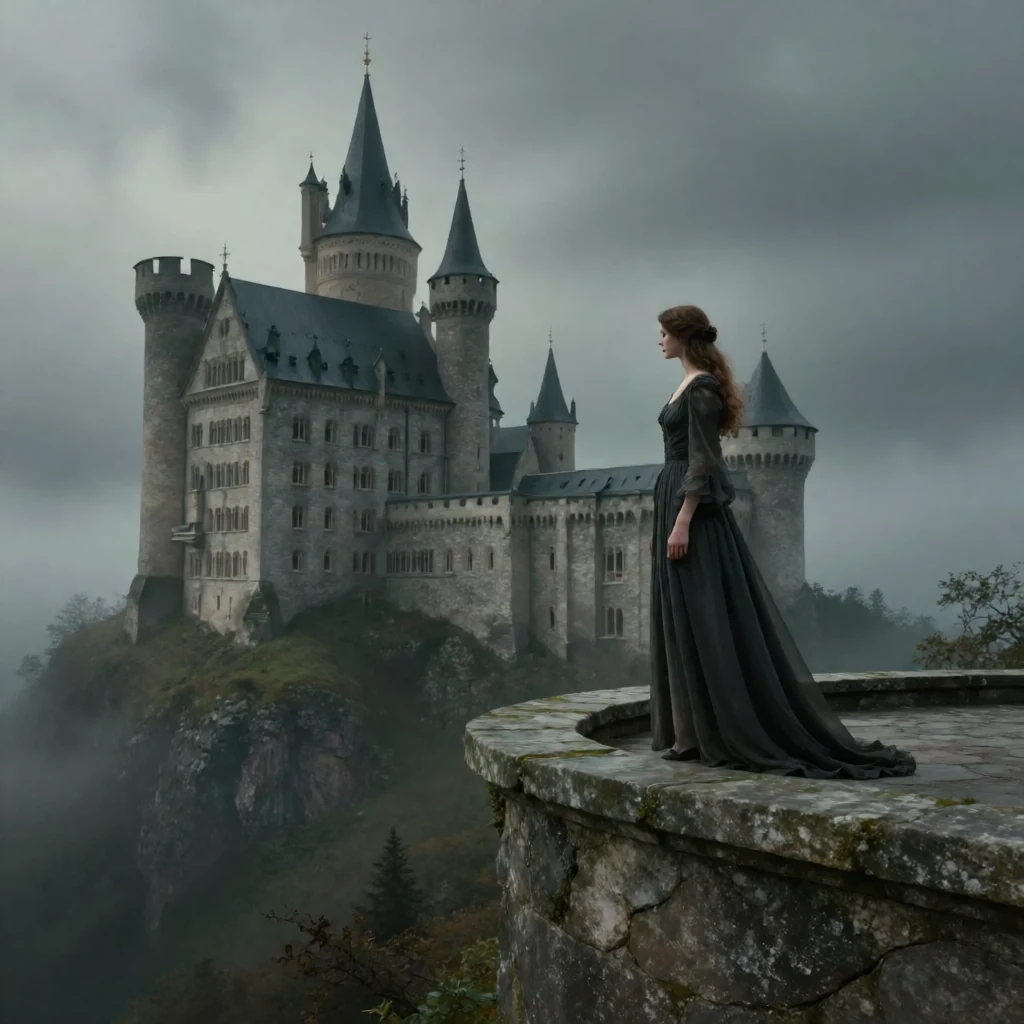
CHAPITRE XIII.
This chapter follows Emily during her second stay at Château-le-Blanc, tracing her deepening anxiety over Valancourt’s prolonged silence, her discovery of a miniature portrait of the late Marchioness de Villeroi, her agreement to hear the Marchioness’s hidden history from servant Dorothée, the Countess’s deeply flawed character, the village vintage harvest festival, and her unexpected, joyful reunion with Valancourt.
Pope’s Homer Epigraph
The chapter opens with an epigraph excerpt from Pope’s translation of Homer, describing a violent storm at sea in which terrified sailors face certain death, establishing a tone of unease and foreboding for the events that follow.
Lady Blanche’s Loneliness
Lady Blanche, left without Emily’s company, grows lonely and listless, with no one to share her admiration of the beautiful local scenery; her father the Count notices her dissatisfaction and renews his invitation for Emily to visit Château-le-Blanc.
Emily’s Return to Château-le-Blanc
Though preoccupied with severe anxiety over Valancourt’s extended silence and preferring solitude to process her worries, Emily agrees to return to Château-le-Blanc for a second visit, as refusing outright would risk offending the Count and his family, whose esteem she values highly.
Aunt’s Estate Recovery Consultation
During her stay, Emily consults Count De Villefort about recovering the estates of her late aunt, which have been seized; he is confident the law will rule in her favor and offers to write to a trusted advocate in Avignon to begin the legal recovery process.
Emily’s Anxiety Over Valancourt
After a week at the château with no word from Valancourt, Emily is consumed by dread, fearing he is dead or has lost his affection for her; her distress is so severe that she finds even Blanche’s company oppressive, and she spends hours alone in her apartment when family obligations allow.
Emily Reads Valancourt’s Old Letters
In one of these solitary periods, Emily opens a box holding Valancourt’s old letters and sketches she made during her time in Tuscany; the letters, once a source of comfort, now only deepen her sorrow as she fears his love has faded, and she is left crying, unable to finish reading the first letter, when Dorothée enters the room.
Dorothée Discovers the Marchioness Miniature
Emily hurriedly hides the letters when Dorothée arrives, but a miniature drops from the papers; Dorothée picks it up and reacts with shock, exclaiming that it is a portrait of the late Marchioness de Villeroi, her former mistress.
Dorothée Identifies the Marchioness Portrait
Dorothée confirms the portrait is an exact likeness of the Marchioness, noting her signature blue eyes and soft, resigned expression she wore during her final illness; Emily is thrown into emotional turmoil, recalling the mysterious papers her father had ordered her to destroy, and struggles between her intense curiosity about the Marchioness and her duty to honor her father’s request for secrecy.
Emily Requests the Marchioness’ History
After reasoning that the personal details Dorothée could share are not the ones her father sought to conceal, Emily earnestly asks Dorothée to reveal the full history of the Marchioness de Villeroi.
Dorothée Agrees to Reveal the Story Later
Moved by Emily’s sincerity, Dorothée agrees to share the Marchioness’s story, but requests to tell it later that night when the rest of the household is asleep to avoid drawing unwanted attention; she notes she cannot come that evening, as she is expected to attend the upcoming vintage harvest dance.
Countess’ Character Description
At dinner, the Count displays his natural, dignified courtesy, while the narrative details the Countess’s flawed character: she rejects modesty for brash assurance, feigns refined languor for social effect, and is indifferent to the suffering of others, showing no real benevolence despite her polished manner toward Emily.
Vintage Festival Attendance
That evening, the Count and most of his family (excluding the Countess and Mademoiselle Bearn) attend the vintage harvest festival in a wooded glade, where peasants dance to rustic music played on flutes and guitars; Blanche dances with a young member of the party, while Emily declines Du Pont’s invitation to join the dancing, her low spirits making her unwilling to participate in the celebration.
The original text of this work is in the public domain. This page focuses on a guided summary article, reading notes, selected quotes, and visual learning materials for educational purposes.