Peasant Girls’ Traditional Attire Description
The peasant girls’ traditional Arcadian-style attire is described as a very short full light green petticoat paired with a white silk bodice, loose sleeves tied at the shoulders with ribbons and bunches of flowers. Their hair falls in ringlets adorned with flowers, and they wear small straw hats set tilted back and to one side of the head, giving them a bright, lively appearance.
Post-Invocation Peasant Dance and Socializing
After the invocation, the peasant girls invite Emily and Maddelina to join them, offering grapes and figs. A peasant invites the accompanying Bertrand to drink, and soon the group strikes up tambourines and flutes for a dance. The younger peasants form a dance circle; Maddelina joins the dance lightly, while Emily watches the joyful group, briefly forgetting her own troubles. Her melancholy returns as she observes the moon over the Tuscan coast, and Bertrand drinks to excess, leading the pair to return to their cottage late, with Emily feeling uneasy.
Emily’s Reflective Walks in Tuscany
In the weeks following the invocation, Emily takes frequent walks with Maddelina, always accompanied by Bertrand. The quiet of her secluded life leads her to hope she was not brought to Tuscany with malicious intent, though she remains deeply perplexed by Montoni’s motive for sending her there. She wishes she could remain at the cottage until she can find a way to return to her home country, though her hope is dampened by the likelihood that Valancourt is currently at Udolpho.
Emily Recalls Forgotten Languedoc Estate Papers
After spending some time at the cottage, Emily remembers that in her hurry to leave Udolpho, she forgot the papers her late aunt entrusted to her related to the Languedoc estates. She feels great unease at the oversight, but holds out hope that the obscure location where she stored the papers will keep them hidden from Montoni’s detection.
CHAPITRE VIII.
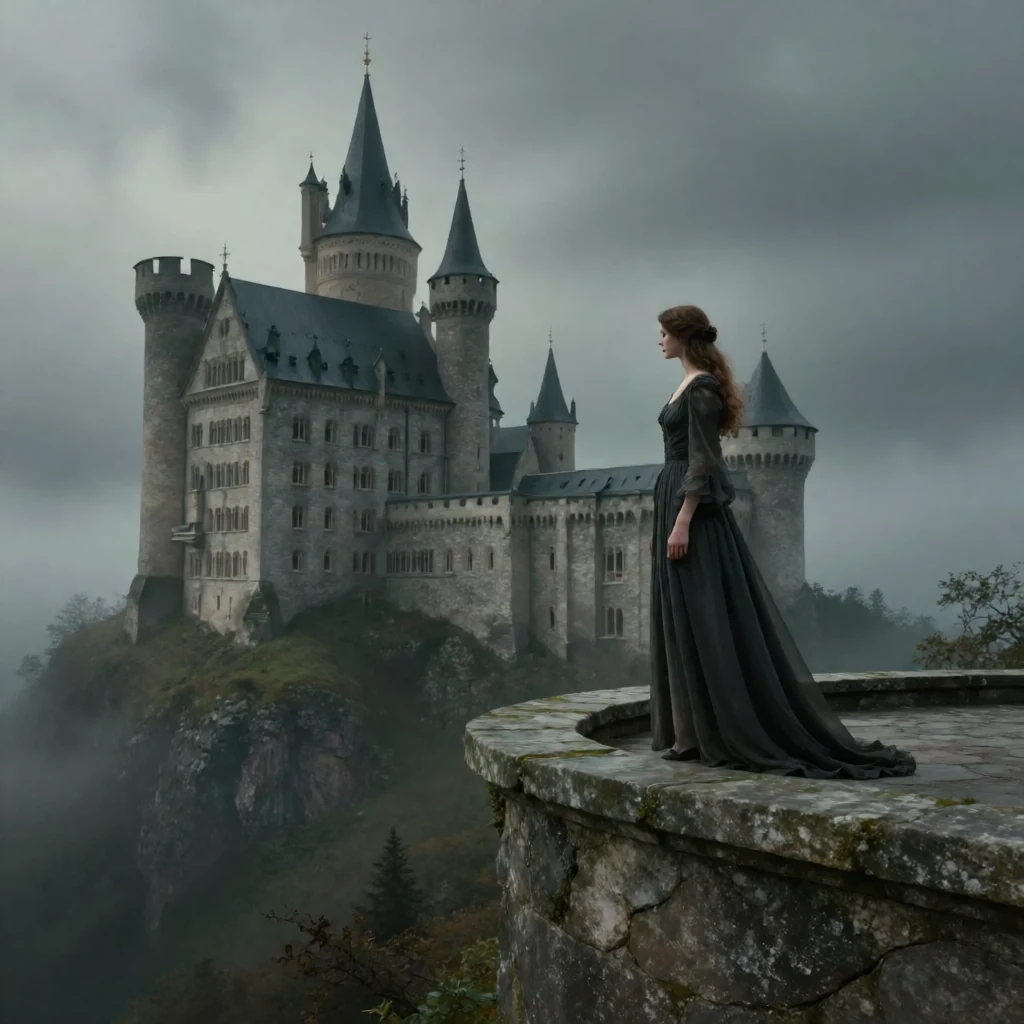
The chapter opens with an epigraph from Richard II framing the narrative as a heavy, torturous tale to be related. It weaves together two concurrent plotlines: the secret imprisonment of Count Morano in Venice on a false accusation from Montoni, the lifting of the siege of Montoni’s Udolpho castle, and the anxious return of Emily from Tuscany to the fortress, detailing her night journey and arrival.
Morano’s Imprisonment in Venice
After arriving in Venice, Count Morano is arrested by order of the Senate and thrown into a secret prison without being informed of his charges, with his friends unable to trace his location. He correctly suspects Montoni of orchestrating his imprisonment, motivated by Montoni’s belief that Morano attempted to poison him, though he lacked evidence to convict Morano of the crime.
Montoni’s Anonymous Accusation
Unable to secure a formal conviction for the attempted poisoning, Montoni submits a false anonymous accusation to Venice’s secret “lions’ mouth” denunciation boxes in the Doge’s Palace, claiming Morano is plotting against the state. Exploiting the system’s rule that accusers are not confronted with the accused, Montoni avoids risk of detection or punishment for his false claim, which is enough to convince the Senate to arrest Morano, given the era’s low standard of proof for disloyalty.
The Siege of Udolpho Raised
While Morano is imprisoned, Montoni’s Udolpho castle is besieged by enemy troops willing to endure great hardship to capture the fortress. The castle’s strong fortifications, the garrison’s vigorous defense, and the scarcity of provisions on the remote mountain where Udolpho sits force the besiegers to abandon their attack and raise the siege.
Emily’s Return from Tuscany
With Udolpho secure once more, Montoni dispatches Ugo to fetch Emily, who had been sent to Tuscany for her safety during the siege. After a fortnight of peaceful rest in Tuscany that restored her harrowed spirits, Emily is compelled to begin the journey back to Udolpho, bidding a regretful farewell to her host Maddelina, feeling distress at returning to the site of her past suffering but comforted by the hope that Valancourt may be held at the castle.
The original text of this work is in the public domain. This page focuses on a guided summary article, reading notes, selected quotes, and visual learning materials for educational purposes.