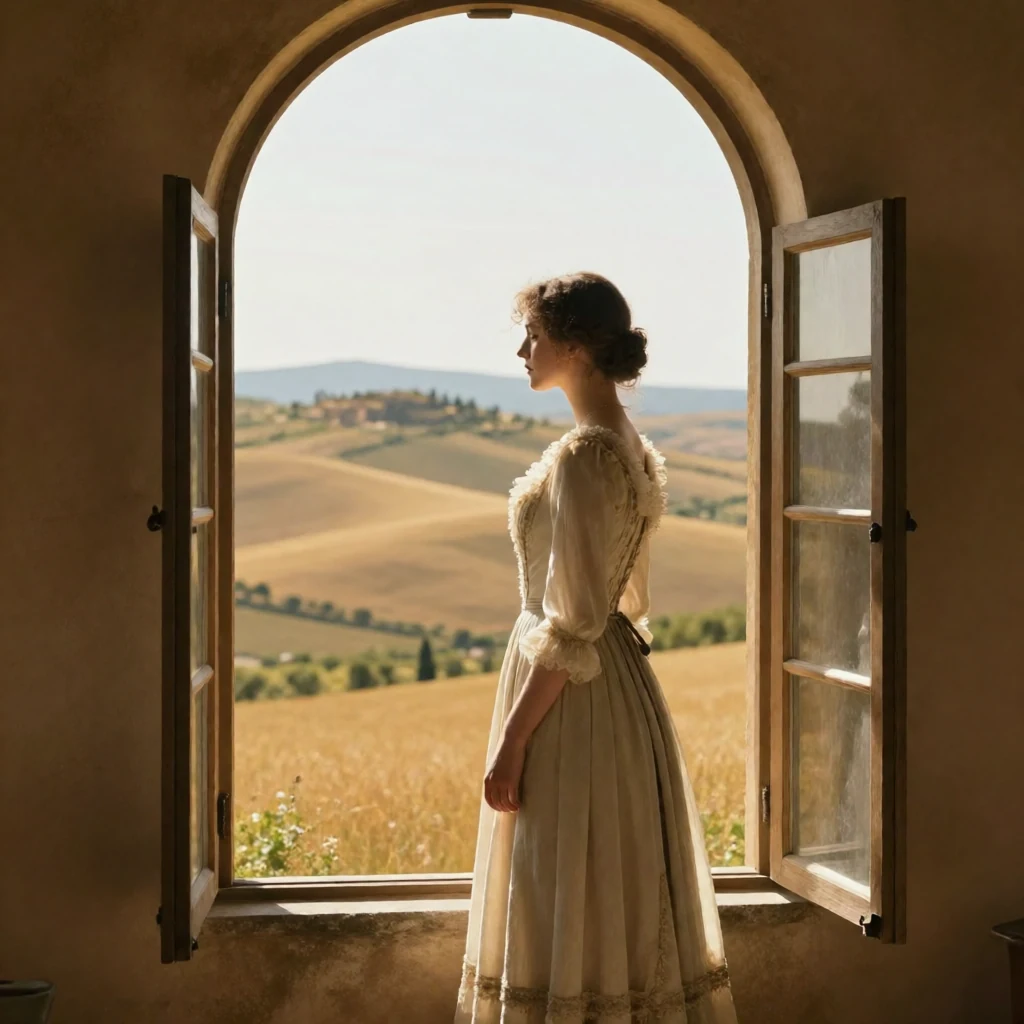
Uffizi Arcade Interaction with George Emerson
Lucy regains consciousness in the Uffizi arcade with George Emerson, who reveals he retrieved her dropped art photographs but threw them into the Arno after they were stained with blood from the stabbing; anxious to avoid gossip about her fainting, Lucy asks him not to mention her embarrassing behavior to anyone, and he agrees, though his blunt, unchivalrous demeanor leaves her uncertain of his respect for her social standing.
Arno Embankment Conversation and Cryptic Response
As Lucy and George walk toward their pension, they stop at the parapet of the Arno embankment, where Lucy repeatedly apologizes for her foolish behavior and reiterates her request for discretion about the incident; when George cryptically replies “I shall probably want to live” instead of addressing her request directly, Lucy is left puzzled by his strange, earnest response.
第五章
Chapter V follows Lucy Honeychurch and her cousin Charlotte Bartlett through a morning in Florence the day after Lucy’s unsettling encounter at the Piazza Signoria. Charlotte is her usual pleasant, unpredictable self, having just returned from her own minor adventure at the Dazio with Miss Lavish. Lucy, meanwhile, suffers in unaccustomed solitude—no one has witnessed what she experienced, so her thoughts remain unconfirmed. After breakfast she chooses to accompany Charlotte rather than join the Emersons’ walk to the Torre del Gallo, and the two set out along the Lung’Arno. In the Piazza they meet the predatory Miss Lavish, who is already fictionalising yesterday’s killing. Mr. Eager then appears, invites them on a drive in the hills, and guides them through an absurd shopping expedition. Eager subsequently launches an attack on the Emersons’ social origins and hints darkly that George Emerson “murdered” his wife. Lucy, newly defiant, presses him until he blurts out the accusation. The chapter closes with Lucy’s irritation on learning that the chaplain’s grand invitation merely duplicates a simpler arrangement Mr. Beebe had already made.
The original text of this work is in the public domain. This page focuses on a guided summary article, reading notes, selected quotes, and visual learning materials for educational purposes.