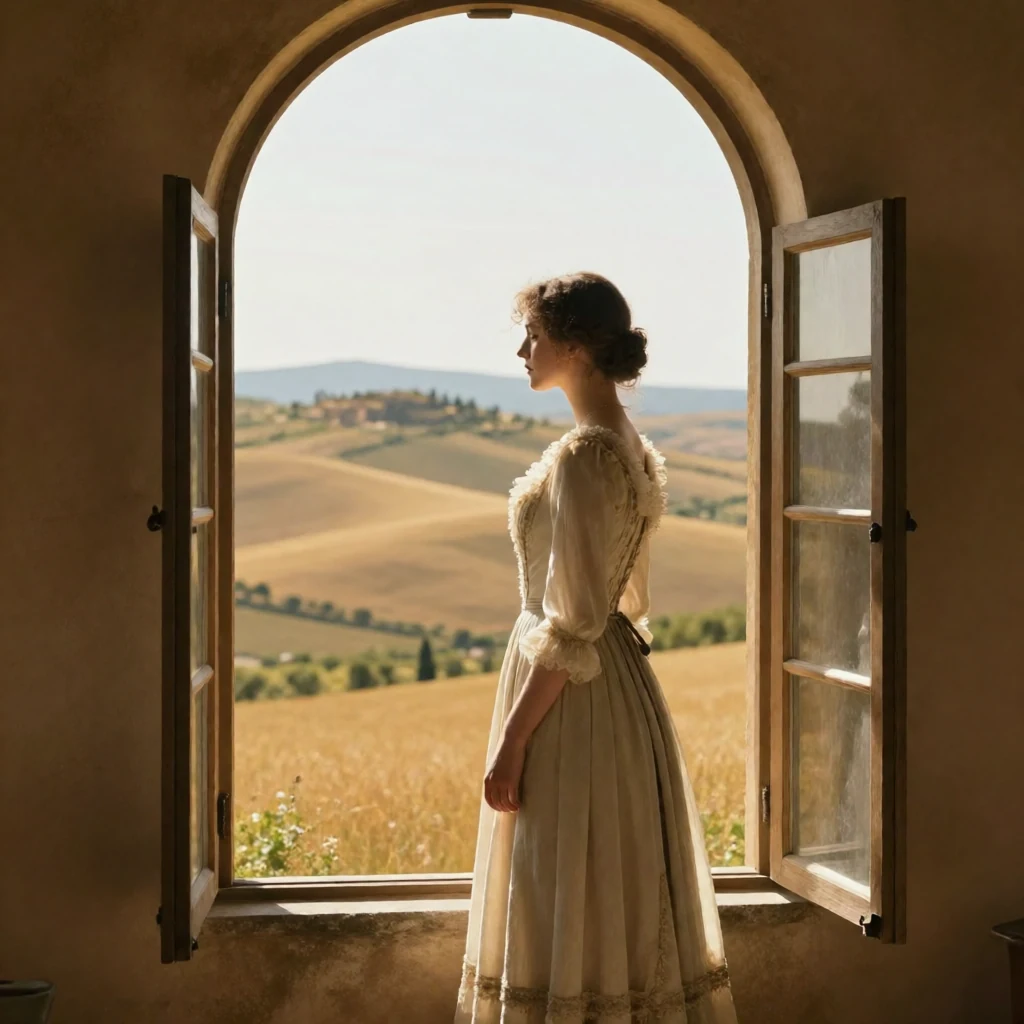
Lucy demands George leave the house
Lucy locates George in the dining-room where he has declined refreshments, sends Freddy and others away, and delivers a terse demand: he must leave the house and never return while she lives there. She speaks firmly, pointing to the door and explaining that she hates conflict but cannot tolerate his presence. George, however, ignores her dismissal and instead asks directly whether she intends to marry Cecil Vyse, launching into an unexpected and passionate defense of his case against the engagement.
George denounces Cecil and confesses his love
George delivers an impassioned critique of Cecil’s character, arguing that Cecil treats people as he treats books and paintings—something to be discussed but never truly known. He explains that Cecil shapes and forms Lucy rather than allowing her to develop her own thoughts and judgments, and that his father’s mispronunciation at the National Gallery first revealed Cecil’s fundamental snobbery and unkindness. George confesses his love for Lucy, acknowledging his own tendency to want to govern women while insisting his love differs from Cecil’s because he wants her to have her own thoughts even when held in his arms. He appeals to Miss Bartlett to understand that this is their last chance, explaining that youth and love matter intellectually.
George departs, leaving the women relieved
George accepts Lucy’s apparent rejection with surprising composure, acknowledging that he is the same kind of brute at bottom and that men and women must fight the desire to govern each other together. He departs quietly, picking up his racquet and climbing the slopes behind the house, much to the relief of both Lucy and Charlotte, who burst into stealthy rejoicing at his departure. The chapter emphasizes the gap between George’s philosophical resignation and their expectation of a more dramatic finish, with Miss Bartlett praising Lucy’s sensible and brave behavior while Lucy herself remains oddly unmoved, suggesting he amuses her.
The original text of this work is in the public domain. This page focuses on a guided summary article, reading notes, selected quotes, and visual learning materials for educational purposes.