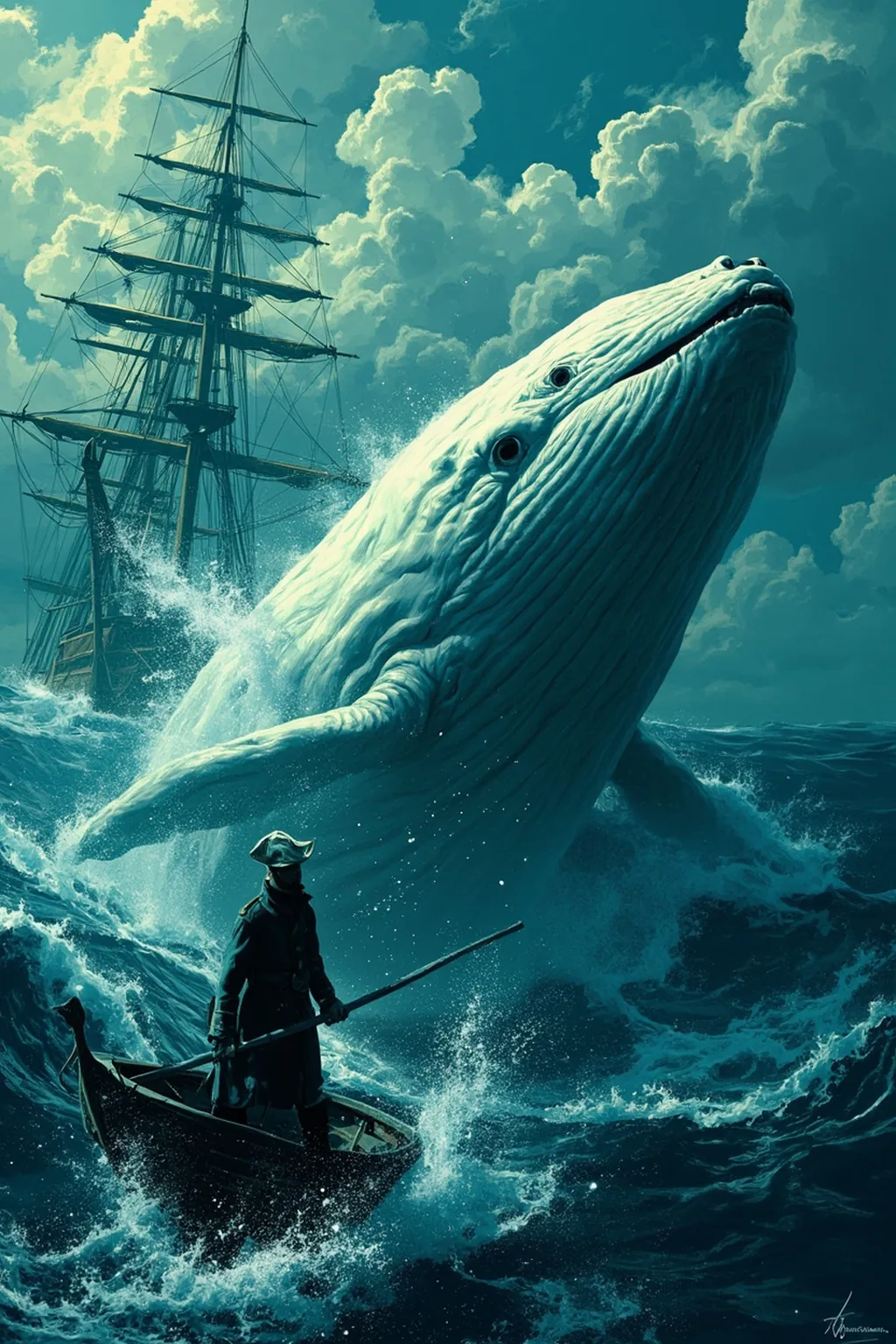
The Mariner’s Superstitious Fear of Milky Seas
The narrator uses the example of a sailor traveling through a midnight sea of milky white water to illustrate this instinctive dread: while the sailor would feel only sharp, rational alertness to hidden rocks near a foreign coast, the pale, uniform whiteness of the “milky sea” inspires a silent, superstitious terror that overwhelms him, far more frightening than the actual risk of shipwreck, even if he cannot consciously articulate that the whiteness itself is the source of his fear.
Contrasting Reactions to Snowy White Scenery
The narrator contrasts reactions to snowy white landscapes to show how context shapes the terror of whiteness: a Peruvian Indigenous person or a Western backwoodsman may view snow-covered mountains or prairies with relative indifference, seeing only desolate but familiar scenery, while a sailor in Antarctic waters sees a similarly blank white landscape of ice as a spectral, churchyard-like horror, full of looming, ghastly ice monuments and splintered crosses that seem to grin at him.
The Spooked New England Colt and Unnatural Whiteness
The narrator closes with the example of a young Vermont colt, raised far from any natural predators, who will panic and flee in terror if presented with the smell of a buffalo robe, even though he cannot see it and has no memory of bison or related dangers. This instinctive fear of an unfamiliar, wild scent tied to a white object, he argues, mirrors the broader, instinctive human dread of whiteness when it is divorced from familiar, positive contexts.
The original text of this work is in the public domain. This page focuses on a guided summary article, reading notes, selected quotes, and visual learning materials for educational purposes.