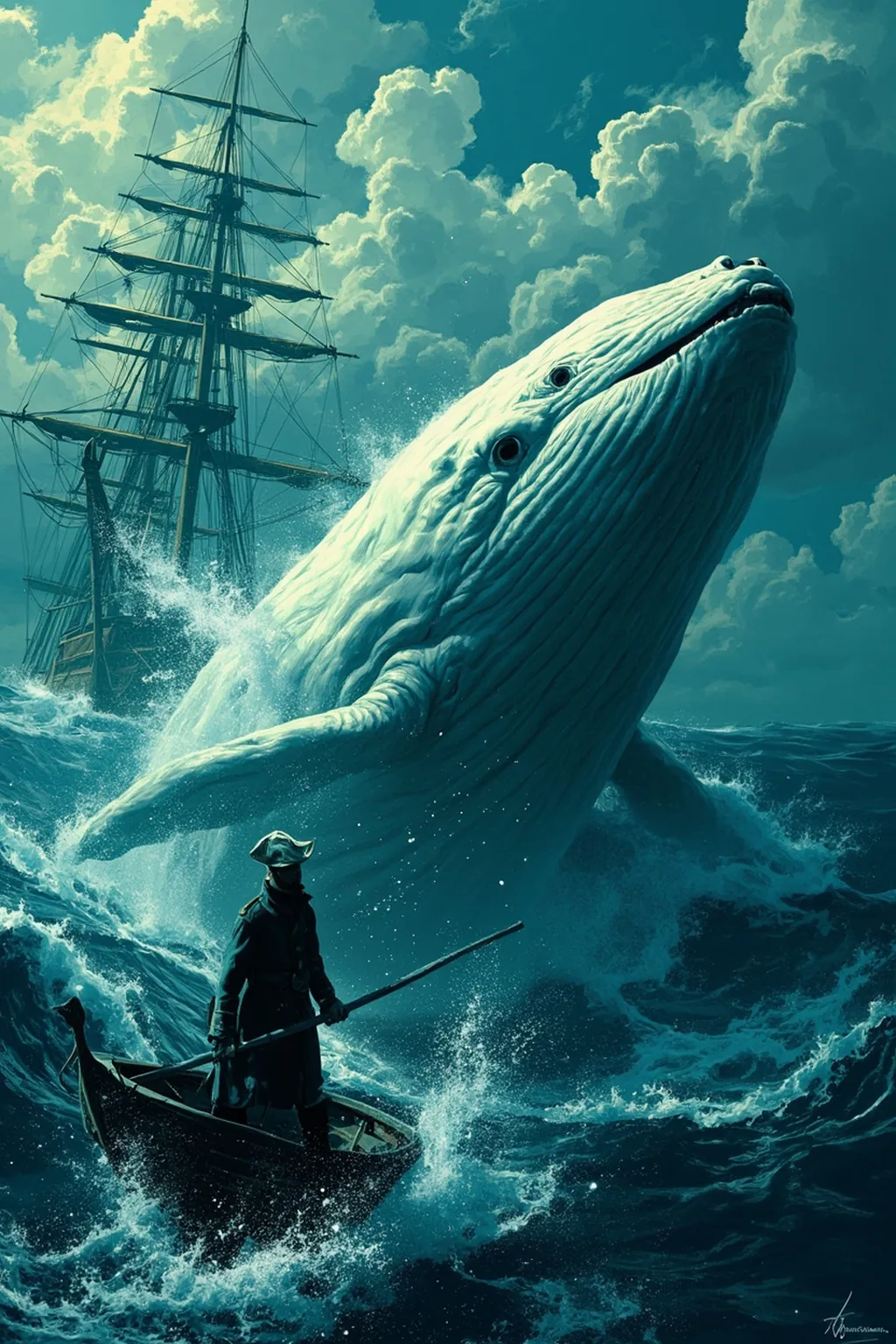
Perils of the Oarsmen
The whale-line encircles the entire boat in complicated coils, involving all oarsmen in its perilous contortions. To a landsman, the men appear as Indian jugglers with deadly snakes sportively festooning around them. A first-time participant in the boat experiences involuntary shudders when imagining the harpoon’s imminent darting and the subsequent horrible movements. Yet through habit, the men display gay sallies, mirth, jokes, and repartee while pulling into death’s jaws with halters around every neck.
Whaling Disasters
The line explains repeated whaling disasters where men are taken from boats and lost. When the line is darting out, being seated in the boat resembles sitting amid the whizzings of a steam engine in full play, made worse by the boat’s rocking motion that pitches occupants without warning. Only through simultaneous self-adjustment can one escape being dragged away.
Life and the Line
Melville compares the line’s graceful serpentine repose before action to the calm before a storm—the wrapper containing terror. All men live enveloped in whale-lines, born with halters around their necks, but only when caught in death’s sudden turn do mortals realize life’s silent, subtle, ever-present perils. The philosophical landsman at his evening fire with a poker beside him feels no more terror in the whale-boat than in his own home.
第六十一章 Stubb Kills a Whale.
This chapter chronicles Stubb’s successful hunt and killing of a sperm whale. Beginning with Queequeg’s prophecy about encountering whales after seeing the squid, the narrative follows Ishmael’s enchanted watch at the mast-head, the sudden sighting of a massive whale, and the subsequent chase. The detailed account describes Stubb commanding his crew, the harpoon strike, the dangerous line work, the violent battle with lances, and the whale’s eventual death. The chapter concludes with Stubb contemplatively scattering his pipe ashes over the water, marking the completion of the hunt.
The original text of this work is in the public domain. This page focuses on a guided summary article, reading notes, selected quotes, and visual learning materials for educational purposes.