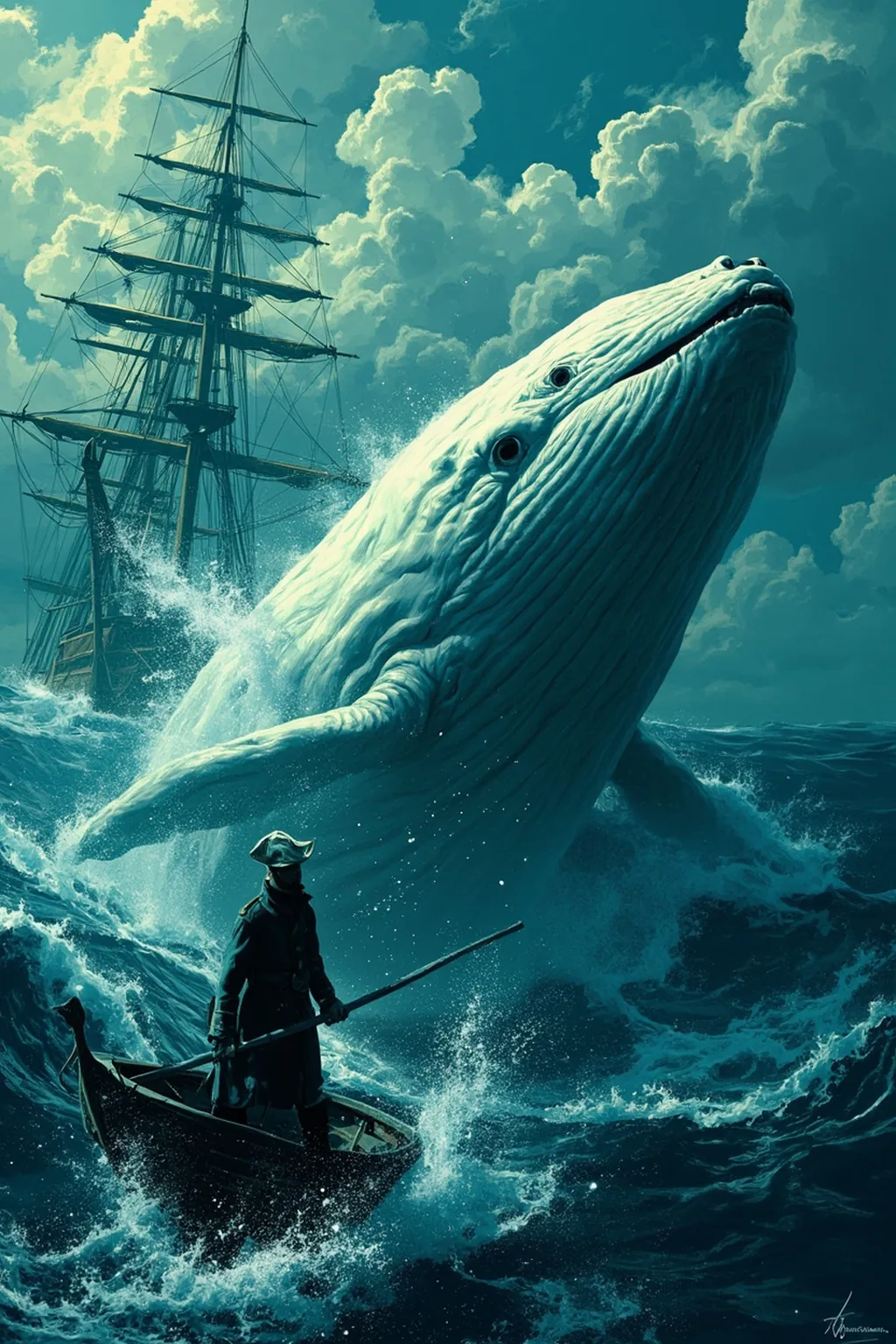
The Honor and Antiquity of Whaling
The narrator describes how his deeper research into whaling reveals its noble heritage. He finds himself “transported with the reflection” that he belongs, though “subordinately,” to this distinguished profession. The chapter emphasizes that whaling is not merely a commercial enterprise but a sacred calling with mythological significance.
Perseus: The First Whaleman
Perseus, described as “a son of Jupiter,” is identified as the first whaleman. His adventure with Andromeda demonstrates that the first whale attacked by the brotherhood was not killed for “sordid intent” but was a knightly endeavor to rescue the distressed. The whale monster was slain “at the very first dart,” an accomplishment rarely achieved even by modern harpooneers. In Joppa (now Jaffa), a great whale skeleton was preserved and believed to be the very bones of Perseus’s monster, later carried to Rome in triumph. Notably, Jonah set sail from the same port of Joppa.
St. George and the Whale Dragon
The famous story of St. George and the Dragon is presented as akin to Perseus’s adventure. The narrator argues the dragon was actually a whale, noting that “in many old chronicles whales and dragons are strangely jumbled together.” Ezekiel’s phrase “thou art as a lion of the waters, and as a dragon of the sea” is cited as evidence, with some Bible versions using the word “whale” directly. The narrator contends that killing a snake lacks the glory of confronting “the great monster of the deep.” St. George becomes a tutelary guardian of England, and Nantucket whalemen consider themselves entitled to enrollment in the Order of St. George.
The original text of this work is in the public domain. This page focuses on a guided summary article, reading notes, selected quotes, and visual learning materials for educational purposes.