Lance vs Harpoon
Although a harpoon can be pitchpoled, it is rarely done because it is heavier and shorter than the lance, making it less effective for the distance and accuracy required. Typically, a harpoon must first be planted to anchor the whale before pitchpoling can occur.
Stubb’s Dexterity
Stubb is singled out as the perfect candidate for pitchpoling due to his characteristic humor, deliberate coolness, and equanimity, which allow him to remain steady in the most dire emergencies.
The Juggler Analogy
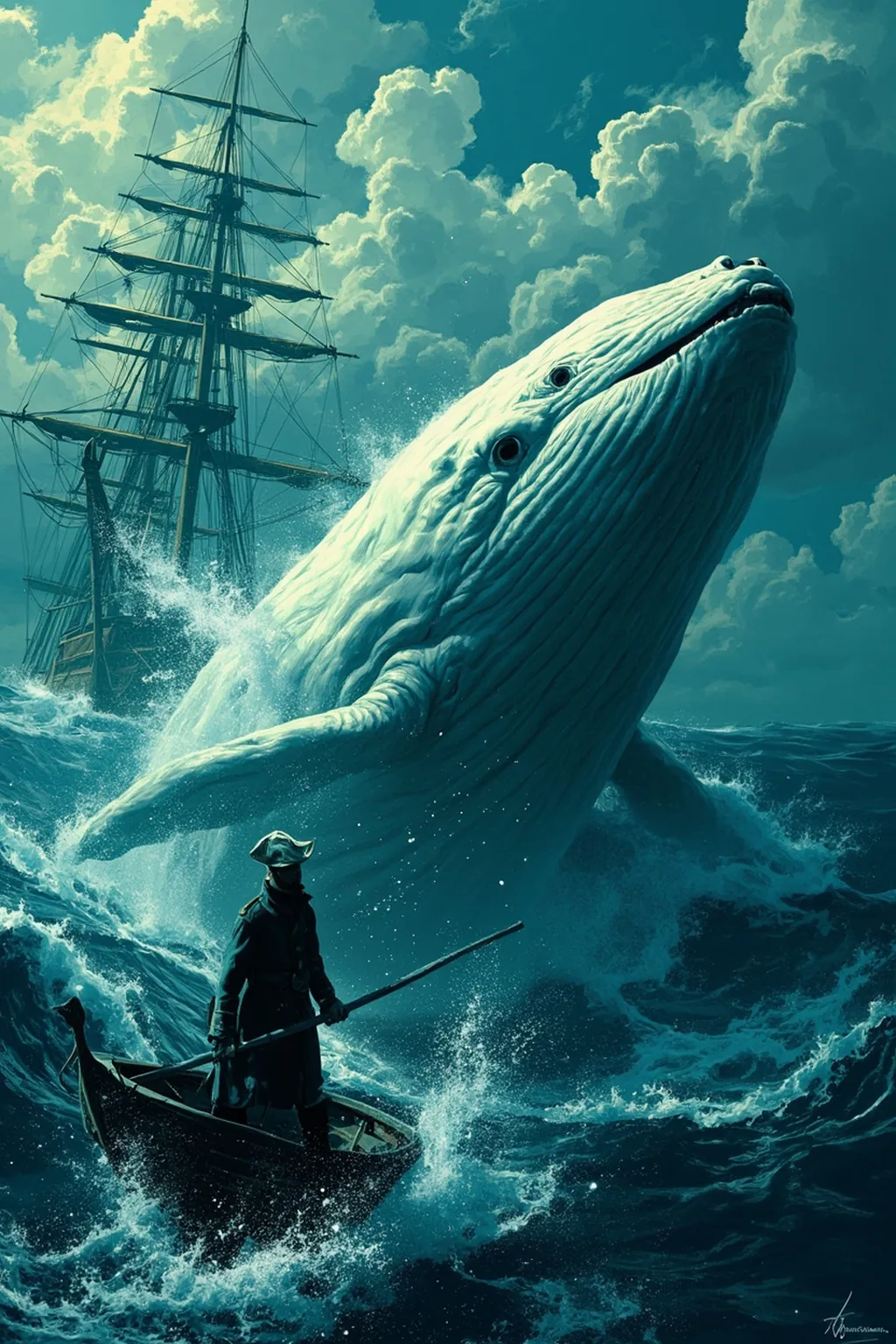
Before throwing the weapon, Stubb balances the long lance vertically on his palm, fifteen feet high. The image of him poised in the tossing bow, holding the spear aloft, is likened to a juggler balancing a staff on his chin.
The Strike
With a swift, nameless impulse, Stubb hurls the lance in a superb, lofty arch. The bright steel flies across the foaming distance and strikes the vital spot of the whale, causing it to spout red blood.
Stubb’s Exclamation
Reacting to the fatal blow, Stubb cries out boisterously, joking that he has “driven the spigot out” of the whale, and declares that today all fountains must run wine, wishing he had whiskey to catch in the spout.
The Whale’s Death
Stubb continues to throw the lance repeatedly, each time retrieving it like a greyhound. The whale enters its final flurry, and as the tow-line slackens, the boat drops back, allowing the crew to stand by and silently watch the monster die.
第八十五章 The Fountain.
This chapter examines a millennia-old puzzle: despite six thousand years of whales spouting across the seas and centuries of hunters watching them up close, it remains uncertain whether whale spouts are truly water or merely vapor.
The original text of this work is in the public domain. This page focuses on a guided summary article, reading notes, selected quotes, and visual learning materials for educational purposes.