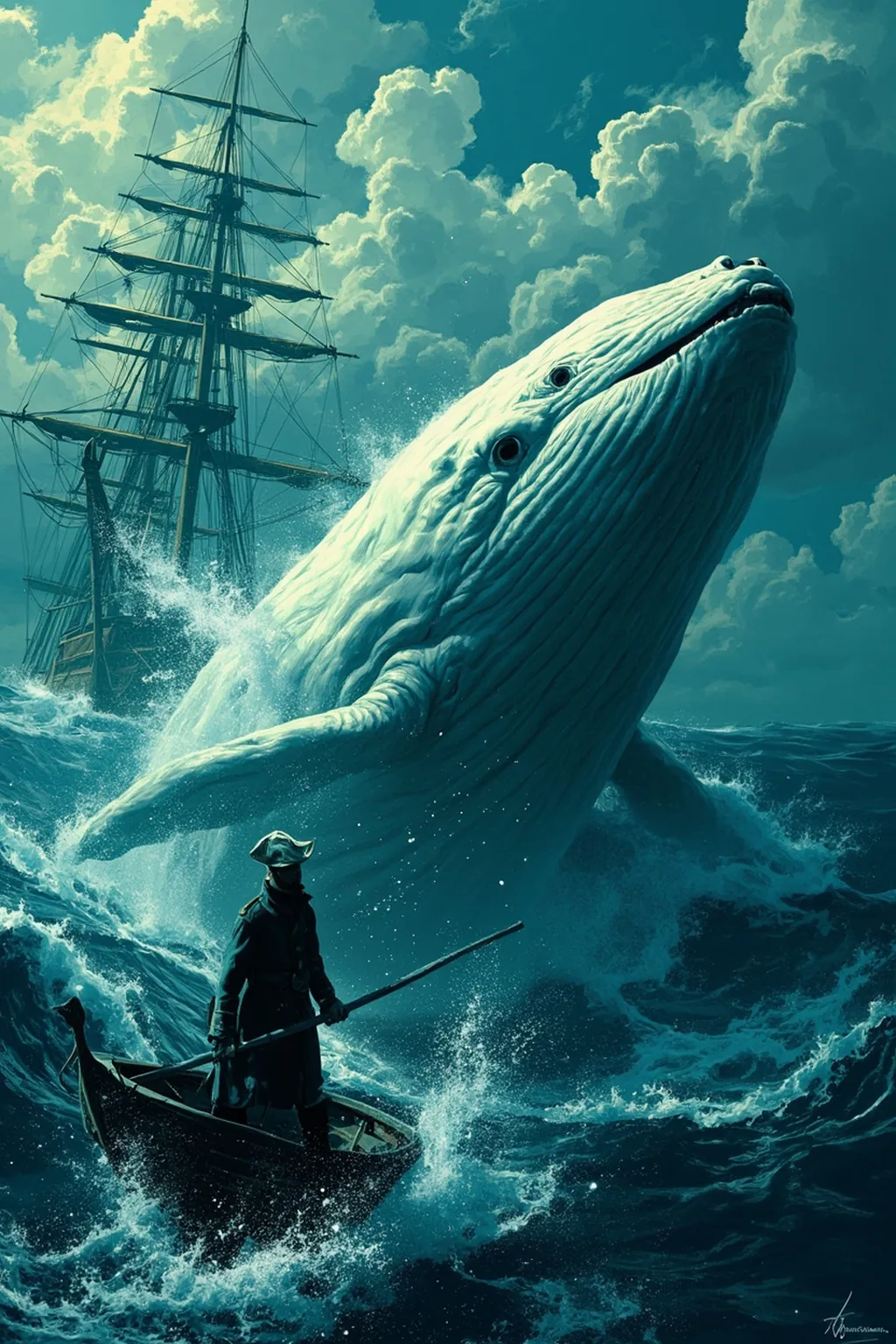
The Dutch Whaling Code
The only formal whaling code authorized by legislative enactment was decreed by Holland in 1695. While no other nation has enacted written whaling law, American fishermen have served as their own legislators, creating a system so concise it surpasses Justinian’s Pandects in terseness. These laws could be inscribed on a small surface, demonstrating their remarkable economy of language.
Fast-Fish and Loose-Fish
The chapter presents two fundamental laws of whaling: First, a Fast-Fish belongs to the party fast to it. Second, a Loose-Fish is fair game for anybody who can soonest catch it. However, the brevity of this masterly code necessitates extensive commentary to expound its meaning and application in specific cases.
What is a Fast-Fish?
A fish is technically fast when connected to an occupied ship or boat by any controllable medium—whether a mast, oar, cable, telegraph wire, or even a strand of cobweb. Additionally, a fish bears a waif or recognized symbol of possession, provided the party waifing it can demonstrate both ability and intention to take the fish alongside at any time. Some whalemen enforce these principles through “hard words and harder knocks,” though honorable fishermen make allowances for peculiar cases where claiming a previously chased or killed whale would constitute moral injustice.
The Whale-Trover Case
Approximately fifty years ago, an English case of whale-trover was litigated. Plaintiffs who had harpooned a whale were forced to abandon their lines and boat due to peril, only to watch defendants capture the whale before their eyes. The defendants even retained the plaintiffs’ attached line, harpoons, and boat. Lord Ellenborough presided, with Mr. Erskine defending. Erskine humorously compared the case to a “crim. con.” case involving a wife, arguing both demonstrated that abandonment makes one a “loose-fish.” The judge awarded the boat to plaintiffs for abandoning it to save their lives, but ruled the whale, harpoons, and line belonged to defendants, since the fish became a Loose-Fish at final capture and acquired property in the attached articles.
The original text of this work is in the public domain. This page focuses on a guided summary article, reading notes, selected quotes, and visual learning materials for educational purposes.