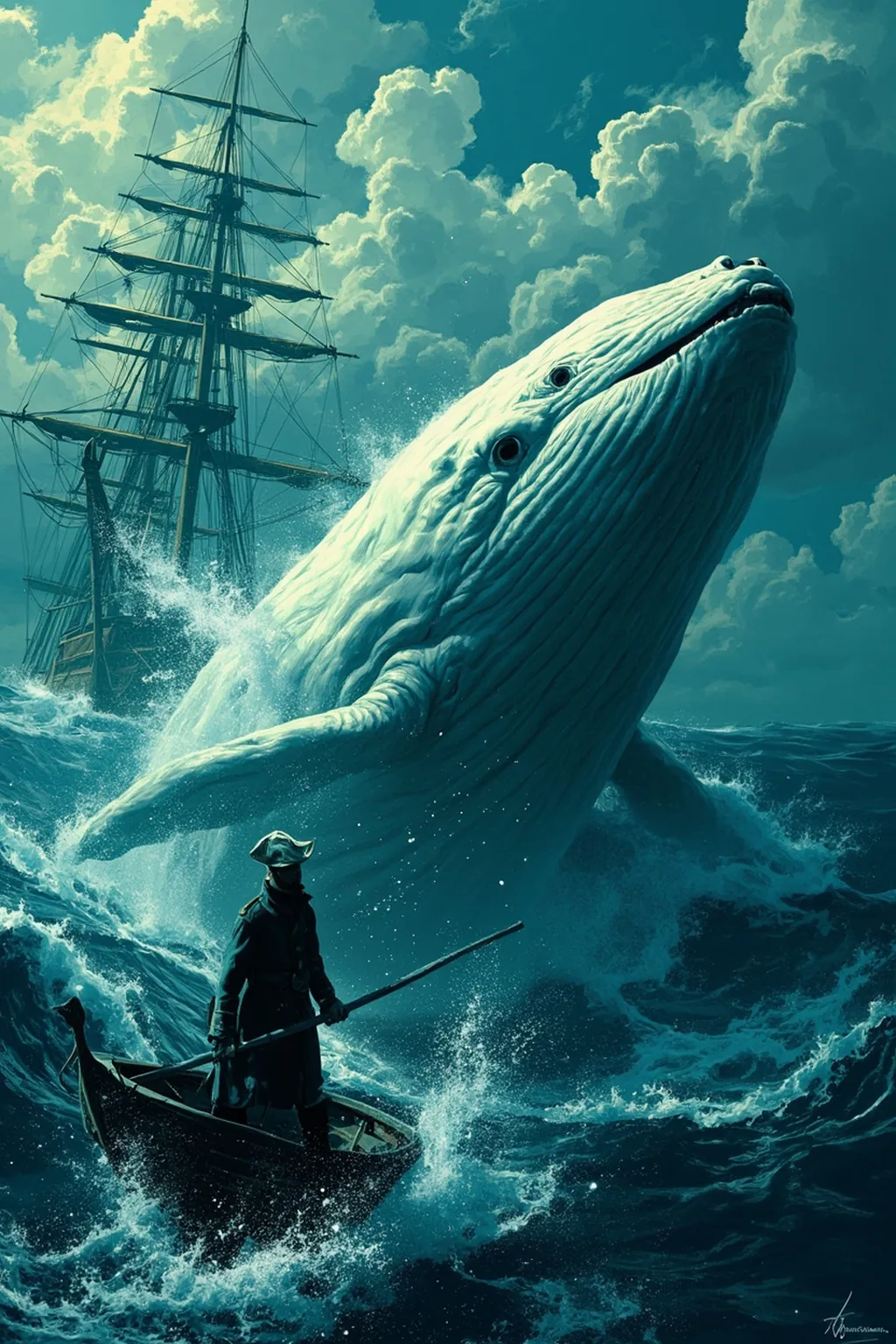
第九十一章 The Pequod Meets The Rose-Bud.
A week after their last whaling scene, the Pequod sails over a calm, vapory sea. The crew’s sense of smell detects something unusual before anyone spots it visually—a peculiar, unpleasant odor drifting across the water.
The Vapory Mid-Day Sea
Stubb comments that the smell likely comes from drugged whales they had encountered before, suggesting they would “keel up before long.” The vessel drifts through a sleepy, mid-day calm as the mysterious scent grows stronger.
The Peculiar Smell
The foul odor becomes inescapable as a dead whale’s presence reveals itself. The smell is described as more intolerable than a plague-stricken city, making the air nearly impossible to breathe without gagging.
The French Ship Rose-Bud
A French vessel appears in the distance, flying French colors and with a whale alongside. As the Pequod approaches, they see the ship is named “Bouton de Rose” (Rose-bud), with a figurehead carved to resemble a drooping green stalk with copper thorns and a red folded bulb—quite romantic for such unpleasant circumstances.
The Blasted Whale
The whale alongside the French ship is identified as a “blasted whale”—one that died unmolested and floated unclaimed. Such whales emit a terrible odor and produce inferior oil, yet some captains still pursue them despite the stench.
Stubb’s Recognition
Stubb recognizes his own cutting spade-pole entangled in the lines around the whale. He mocks the French as poor fishermen who mistake breakers for whale spouts and sail with holds full of candles and snuffers, knowing they won’t catch enough oil. Yet he notes they are content with the Pequod’s leavings—drugged whales and the bones of dried-up specimens.
The original text of this work is in the public domain. This page focuses on a guided summary article, reading notes, selected quotes, and visual learning materials for educational purposes.