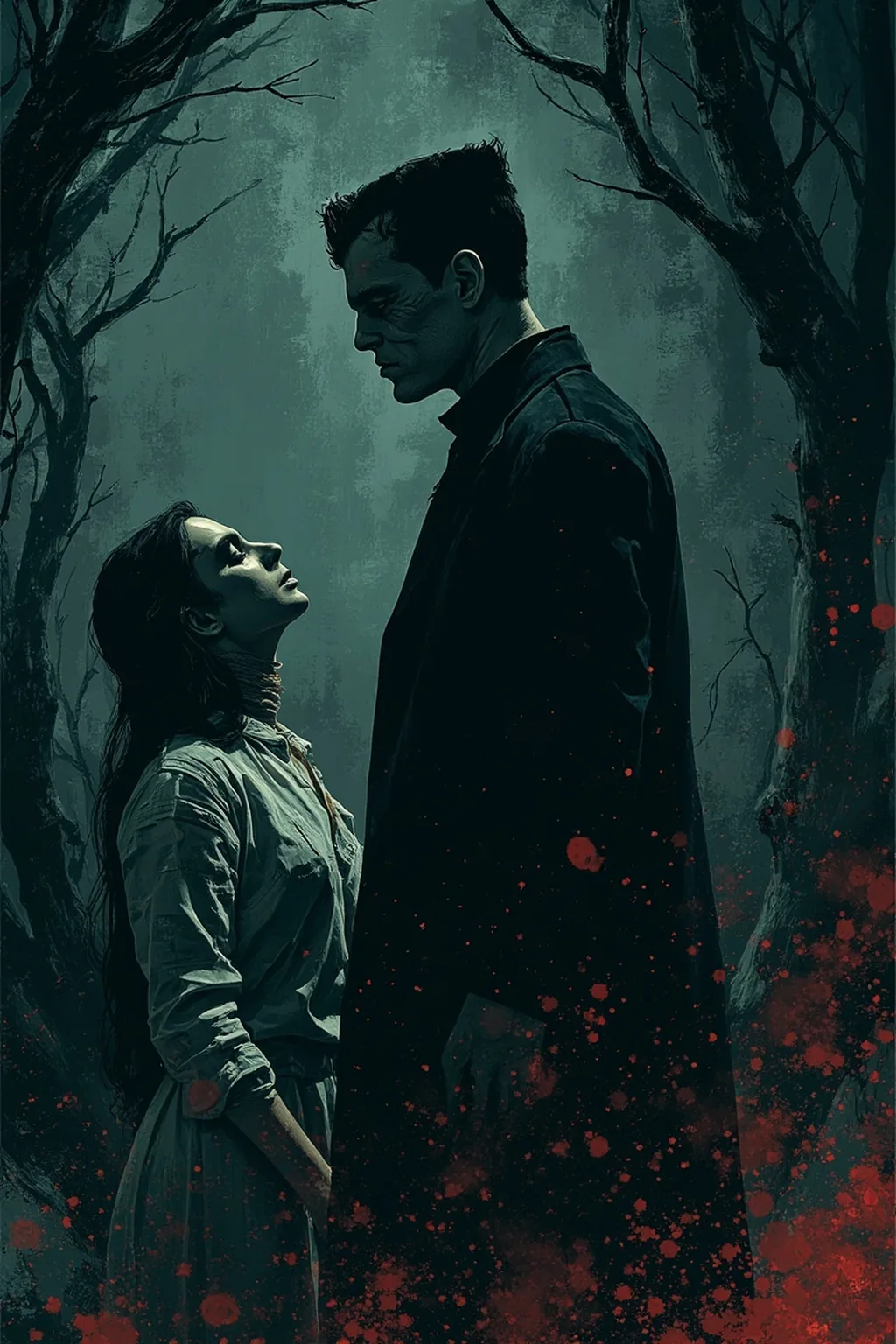
Victor Frankenstein, driven by a desire to transcend natural limits, assembles a humanoid creature from dead matter. Horrified by his creation, he abandons it, prompting the being to seek revenge for its isolation. The narrative follows the catastrophic fallout of this broken bond, moving from the icy Arctic to the serene Swiss Alps, as creator and creation are locked in a mutual pursuit of ruin.
His relief is short-lived. As he lands, the crowd gathers, speaking to one another with gestures of alarm. When Victor inquires where he is, a man replies roughly that he will know soon enough and that he is come to a place not to his taste. Victor is surprised by the inhospitable reception, but the man retorts that while it is free for honest folks, it is the custom of the Irish to hate villains. The crowd increases, their faces expressing a mixture of curiosity and anger. An ill-looking man taps Victor on the shoulder and demands he follow Mr. Kirwin, the magistrate, to give an account of himself for the murder of a gentleman found dead the previous night. Though startled, Victor follows in silence, ready to sink from fatigue but rousing his strength to appear innocent. He is led to one of the best houses in the town, little suspecting the calamity that is about to overwhelm him.
Brought before the magistrate to answer for a murder he knew nothing of, Victor faced the gathered witnesses and their damning testimony. The discovery of a strangled young man on the shore would soon reveal a tragedy more personal than he could have anticipated.
Victor is brought before the magistrate, Mr. Kirwin, who listens to the testimony of several witnesses regarding the murder of a young man found on the shore. Fishermen describe discovering the body, noting that while it appeared to be a drowning victim, the clothes were dry and the body still warm, bearing the black mark of fingers on the neck. Another witness places a boat containing a single man—identified as the one Victor arrived in—near the scene of the crime around the time of the murder. When the manner of the killing is described, Victor is overcome by agitation, reminded of his brother William’s death, and must lean on a chair for support. Observing this reaction, Mr. Kirwin decides to test Victor’s guilt by leading him to the room where the corpse lies.
Despite believing himself innocent of this specific crime, Victor is tranquil until he approaches the coffin. Upon seeing the lifeless form of Henry Clerval, his dearest friend, Victor’s composure shatters. He gasps for breath and throws himself upon the body, accusing his own murderous machinations of depriving Henry of life. The human frame cannot support the agony of this recognition, and Victor falls into violent convulsions, requiring him to be carried from the room. A fever succeeds this shock, confining him to his bed for two months on the point of death. His ravings are frightful; he confesses to the murders of William, Justine, and Clerval, and screams in terror, feeling the fingers of the monster grasping his neck.
The original text of this work is in the public domain. This page focuses on a guided summary article, reading notes, selected quotes, and visual learning materials for educational purposes.