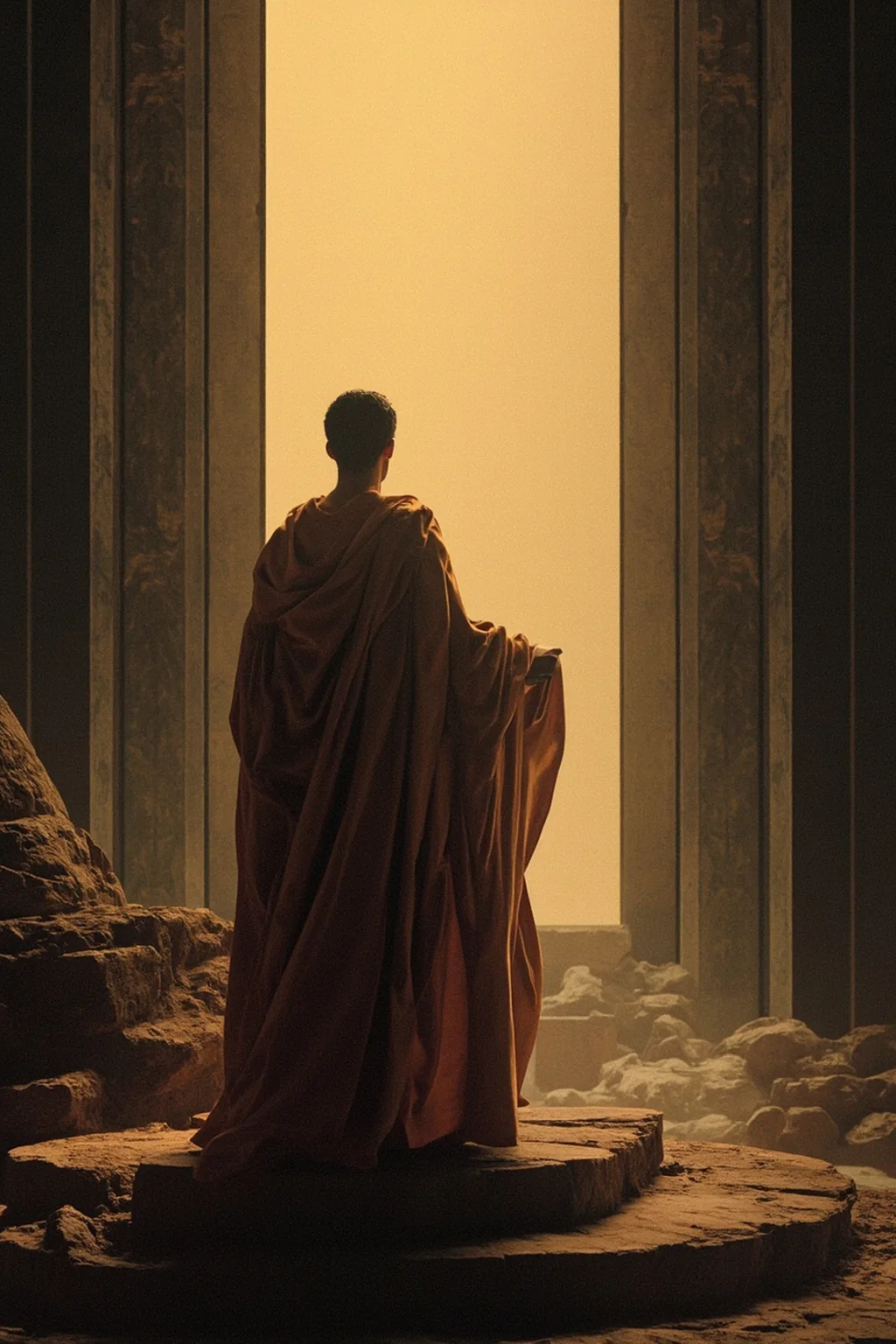
Written during military campaigns at the edges of the empire, the *Meditations* represent a private dialogue between a ruler and his conscience. Marcus Aurelius does not seek to teach a system, but to fortify his own mind against the corruption of power and the fear of death. The work moves from a catalog of gratitude to his teachers to a rigorous metaphysical examination of change, duty, and the rational soul, ultimately concluding that the good life consists in acting justly and accepting fate as a necessary part of the cosmic whole.
Marcus emphasizes the importance of acting only when it is fitting and speaking only when it is true, maintaining one’s purpose free from compulsion. He advises that of everything that presents itself, one should consider its true nature, dividing it into its formal and material parts, its true use or end, and the just time it is appointed to last. It is high time, he insists, to understand that there is something in the individual better and more divine than passions or sensual appetites. One must consider what is the object of the mind—is it fear, suspicion, or lust?—and resolve to do nothing rashly without a certain end, that end being the common good. For soon, the individual will be no more, and no more will any of the things now seen or the people now living be, as all things are appointed by nature to change and turn so that other things may succeed in their room.
The central theme of the book emerges strongly here: remember that all is but opinion, and all opinion depends on the mind. Take away opinion, and one finds safety like a ship that has struck into the harbor; a present calm ensues, all things safe and steady, a bay not capable of storms. Marcus argues that no operation, ceasing for a while, can be said to suffer evil because it is at an end. Neither can the author of that operation be said to suffer evil because his operation is at an end. Likewise, the whole body of actions, which is life, if it ceases in time, cannot be said to suffer evil for that very reason. This time or period depends on the determination of nature—sometimes of particular nature, as when a man dies old, but of nature in general, the parts changing so that the whole world continues fresh and new. That which is best and most seasonable is for the good of the whole. Therefore, death cannot be hurtful to any in particular; it is not shameful, as it does not depend on the will, nor is it contrary to the common good. Since it is expedient and seasonable to the whole, it must be good. It is brought to us by the order of Divine Providence, so he whose will and mind run along with the Divine ordinance, being led and driven as it were by God Himself, may truly be termed theophoros, or divinely led and inspired.
The original text of this work is in the public domain. This page focuses on a guided summary article, reading notes, selected quotes, and visual learning materials for educational purposes.