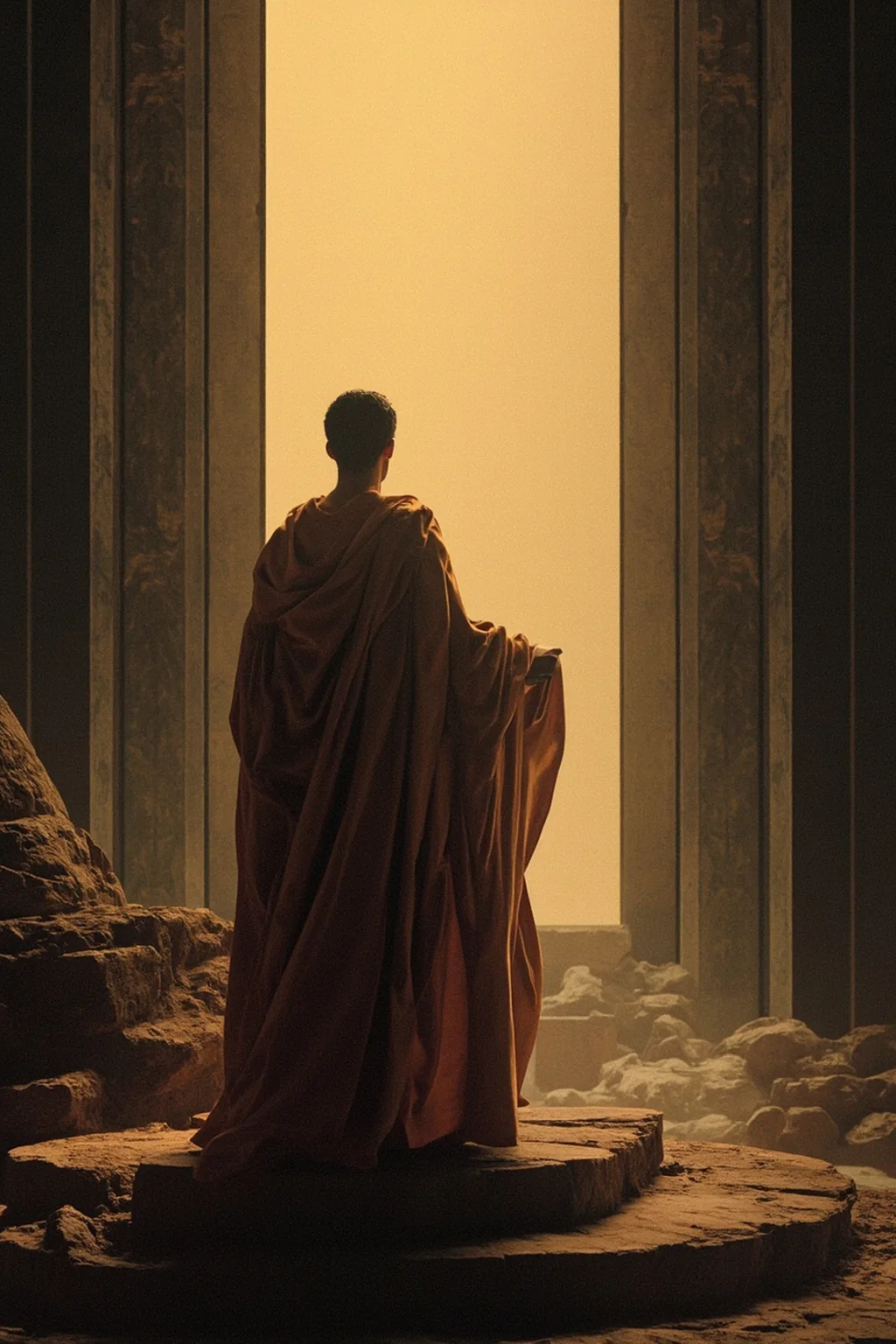
Written during military campaigns at the edges of the empire, the *Meditations* represent a private dialogue between a ruler and his conscience. Marcus Aurelius does not seek to teach a system, but to fortify his own mind against the corruption of power and the fear of death. The work moves from a catalog of gratitude to his teachers to a rigorous metaphysical examination of change, duty, and the rational soul, ultimately concluding that the good life consists in acting justly and accepting fate as a necessary part of the cosmic whole.
Marcus lists three things to have always in readiness: first, concerning one’s own actions, whether one does nothing idly or otherwise than justice requires; second, concerning external things, that they happen either by chance or providence, and to accuse either is equally against reason; and third, to consider what bodies are like while yet rude and imperfect until animated, and from animation until expiration—of what things they are compounded and into what they shall be dissolved. He urges the reader to view all things from on high, looking down upon the earth and contemplating the wonderful mutability of things, the infinite greatness and variety of aerial and celestial things, and realizing that these are the things we are so proud of.
He returns to the command to cast away opinion, for in doing so, one is safe. What hinders this casting away? When grieved, one has forgotten that all things happen according to the nature of the universe, that it concerns only him who is in fault, and that what is done now is what has been done from the beginning and will be done forever. One has forgotten how nearly all men are allied by a kindred not of blood but of the same mind, that every man’s mind partakes of the Deity, and that no man can properly call anything his own—not son, body, nor life—as they all proceed from the One who is the giver of all things. All is opinion; no man lives properly but the present instant, and no man loses more than an instant of time when he dies.
Marcus reflects on the vanity of worldly pursuits by considering those who were once moved with extraordinary indignation, or were in the highest pitch of honour or calamity, or mutual hatred. What has become of them? All is turned to smoke, mere fable, or perhaps not so much as a fable. He cites specific examples of vehement prosecution in worldly matters, urging the reader to consider how vile every object of such earnest prosecution is. It is far more agreeable to true philosophy to carry oneself justly and moderately, following the Gods simply, rather than being puffed up about one’s own lack of pride. For a man to be proud that he is not proud is the most intolerable kind of pride.
He answers those who ask where he has seen the Gods or how he knows they exist. He answers that even to the eye, they are in some manner visible. Secondly, he has never seen his own soul, yet he respects and honours it. By the daily experience of their power and providence, he knows certainly that they are and therefore worships them.
The original text of this work is in the public domain. This page focuses on a guided summary article, reading notes, selected quotes, and visual learning materials for educational purposes.