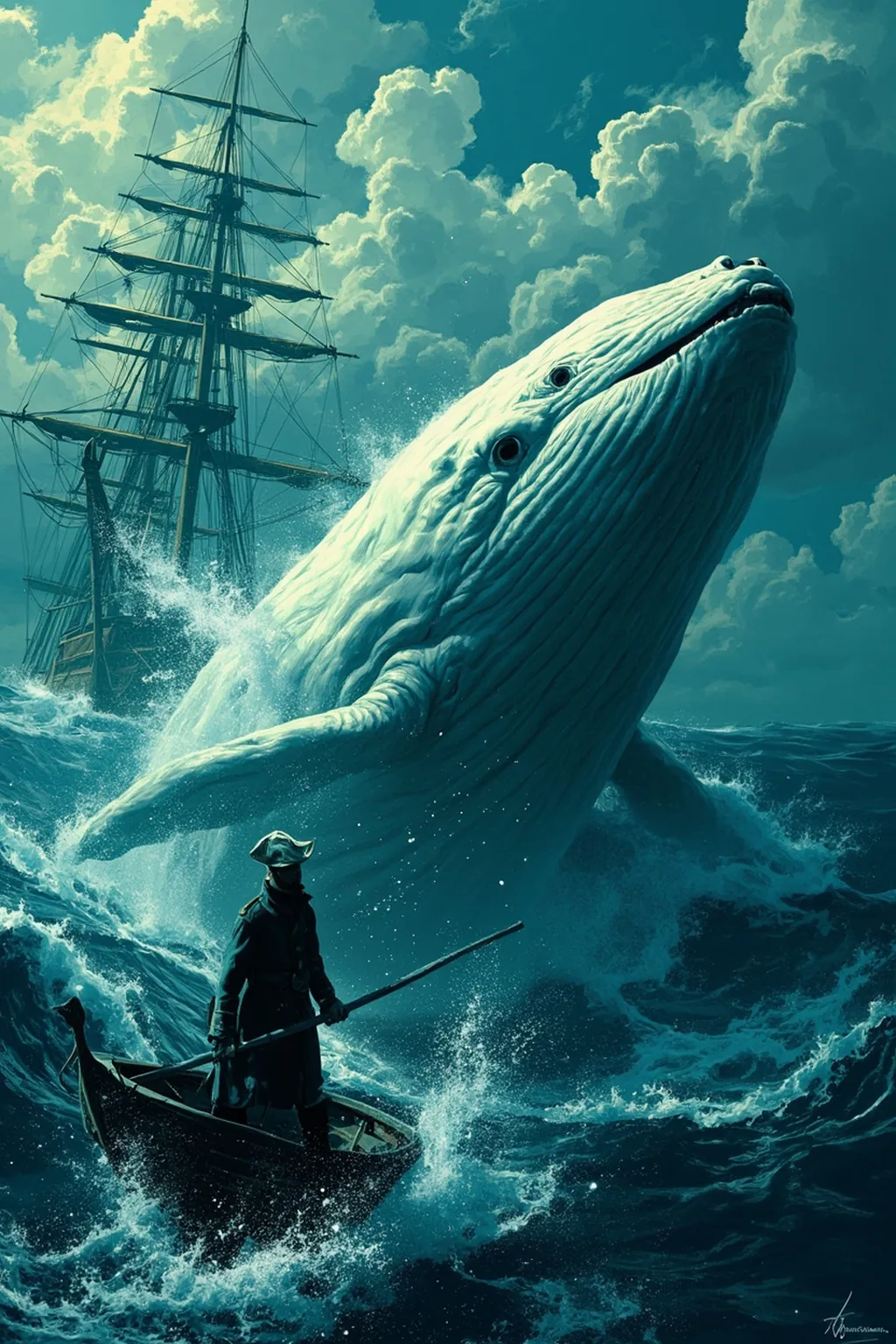
Pequod Drifts Into Right Whale Habitat, Hunts One
During the night and morning, the Pequod drifted into waters marked by patches of yellow brit, indicating Right Whale territory—though this species was unexpected in this location and season. Though the crew typically disdain hunting these inferior creatures and the ship was not commissioned for them, an announcement is made that a Right Whale will be captured if opportunity allows.
Stubb and Flask Chase Right Whale, Avoid Ship Collision
Two boats under Stubb and Flask pursue sighted spouts until nearly invisible from the mast-head. They become fast to a whale that nearly rams the hull, diving under the keel with boats on the verge of destruction. The crew manages to gain ground ahead as the line scrapes beneath the ship, snapping and dripping like broken glass, until the whale circles round the stern with both boats in tow.
Right Whale Battle Circles Pequod, Sharks Feed On Blood
The two headsmen flank the whale on both sides with lances, circling the Pequod in battle. Sharks that had previously fed on the Sperm Whale’s blood now rush to drink from every new wound, eagerly consuming the fresh blood like Israelites at the rock.
Right Whale Killed After Tense Struggle
The whale’s spout grows thick, and with a frightful roll and vomit, he turns upon his back a corpse.
Stubb and Flask Chat While Securing Whale Flukes
As the headsmen secure cords to the flukes for towing, Stubb expresses disgust at having to deal with such an “ignoble leviathan” and wonders at Ahab’s purpose.
Stubb Mocks Right Whale As Inferior Leviathan
Stubb mocks the Right Whale as a lump of foul lard, reflecting his disdain for these creatures compared to the noble Sperm Whale.
Flask Shares Dual Whale Head Superstition
Flask relates an old superstition that a ship which has hoisted a Sperm Whale’s head on the starboard side and a Right Whale’s head on the larboard can never capsize. He learned this from the mysterious Fedallah, whom he distrusts, noting his snake-carved tusk.
Stubb Claims Fedallah Is Disguised Devil, Recounts Anecdote
Stubb declares Fedallah to be the devil in disguise, planning to throw him overboard given a dark night opportunity. He describes Fedallah’s strange habits—stuffed boot toes, sleeping in rigging coils—claiming the devil hides his tail coiled in his pocket. Stubb theorizes Ahab is making some bargain with this devil to surrender Moby Dick.
Stubb and Flask Debate Fedallah’s Great Age
Stubb claims Fedallah’s age exceeds countless hoops from the hold strung alongside the mainmast, questioning who could have seen him die. Flask challenges whether harming an immortal being serves any purpose, prompting Stubb to advocate repeatedly ducking him.
Stubb Threatens To Dump Fedallah Overboard, Jokes About His Tail
Stubb threatens to seize Fedallah by the neck if he witnesses suspicious behavior, forcibly extract his tail at the capstan, and sell it for an ox whip. He dismisses the notion of fearing the devil, criticizing the governor who signs bonds with him.
Right Whale Head Hoisted Opposite Sperm Whale Head, Ship Regains Balance
The whale is brought alongside on the larboard side and the Right Whale head hoisted opposite the Sperm Whale head, restoring the ship’s even keel. A philosophical digression notes that like trimming minds, adding counterweights on both sides brings equilibrium.
Right Whale Carcass Processing Notes
Describes standard procedures for processing Right Whale carcasses, involving separate removal of lips and tongue with the black bone. In this case, neither whale has been processed—the heads merely hang like a mule’s overburdening panniers.
Fedallah Observes Right Whale Head Near Ahab
Fedallah calmly examines the right whale’s head while glancing between its wrinkles and the lines in his own hand. He stands in Ahab’s shadow, his own shadow blending with and lengthening the captain’s.
Crew Speculates On Right Whale And Fedallah
While toiling at their work, the crew bandies speculations about all these strange occurrences.
The original text of this work is in the public domain. This page focuses on a guided summary article, reading notes, selected quotes, and visual learning materials for educational purposes.