CHAPTER X
This chapter opens with a lyrical verse celebrating the joy of youthful idealism, then shifts to a 1584 Languedoc narrative following Count De Villefort as he inherits the decaying Château-le-Blanc estate, relocates his family to the property, and clashes with his new Countess over the remote, rundown home.
Opening Verse on Youthful Idealism
A short opening verse extols the vivid, hopeful ideals of youth, describing how young minds paint unfamiliar, new objects in warm, lovely colors fueled by unjaded imagination.
SACRED DRAMAS
The section header “SACRED DRAMAS” precedes a return to the Languedoc storyline, introducing Count De Villefort as the nobleman who has inherited the Château-le-Blanc estate located near the St. Claire monastery, a site that previously alarmed Emily St. Aubert’s curiosity.
Count De Villefort’s Inheritance of Château-le-Blanc
In 1584, the same year St. Aubert dies, Francis Beauveau, Count De Villefort, inherits Château-le-Blanc, a centuries-old family estate on the Languedoc Mediterranean shore, after the death of his reclusive, austere cousin the Marquis De Villeroi, with whom he had little contact. De Villefort receives news of the inheritance and property documents that year, but delays visiting the long-neglected, decaying château until the following autumn, when he plans to oversee repairs and revisit the site of happy childhood memories.
Family Preparations for the Languedoc Move
Though the Countess protests and weeps at leaving the vibrant social scene of Paris, where her beauty is widely praised, she prepares to accompany the Count to Languedoc. The Count intends to bring his two children from his first marriage: his 20-year-old son Henri, serving in the French military, and his nearly 18-year-old daughter Blanche, who has been confined to a convent since the Count’s second marriage, as the Countess had no interest in her education and sought to hide her exceptional beauty from the public eye.
Blanche’s Departure from the Convent
On the morning of the journey, Blanche, overjoyed at the prospect of freedom and new experiences, departs the convent where she was raised. She weeps at her farewells to her fellow nuns and the abbess, despite her excitement, before joining the Countess to begin the trip. Her low mood quickly lifts as she is captivated by the new natural scenery along the road, lost in pleasant daydreams of the world ahead.
Journey to Château-le-Blanc
The seven-day journey to Château-le-Blanc fills Blanche with delight, as she is captivated by the ever-changing natural landscapes: drifting clouds, unfolding distant views, and shifting light along the route. The Countess grows increasingly sour at leaving Parisian society, while Henri feels a mix of regret for the capital and a lady he admired, softened by the novelty of the trip ahead.
Arrival at Château-le-Blanc
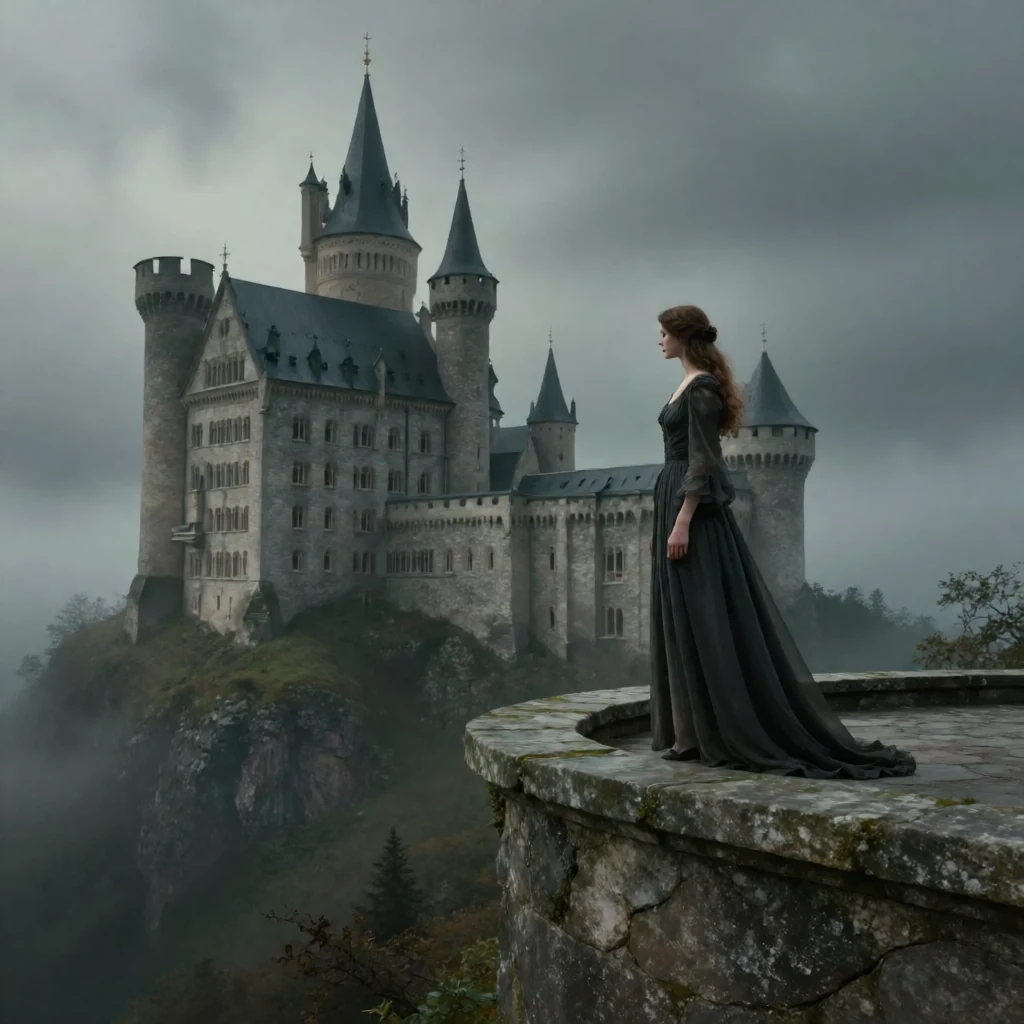
On the seventh evening, the party arrives at Château-le-Blanc, a gothic mansion perched on a Mediterranean promontory surrounded by pine, oak, and chestnut woods, with sweeping views of the Pyrenees mountains, Languedoc’s vine-covered plains, and the open sea. Blanche is awestruck by the estate’s romantic, storybook appearance, though the carriage is stopped at a locked gate, and a servant must climb over a ruined section of the wall to alert the household of their arrival before they can travel the overgrown, tree-lined avenue up to the château.
Countess’s Discontent with the Estate
Upon entering the gloomy gothic great hall of Château-le-Blanc, the Countess immediately voices her disgust at the remote, decaying property, calling it a “barbarous spot” and complaining about the mansion’s dark, dismal features. She clashes with the Count when he defends the estate as his ancestors’ legacy, criticizing her poor taste and manners. The elderly housekeeper Dorothée laments the château’s decay since the previous Count left for war, and the Count notes significant repairs will be needed to make the home livable, further angering the Countess, who withdraws to her rooms in a foul mood.
CHAPTER X
This chapter follows Lady Blanche as she explores the neglected and inhabited wings of the château, takes in the surrounding evening and moonlit landscapes, delivers an enthusiastic soliloquy on the beauty of the natural world, interacts with the elderly housekeeper Dorothée, rejoins her family for a supper where the Count reflects on the passage of time, and retires to her chambers where she examines a faded Trojan War tapestry and contemplates the night before falling into peaceful slumber.
The original text of this work is in the public domain. This page focuses on a guided summary article, reading notes, selected quotes, and visual learning materials for educational purposes.