The Gallery and Saloon
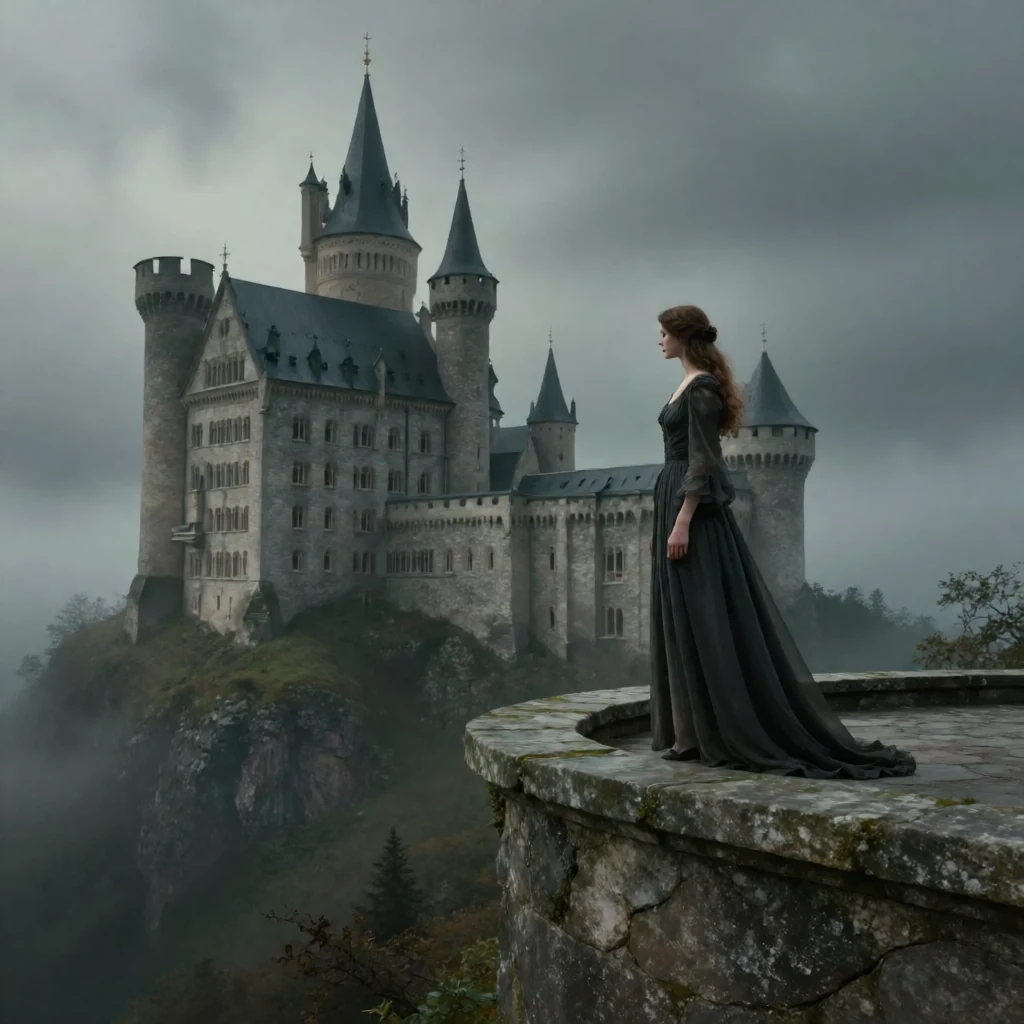
Lady Blanche leaves the parlour to explore the château, passing through a wide gallery lined with marble pilasters and topped by a mosaic arched roof, where she glimpses purple evening clouds and a dim, grey twilight landscape stretching to the horizon. The gallery opens into a grand but decaying or unfinished saloon with numerous large, low windows offering an extensive prospect; Blanche surveys the shadowy scene, listens to distant sounds including a watch-dog’s bark, rustling shrubs, a cottage light, and a far-off convent bell, before the saloon’s gloom prompts her to seek a dark passage leading to a new, Moorish-style hall with white marble pillars and an open portico.
An Evening Landscape
From the saloon’s windows, Blanche initially views the evening landscape: a vast, blended scene of woods, valleys, and horizon veiled in solemn grey twilight, which her imagination fills with imagined woods, mountains, valleys, and rivers, enhanced by the faint evening sounds surrounding her.
The Moonlit Prospect
Standing on the portico steps of the new Moorish hall, Blanche watches the moon rise over the sea, gradually disclosing the château’s eminence: a rough, overgrown lawn slopes to surrounding woods that sweep down the southern promontory to the ocean, with the Languedoc plains visible to the north and a moonlit monastery rising over dark groves to the east. The soft, shadowy light, undulating waves, and low surf elevate Blanche’s spirits to enthusiastic delight.
Blanche’s Enthusiastic Soliloquy
Moved by the moonlit landscape, Blanche delivers an enthusiastic soliloquy lamenting that she has lived eighteen years without witnessing such natural beauty, contrasting her cloistered, restricted upbringing in Paris with the freedom of peasant girls who experience nature from infancy. She declares she will watch the sunrise the next day for the first time in her life, and rejects the idea of living in a city to gaze on dirty streets when she could enjoy the blue heavens and green earth of the country.
A Rustling in the Hall
Blanche’s soliloquy is interrupted by a rustling noise in the hall; sensing movement between the pillars in the lonely space, she initially feels fear but overcomes her apprehension to call out and ask who is there.
Dorothée the Housekeeper
The rustling is revealed to be Dorothée, the elderly housekeeper, who had come to shut the windows and was startled by the dark. She expresses relief that the Count has moved into the long-deserted château, which has been lonely since the Marchioness’s death many years prior, and offers to guide Blanche to the inhabited wing of the building.
Return to the Inhabited Wing
Blanche asks Dorothée about the age of the newer wing of the château, learning it was built soon after the Count’s marriage, then requests to be shown to the inhabited part. As the passages are entirely dark, Dorothée leads her along the edge of the lawn to the opposite side of the edifice, where they enter the great hall.
Mademoiselle Bearn’s Wit
Upon entering the great hall, Blanche is greeted by Mademoiselle Bearn, who teases her for being gone so long, joking that a giant or ghost of the enchanted castle must have carried her off to a subterranean vault. Blanche playfully retorts that Bearn is so fond of adventures she should seek them out herself, and Bearn replies she would, if allowed to describe them afterward. The Count then arrives and quips that modern ghosts are too civilized to silence a lady’s storytelling.
Supper with the Count
The group sits down for supper, during which the Count is quiet, frequently distracted, and remarks that the château is greatly changed since he last saw it many years prior.
The Count’s Reflections on Time
When Blanche remarks the landscape seems lovelier than ever, the Count explains that the landscape itself is unchanged, but time has altered his perception, fading the illusion that once gave nature its vibrant spirit. He tells Blanche that if she revisits the spot in many years, she will understand his current feelings, which moves Blanche to tears as she realizes her father will likely be gone by then; the Count smiles affectionately and moves to a window to hide his own emotion.
The original text of this work is in the public domain. This page focuses on a guided summary article, reading notes, selected quotes, and visual learning materials for educational purposes.