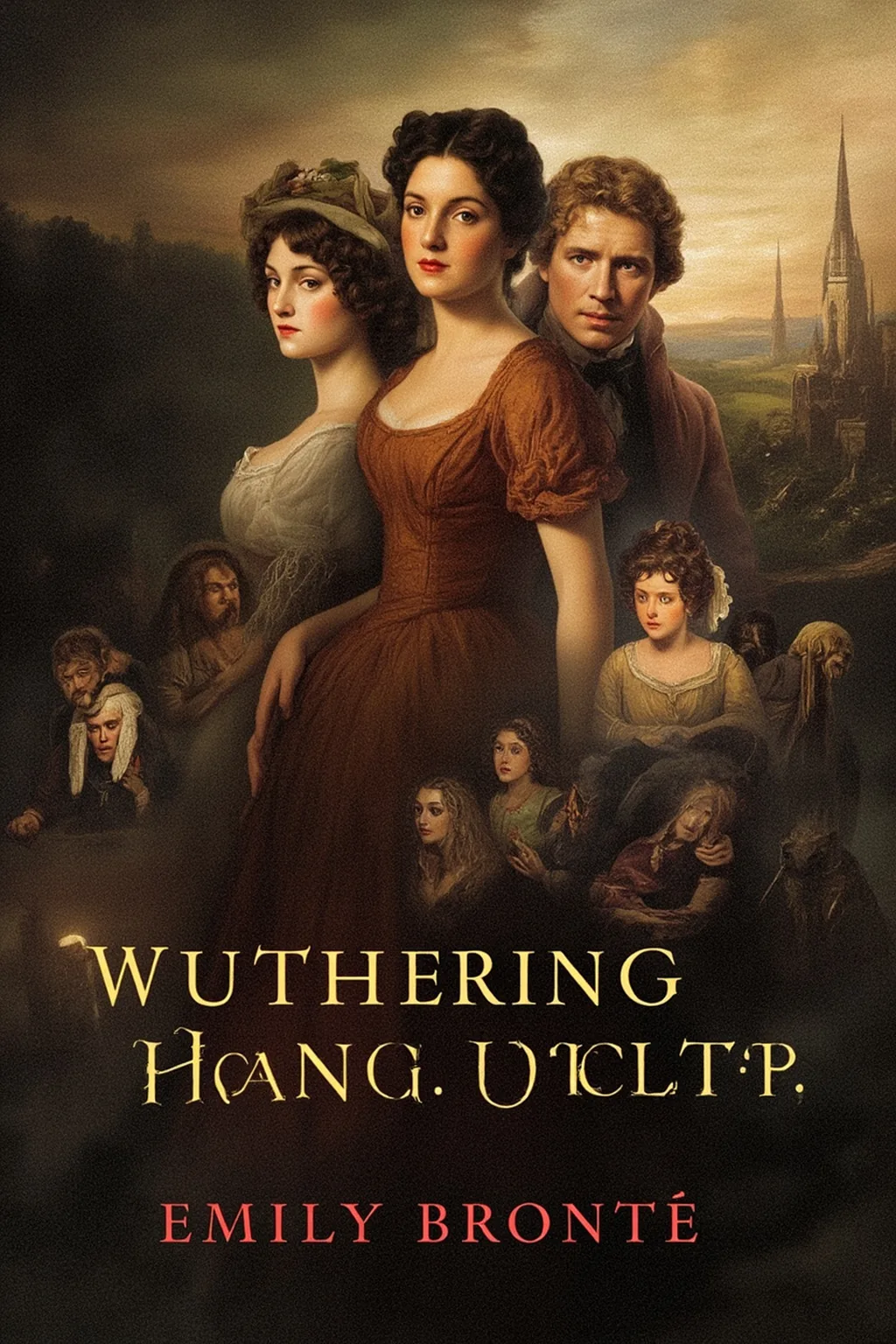
Captivity, Death, and Obsession
The narrative intensifies as Nelly Dean emerges from her detention at Wuthering Heights to find the Linton household in crisis. Edgar Linton lies dying, his life ebbing away after Catherine has been forcibly removed from the Grange by Heathcliff’s machinations. Nelly’s frantic return reveals Edgar in a state of peaceful resignation, his final wish to see his daughter fulfilled before his soul departs. His death, described with quiet reverence, occurs without struggle—a blissful transition marked by his conviction that he will soon reunite with Catherine in a better world. Heathcliff, however, refuses to release Catherine until the legal documents transferring Thrushcross Grange to his control have been completed. Only when Edgar’s death is confirmed and the paperwork finalized does Heathcliff allow Catherine to return to find her father buried and her inheritance stolen. The cruel irony of her situation—trapped in the very house her mother once ruled, married to her dying cousin to seal Heathcliff’s victory—completes the tragedy that began generations earlier.
A Prisoner’s Despair
Nelly Dean’s narrative shifts to a grim account of Catherine Linton’s captivity at Wuthering Heights, delivered through the biased testimony of Zillah, the housekeeper. Since Linton’s death, Catherine has been effectively imprisoned—no visitors allowed, no medical care for her dying cousin, no human kindness offered by her captors. Joseph and Heathcliff enforce a rigid isolation, while Zillah, though privately sympathetic, prioritizes her own security over any moral obligation. The account reveals the systematic cruelty of Heathcliff’s revenge, which has extended to the second generation with devastating effectiveness. Catherine, like her mother before her, finds herself trapped by circumstances beyond her control, her spirit slowly crushed by confinement and emotional deprivation.
Reconciliation and Renewal at Wuthering Heights
In September 1802, an impulse leads Lockwood back to the Yorkshire moors, where he finds Thrushcross Grange in disarray. The new housekeeper informs him that his tenant Nelly Dean has relocated to Wuthering Heights, and to his shock, reveals that Heathcliff died three months prior. When Lockwood visits the Heights to settle business, Nelly shares the remarkable story of reconciliation she has witnessed since his departure. Nelly’s account describes a transformation at Wuthering Heights that defies the novel’s earlier patterns of cruelty and revenge. Catherine and Hareton, despite their complicated circumstances and Catherine’s formal captivity, have begun to form a genuine connection that mirrors the original bond between Catherine Earnshaw and Heathcliff—though one with hope for a kinder ending.
The Garden Rebellion and Its Consequences
Chapter XXXIII of Wuthering Heights marks a pivotal turn in the novel’s emotional landscape, shifting focus from the older generation’s bitter legacies to the transformative potential of the younger characters. The chapter opens with Catherine Earnshaw and Hareton Earnshaw forming a clandestine alliance that immediately alarms Nelly Dean. Within a single morning, the two cousins demolish Joseph’s cherished currant and gooseberry bushes to create space for flowers—a small act of rebellion against the household’s gloom that represents much more. Catherine begins teaching Hareton to read, replacing his ignorance and degradation with education and hope. Their gradual mutual respect develops into genuine affection, offering a counterpoint to the destructive passion that defined the older generation’s relationships.
Heathcliff’s Desperate Vigil and Final Rest
Chapter XXXIV depicts Heathcliff’s final days and death, charting his transformation from isolated figure to one consumed by an ecstatic, otherworldly anticipation. Nelly observes him avoiding family meals while sustaining himself on minimal sustenance, and his solitary nighttime wanderings produce a striking alteration in his demeanor—pale, trembling, yet radiating an unnatural joy that unsettles her deeply. When she questions him about his peculiar contentment, he cryptically declares he stood recently on “the threshold of hell” but now gazes toward paradise. His obsession with Catherine’s spirit has intensified rather than diminished with time, and in his final days, he speaks of seeing her ghost walking the moors, waiting for him. Heathcliff dies on a stormy night, his face bearing an expression of triumph rather than fear. The servants find him dead with a strange smile on his face, his eyes fixed on some vision that only he can perceive.
The novel concludes with Lockwood visiting Catherine Earnshaw’s grave in the churchyard, where he observes a strange phenomenon: the这块石头 three sides face the moors, and the swallows nest in the pine trees beside it, while the heather blooms on the mound. Lockwood imagines the spirits of Heathcliff and Catherine wandering together across the moors, their love transcending death itself—“not in the churchyard, but on the moors.” This haunting final image transforms the novel’s tragedy into something approaching transcendence, suggesting that some loves, no matter how destructive or forbidden, achieve a permanence that defies mortality. The moorland becomes their eternal home, unbound by the constraints of social class or the judgments of the living world above.
The original text of this work is in the public domain. This page offers a compressed quick-read summary for educational purposes.