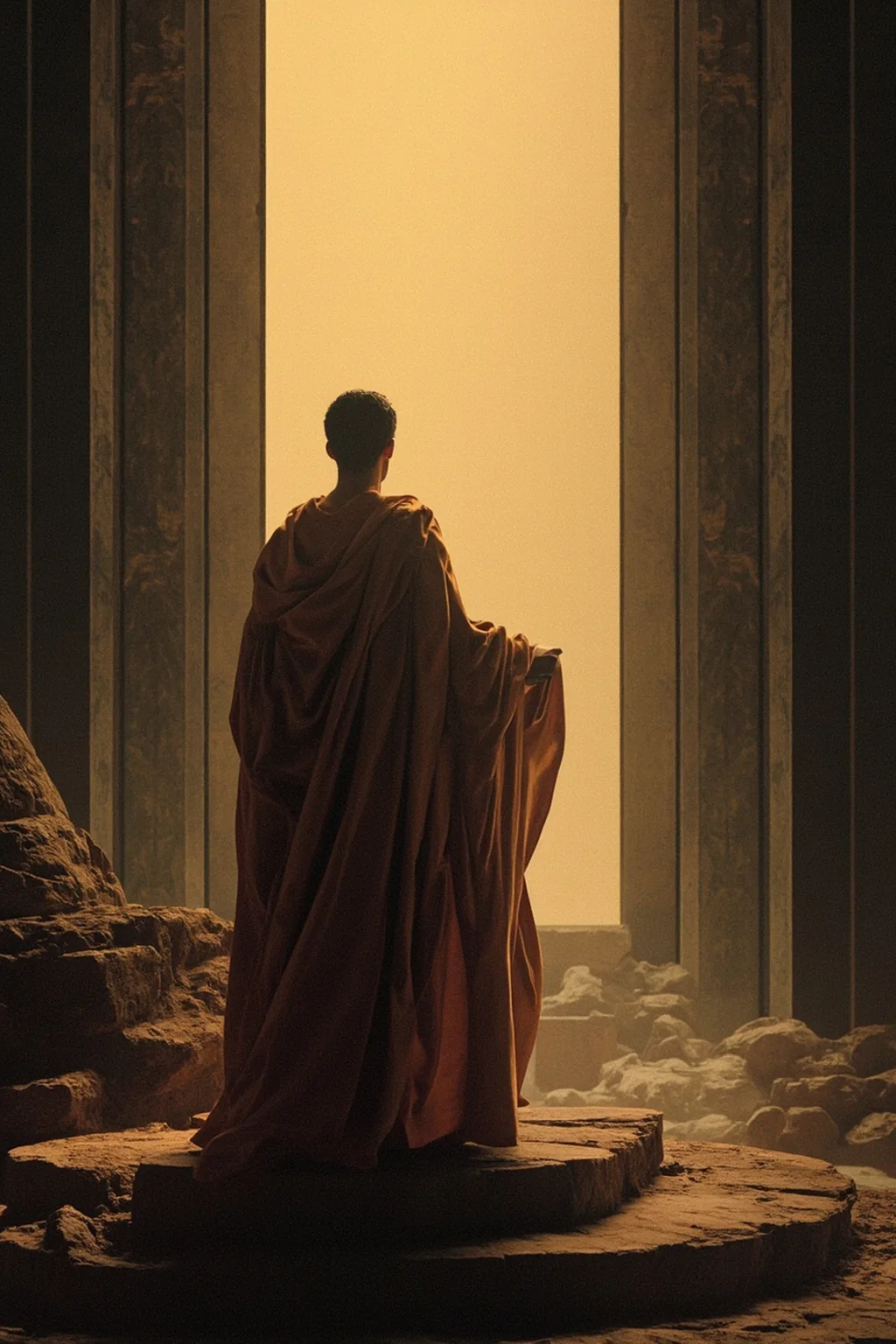
Les notes et le glossaire qui accompagnent les sections préliminaires des Méditations de Marc Aurèle fournissent un contexte essentiel au catalogue inaugural de leçons morales formatrices de l’empereur, en décrivant la structure du Premier Livre, qui se compose de quatorze réflexions numérotées dans lesquelles Marc désigne nommément des parents, des tuteurs et des guides philosophiques spécifiques. Chaque entrée isole les vertus, les habitudes et les aperçus distincts qu’il a absorbés de ces individus, la réflexion finale reconnaissant les dons qu’il a reçus de ses ancêtres et du cosmos divin lui-même. Ce matériel préliminaire établit la prémisse fondamentale que la philosophie n’est pas simplement une discipline abstraite, mais une pratique vivante transmise par les relations personnelles, le mentorat et la sagesse accumulée des générations.
Le registre des dettes morales : le Premier Livre
Dans le livre d’ouverture de ses Méditations, Marc Aurèle construit un inventaire systématique des dettes morales qu’il a envers les personnes qui l’ont façonné. Plutôt que de théoriser de manière abstraite sur la vertu, l’empereur ancre sa philosophie dans la gratitude, en nommant des individus spécifiques et en isolant les leçons particulières que chacun a dispensées. Le résultat est à la fois un mémoire de formation du caractère et un guide pratique du développement moral, démontrant que la vertu se transmet non seulement par les livres, mais par l’exemple vécu et l’instruction intime. Les dernières réflexions numérotées de ce Premier Livre exposent des principes stoïciens pratiques fondamentaux pour naviguer les interactions quotidiennes, comprendre la composition du soi, et aligner l’action humaine avec la structure rationnelle du cosmos. Marc catalogue la tempérance qu’il a apprise d’un tuteur, la liberté face à la superstition enseignée par un autre, la patience philosophique instillée par un autre encore, construisant une image complète de l’éducation morale comme une mosaïque d’influences diverses convergeant vers une vision éthique unifiée.
Le deuxième livre : Les fondations à Carnuntum
Rédigé pendant le séjour de Marc Aurèle à Carnuntum, ce deuxième recueil de ses Méditations s’articule autour de principes stoïciens fondamentaux destinés à cultiver la vertu intérieure, à s’aligner sur l’ordre divin cosmique et à rejeter les distractions qui érodent la maîtrise morale de soi. L’empereur ouvre par un vif reproche qu’il s’adresse pour avoir tardé à comprendre sa place dans l’univers, observant que chaque être humain se voit attribuer une durée de vie finie et prédéterminée qui s’écoulera sans effort délibéré pour apaiser le tumulte de l’âme et accomplir sa purpose. Il expose les pratiques modestes et accessibles qui ancrent la discipline stoïcienne : l’importance de se lever avec intention, la nécessité d’examiner ses pensées avant d’agir, et la reconnaissance que les événements extérieurs ne nous troublent que par les jugements que nous y attachons. Le livre progresse steadily de la correction personnelle vers le principe universel, soutenant que la véritable paix ne vient pas de la maîtrise du monde, mais de celle de la réponse de l’esprit à celui-ci.
Le troisième livre : L’urgence et la beauté naturelle
Le troisième livre s’ouvre sur un rappel sévère : la vie recule jour après jour, et rien ne garantit que les facultés intellectuelles demeurent assez vives pour exercer un jugement sain, poursuivre la vérité ou agir avec justice à mesure que l’on vieillit. Même si les fonctions corporelles telles que la respiration, l’appétit et la vitalité physique restent intactes, la capacité de raisonner clairement, de corriger ses erreurs et de faire des choix délibérés et vertueux s’estompera. Ainsi, la cultivation d’une vie bonne n’est pas seulement une question de saisir l’instant, mais de construire des habitudes qui soutiendront la vertu à travers le déclin inévitable. Marc se tourne vers la beauté du monde naturel comme maître d’une proportion juste, exhortant le lecteur à observer comment la nature accomplit ses fins avec économie, grâce et indifférence à l’opinion humaine. La souveraineté intérieure émerge comme le thème central : la reconnaissance que, bien que nous ne puissions pas contrôler ce qui nous arrive, nous conservons une autorité absolue sur le caractère de nos réponses, et cette autorité constitue la seule vraie liberté accessible aux êtres humains.
The original text of this work is in the public domain. This page offers a compressed quick-read summary for educational purposes.