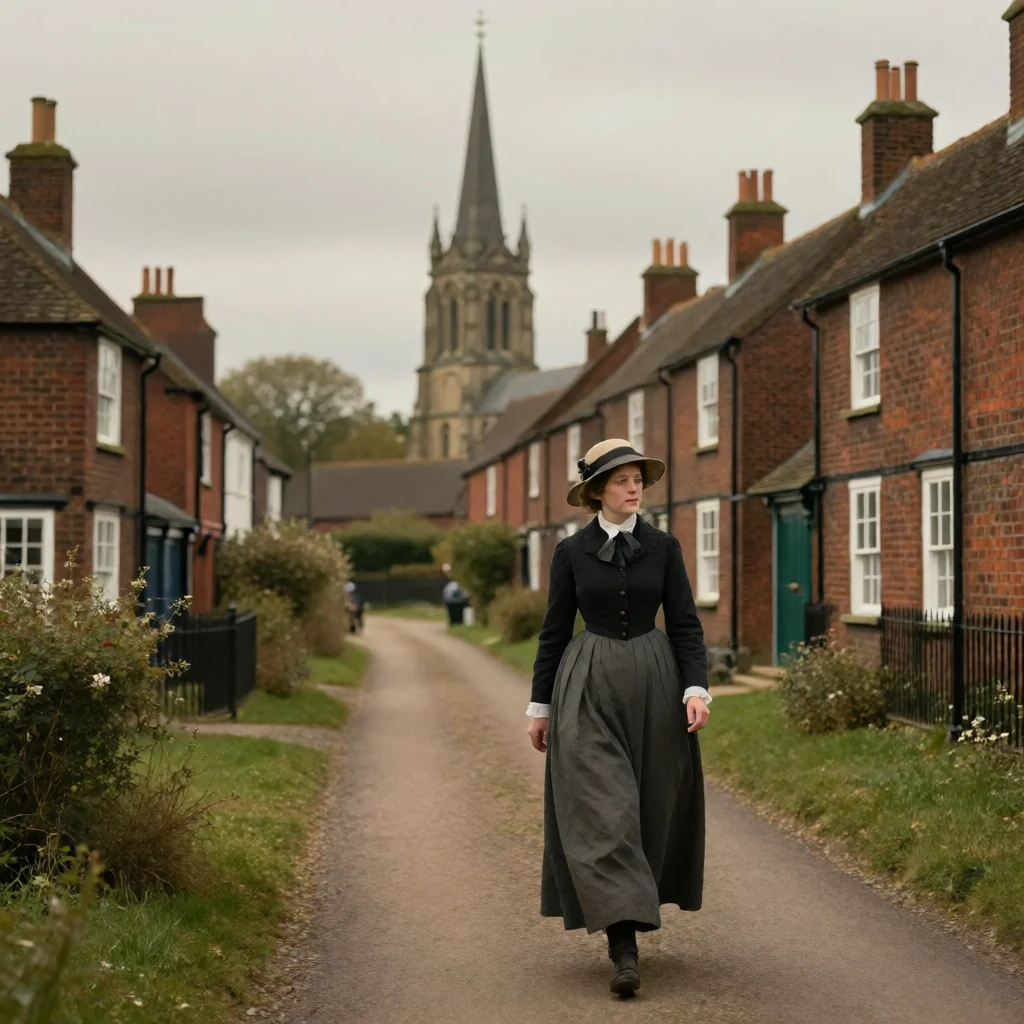
An Evening at Freshitt Hall
Dorothea visits Freshitt Hall to fulfill a promise to stay overnight and observe baby Arthur’s bath. The setting describes the warm evening in the delightful drawing-room with its fine old turf, lilied pool, and planted mounds. Lady Chettam and Mrs. Cadwallader join for dinner, while the Rector is away on a fishing excursion. Celia, dressed in white muslin, reflects on how uncomfortable Dorothea must be in her black widow’s dress and close cap.
Celia Removes the Widow’s Cap
Celia takes it upon herself to free her sister from the constraints of full mourning dress. She insists that Dorothea remove her widow’s cap, arguing that the dress alone is sufficient mourning and the cap makes everyone uncomfortable. Celia unfastens the cap and releases Dorothea’s dark-brown hair, a moment that Sir James observes with evident satisfaction when he enters the room. This small act of liberation marks a significant symbolic shift in Dorothea’s presentation.
A Debate on Second Marriages
The conversation turns to the delicate subject of second marriages for widows. Lady Chettam argues that proper mourning requires wearing a widow’s cap for at least a year. Mrs. Cadwallader, in a mischievous mood, provokes the older ladies by suggesting that a good second husband might be preferable to an indifferent first, and that marriage to “blood, beauty, and bravery” would be desirable. She references historical examples like Mrs. Beevor, whose second marriage to Captain Beevor allegedly resulted in mistreatment. Sir James expresses disgust at the topic and attempts to change the subject.
Dorothea’s Resolve to Remain Unmarried
Dorothea takes the opportunity to make her position on remarriage absolutely clear. She states that no question could be more indifferent to her than second marriage, comparing it to discussing women fox-hunting. She firmly declares her intention never to marry again, regardless of what excellent matches might be recommended. When Celia probes whether even a “very wonderful” suitor might change her mind, Dorothea firmly shakes her head and affirms she has other plans for her life, touching her sister’s chin with indulgent affection.
Plans for a Land Colony
Rather than seeking remarriage, Dorothea reveals her ambitious vision for the future. She expresses her desire to take on a great deal of land, drain it, and establish a working colony where everyone contributes and all work is done well. She intends to know every person in her community personally and be their friend. She plans to consult extensively with Mr. Garth, whose practical knowledge can help her realize these agricultural and social objectives. Celia expresses hope that this purpose will bring Dorothea happiness, noting that her little son Arthur might someday help with her plans.
Sir James’s Private Satisfaction
That evening, Sir James learns of Dorothea’s firm resolution against remarriage and her intention to pursue “all sorts of plans” instead. To his secret satisfaction, Sir James finds something repulsive in the concept of a woman’s second marriage, viewing it as a form of desecration, particularly for Dorothea. While aware that society typically treats a young widow’s remarriage as expected and near, he recognizes that Dorothea’s choice to embrace solitude would be entirely fitting for her character.
CHAPITRE LVI.
Chapter LVI opens with a quote from Sir Henry Wotton celebrating personal independence and self-sufficiency, then introduces its core narrative threads: Dorothea Casaubon’s growing trust in Caleb Garth, the arrival of a planned railway line disrupting Lowick parish, local landowner and resident resistance to the railway, Solomon Featherstone’s efforts to stoke anti-railway sentiment, and Fred Vincy’s professional and personal struggles that intersect with these unfolding events.
Dorothea’s Confidence in Caleb Garth
Dorothea’s confidence in Caleb Garth’s practical judgment, first sparked when he approved of her cottage-building plans, grew significantly during her stay at Freshitt, where she toured the local estates with Sir James and Caleb. Caleb praised Dorothea highly to his wife, highlighting her rare business acumen for a woman, and quoted her words about wanting to improve land and build cottages as meaningful, healthy work that benefits communities long after completion.
The original text of this work is in the public domain. This page focuses on a guided summary article, reading notes, selected quotes, and visual learning materials for educational purposes.