Caleb’s Love of Music
Caleb Garth was a passionate lover of music, attending oratorios whenever he could afford tickets, and returning from performances with deep reverence for the art form. He compared Dorothea’s clear, musical speaking voice to passages from Handel’s Messiah, noting it satisfied his ear and evoked unspoken, profound emotional resonance.
Dorothea Employs Caleb Garth
With mutual trust established, Dorothea hired Caleb Garth to manage all business related to Lowick Manor’s three farms and attached tenements. Caleb observed that “business breeds,” and the planned construction of a new railway through the parish was one emerging business opportunity that would soon draw him into conflict with local resistance.
The Coming of the Railways
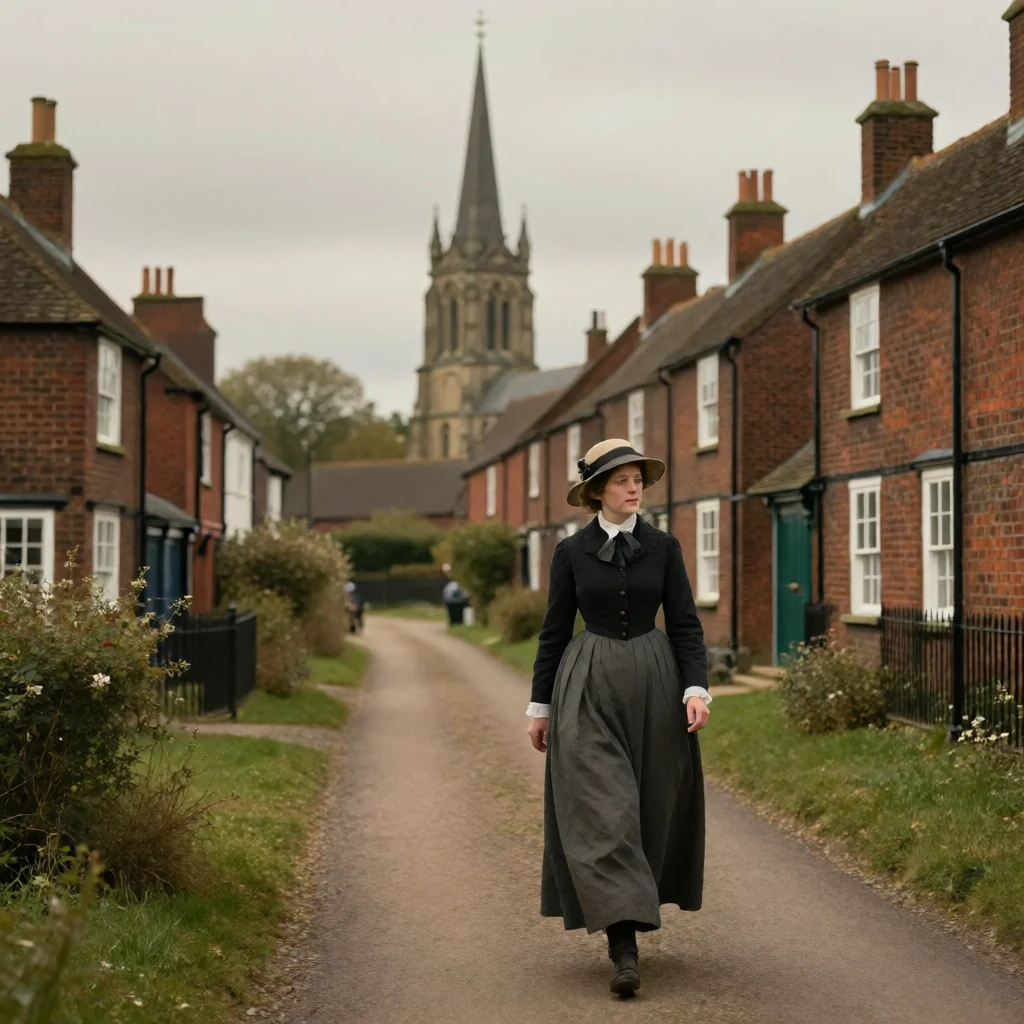
A projected railway line was set to run through Lowick parish, an area where cattle had previously grazed undisturbed. The railway’s arrival marked the start of major disruption to local life, and would directly shape the fates of two people close to Caleb Garth. Unlike undersea railways, which only faced technical challenges, the Middlemarch-area railway faced fierce disputes with landed proprietors, and was as hotly debated locally as the Reform Bill and ongoing cholera outbreaks.
Landowners’ Resistance to the Railways
Local women and landholders were the most vocal opponents of the new railway. Women of all ages viewed rail travel as presumptuous and dangerous, vowing never to ride in a railway carriage. Landowners, despite differing in their specific arguments against the project, were united in demanding very high compensation from railway companies for the right to damage their land and disrupt local life, regardless of whether the land was sold to a private party or a corporate entity.
Solomon Featherstone and Mrs. Waule
Slower-witted local landowners Solomon Featherstone and Mrs. Waule struggled to grasp the full financial and practical implications of the railway, fixating instead on the immediate disruption of dividing the Big Pasture into awkward, unusable triangular plots. They dismissed compensation promises as remote and unrealistic: Mrs. Waule lamented that the railway would harm her livestock and steal her widow’s property with no legal recourse, while Solomon argued against letting railway agents onto their land and doubted companies would ever pay fair compensation for the damage they caused.
Public Opinion in Frick
Public opinion in the small industrial hamlet of Frick, home to laborers, a water mill, and stone pits, was uniformly opposed to the railway. Residents had no positive associations with the unknown technology and assumed it would harm working people. Unlike the excitement around the Reform Bill, the railway offered no obvious, tangible benefits to Frick’s residents, who were generally well-fed but deeply suspicious of authority and outside forces, viewing even promises of reform as likely to be empty or harmful.
Solomon Sows Discord
Solomon Featherstone, who served as local road overseer, exploited Frick residents’ existing suspicion of outsiders to stoke anger against the railway. On his slow rounds through the hamlet, he casually chatted with laborers, hinting that railway agents were cutting up local land for no good reason, referencing rumors of violent resistance to railway surveyors in Brassing, and claiming the railway would ultimately destroy small farms and replace local labor with big commercial operations. His manipulative rumors spread quickly through Frick, discussed widely in the local pub and hay fields across the rural area.
Caleb Garth at Work
One gray, post-rain morning, Caleb Garth traveled to Yoddrell’s farm near Frick to measure and value an outlying piece of Lowick Manor land he hoped to sell to the railway company for the best possible terms for Dorothea. He was accompanied by his assistant and measuring equipment, and encountered the railway company’s surveyors working on the site before continuing to his measurement task.
Fred Vincy’s Career Dilemma
Fred Vincy was riding through the Frick area the same morning, distressed by his professional uncertainty. His father expected him to enter the Church, but his love interest Mary Garth had threatened to leave him if he did, and he had no clear, viable secular career path that was gentlemanly, well-paying, and didn’t require specialized skills he lacked. He was delaying his ride to consider visiting Mary at Lowick Parsonage when he heard a disturbance nearby.
The original text of this work is in the public domain. This page focuses on a guided summary article, reading notes, selected quotes, and visual learning materials for educational purposes.