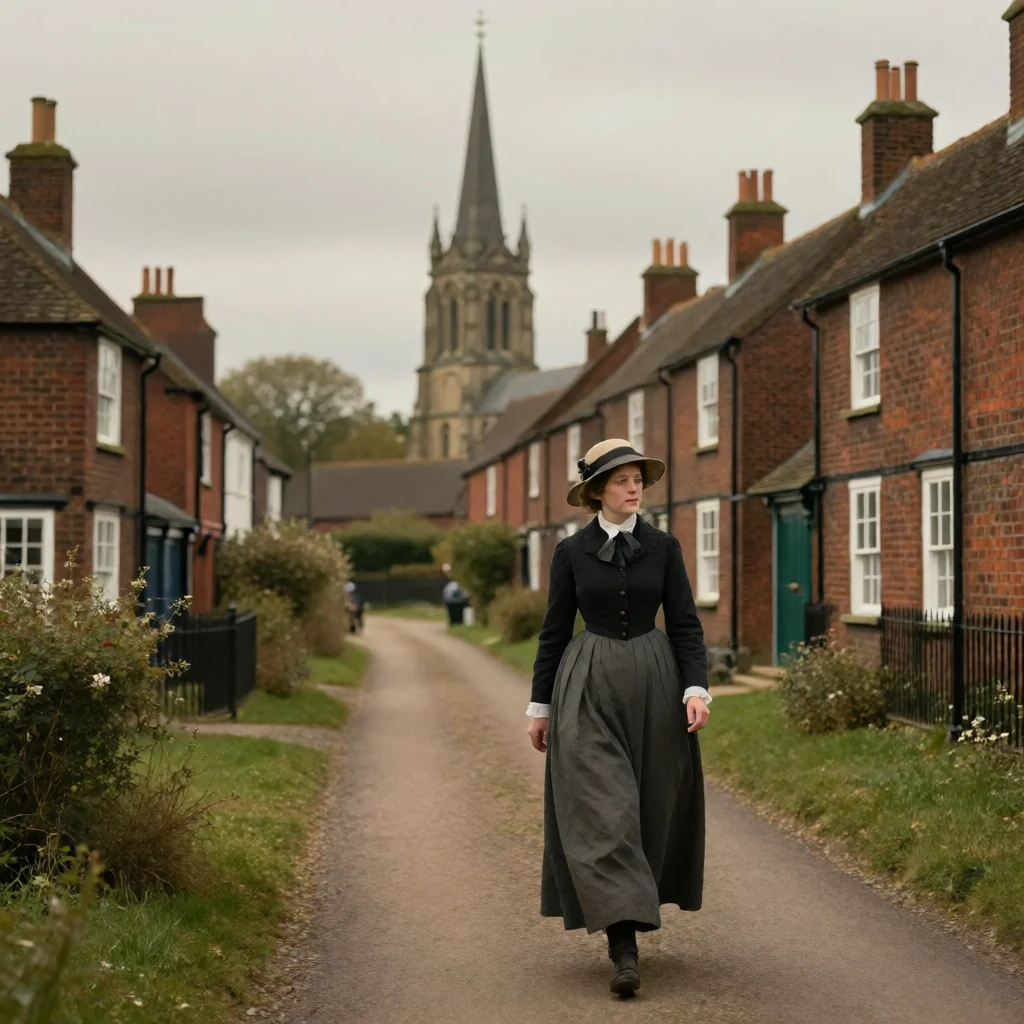
Will Ladislaw’s Instant Fascination
Will, who had been mired in boredom and daydreaming of a Homeric sheep-stealing epic, starts up as if from an electric shock at Dorothea’s entrance. The narrator compares the effect to the magic of a violin bow or morning light: every molecule of his body responds, his complexion shifts, and his mood transforms. Dorothea, however, sits down preoccupied and barely acknowledges him, leaving Will ridiculously disappointed.
A Passionate Appeal for the Tenants
Seizing Sir James’s information about estate reforms, Dorothea clasps her hands in childlike delight at the prospect of improved cottages and the engagement of Mr. Garth. She urges her uncle to act, vividly describing the misery of laborers such as Kit Downes and the Dagleys, and arguing that it is hypocritical to display fine art at home while ignoring the poverty beyond one’s walls.
Mr. Brooke’s Flustered Response
Mr. Brooke’s masculine consciousness is left stammering under his niece’s eloquence. He rises, adjusts his eye-glass, and fumbles among his papers before producing only vague concessions and Latin tags about art refining manners, calling her views “a little one-sided.” The interruption of a footman reporting that Dagley’s boy has been caught with a freshly killed leveret gives him a welcome escape.
A Private Conversation
Left briefly alone with Will, Dorothea immediately reasserts her hope for the estate changes. Will, with growing impatience, seizes the chance to tell her something more pressing—that Mr. Casaubon has forbidden him to call at the house. Dorothea is deeply struck, mournfully sorry, and they stand on either side of the open window, her hand resting on Monk’s head, as Will explains his refusal to give way on questions of family dignity and position.
Casaubon’s Decree of Banishment
Dorothea privately thinks her husband altogether wrong. Declining to discuss the matter further, she reminds Will that he intends to remain at the Grange, and he laments that he will hardly ever see her now. Their exchange mingles his boyish complaint and her melancholy acknowledgment that her life at Lowick is, as he calls it, “a dreadful imprisonment,” though she insists she has no longings for herself.
Widening the Skirts of Light
Dorothea shares with Will the personal belief that sustains her: that by desiring what is perfectly good, even when one cannot fully act on it, one becomes part of the divine power against evil—“widening the skirts of light and making the struggle with darkness narrower.” She asks him not to name it, fearing he will call it Persian or something merely geographical; it is, she says, her life and her religion.
Shared Confidences on Religion
The conversation turns to Will’s own faith. He answers that his religion is to love what is good and beautiful when he sees it, though he styles himself a rebel who refuses to submit to what he dislikes. Dorothea gently points out that this comes to the same thing, and they smile at one another like two fond children sharing confidences before Dorothea leaves to find her uncle and continue on to the Hall.
The Carriage Ride to Dagley’s
Mr. Brooke offers to ride partway with Dorothea, intending to stop at Dagley’s about the boy caught with the leveret. In the carriage, Dorothea renews the subject of estate reform, but Mr. Brooke, having recovered from his surprise, steers the talk to his own grievances, defending his preservation of game against Chettam’s criticism and digressing toward the broader subject of poaching.
The Poaching Methodist Preacher
To illustrate, Brooke recounts the recent case of Flavell, the Methodist preacher, who was brought up for knocking down a hare that crossed his path while walking with his wife. Brooke half-sympathetically notes that Flavell pleaded divine provision, and that he himself hushed the matter up, though he suspects Sir James would have been more severe. He arrives at Dagley’s gate still rankled by the fault-finding of the Trumpet and Sir James.
The Squalor of Freeman’s End
Alone in the carriage, Dorothea continues toward the Hall, while the narrative lingers at Freeman’s End, Dagley’s homestead. The narrator lingers on its picturesque decay—the ivy-choked chimneys, worm-eaten shutters laced with jasmine, hollyhocks above the mouldering wall, an aged goat, ragged laborers, and thin livestock—objects that would charm an artistic eye but that now strike Mr. Brooke only as evidence of his own failings.
The original text of this work is in the public domain. This page focuses on a guided summary article, reading notes, selected quotes, and visual learning materials for educational purposes.