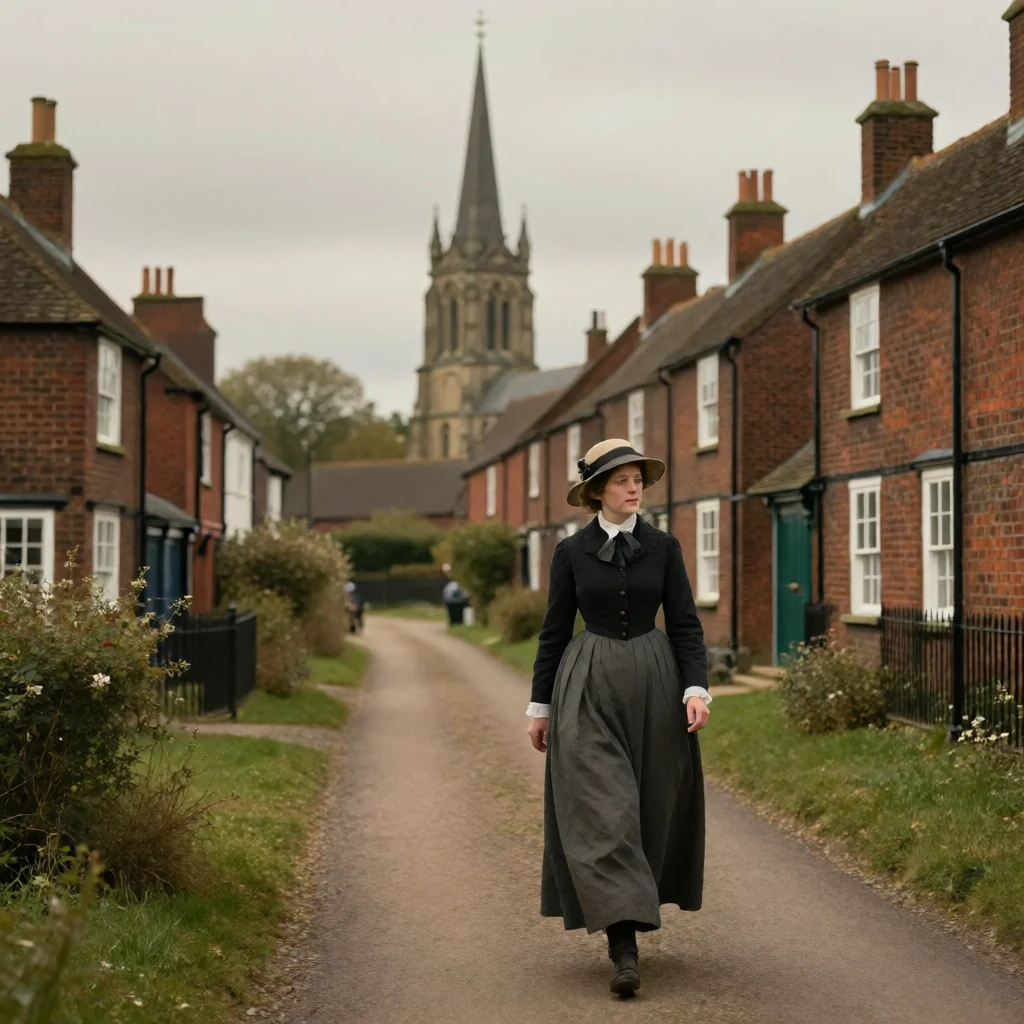
CHAPITRE XLIV.
Chapter XLIV, which opens with an epigraph, follows Dorothea Brooke’s interactions with Dr. Tertius Lydgate regarding the New Hospital in Middlemarch, and the resulting tension between Dorothea and her husband Mr. Casaubon.
Epigraph
The chapter opens with an epigraph of two lines of verse: “I would not creep along the coast but steer / Out in mid-sea, by guidance of the stars.”
Dorothea and Lydgate at the New Hospital
While walking the laurel-planted grounds of the New Hospital with Lydgate, Dorothea learns there are no changes to Mr. Casaubon’s physical condition beyond increased anxiety about his illness. Lydgate uses the opportunity to advocate for the hospital, a project funded and spearheaded by Mr. Bulstrode, explaining that he has been appointed to lead its medical direction, drawing fierce opposition from nearly all of Middlemarch’s established medical professionals, who refuse to cooperate with the initiative and work to discredit it and block outside subscriptions. Lydgate frames his work at the hospital as a chance to advance better, more accessible medical practice for the public good, with no personal financial incentive attached to the role.
Opposition to Bulstrode’s Hospital
Lydgate details the roots of the opposition to Bulstrode’s hospital: Bulstrode is deeply unpopular with most of Middlemarch’s residents, many of whom would go out of their way to thwart his initiatives out of prejudice against his overt religious demeanor, domineering personality, unsociable nature, and ties to the trade world. Lydgate also notes that much of the local community dismisses any public initiative not led by their own social circle, and that established local medical practitioners resent Lydgate as a young, new arrival with more advanced medical training, fueling their determination to undermine the hospital project.
Dorothea’s Subscription Offer
Dorothea reacts with indignation to the pettiness of the opposition, and immediately offers to support the hospital financially, explaining she has unused personal funds from her seven hundred pounds a year settled fortune and can contribute two hundred pounds annually to the project. She laments that so much public good work is undertaken with the benefit hard to see, before cheerfully promising to discuss the subscription with Mr. Casaubon and invite Lydgate to Lowick to share more details about the hospital’s needs.
Reporting to Mr. Casaubon
That evening, Dorothea tells Mr. Casaubon about her meeting with Lydgate and her plan to subscribe two hundred pounds a year to the New Hospital. Casaubon raises no strong objections, only vaguely suggesting the sum may be disproportionate relative to other charitable causes, but acquiesces when Dorothea pushes back, as he has no personal investment in restricting charitable spending and is not reluctant to give away money.
Casaubon’s Distrust
Though he does not question Dorothea’s account of her conversation with Lydgate, Mr. Casaubon is convinced Dorothea withheld details of what she discussed with Lydgate about him specifically. The unspoken, mutual awareness that each is hiding information from the other only deepens the rift of distrust between them, with Casaubon growing increasingly suspicious of Dorothea’s affection, leaving him in a profound state of loneliness.
CHAPITRE XLV.
CHAPTER XLV. This chapter explores the growing opposition to Lydgate’s medical reforms in Middlemarch, opening with an epigraph from Sir Thomas Browne about judging present times by past vice. It traces how hostility toward Lydgate’s New Fever Hospital and his refusal to dispense drugs spreads through various social strata, from Mrs. Dollop’s inflammatory accusations to dinner-party debates among the town’s medical elite, culminating in Lydgate’s reputation being rescued somewhat by fortunate successful cures despite the simmering professional resentment.
Browne on Judging Present Times by Past Vice
The chapter opens with an epigraph from Sir Thomas Browne’s Pseudodoxia Epidemica, observing that it is common for people to condemn the vices of their own times by comparing them to the openly expressed vices of the past, which actually demonstrates a community of vice across eras. The quotation notes that satirists like Horace, Juvenal, and Persius, while seeming to point at contemporary failings, were not truly prophets.
The original text of this work is in the public domain. This page focuses on a guided summary article, reading notes, selected quotes, and visual learning materials for educational purposes.