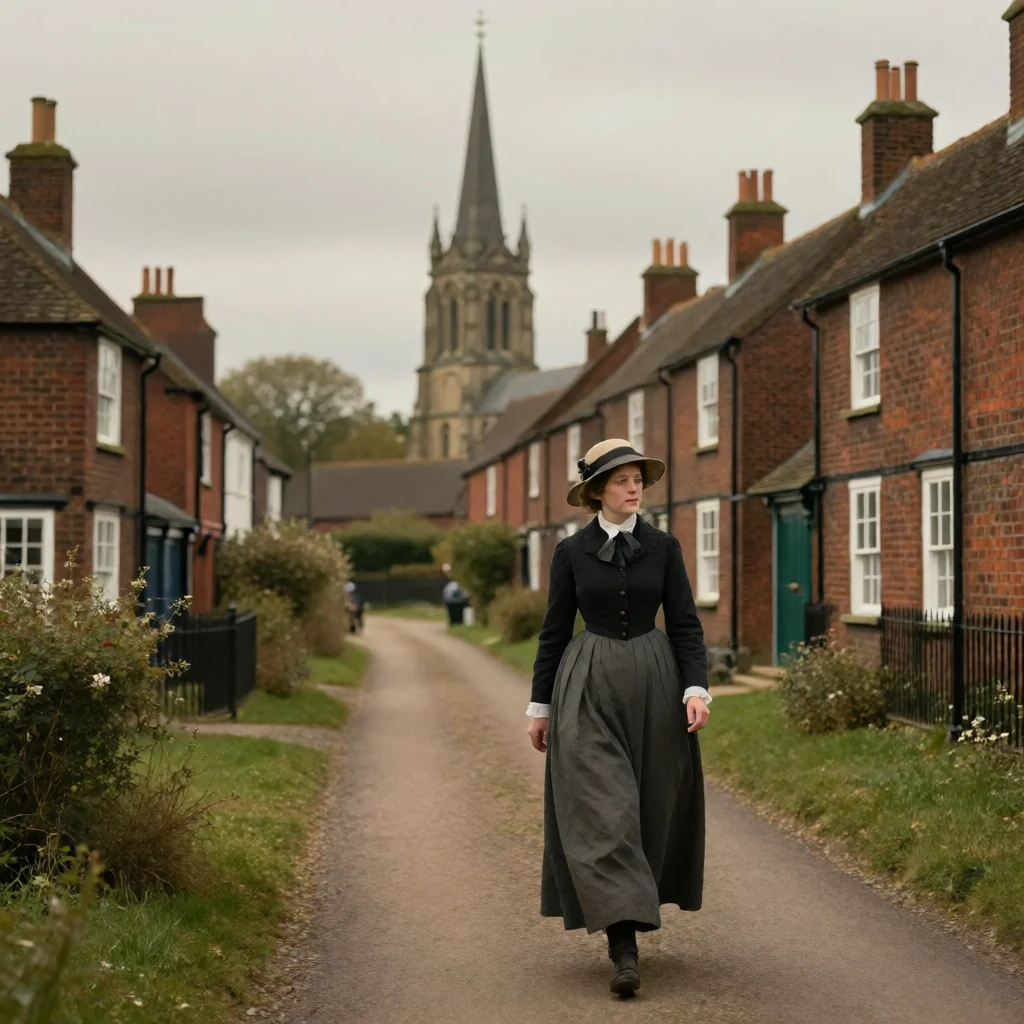
CHAPITRE L.
In a private conversation with Lydgate, Dorothea inquires why Mr. Farebrother has not accomplished more, prompting Lydgate to explain that the Vicar is hampered by his limited means, his wider scientific inclinations, and his habit of playing whist for money, which draws him into company somewhat beneath him—though Lydgate still regards him as one of the most blameless and unvenomous men he knows. Their talk then turns to the contrast between Farebrother and the more self-promising Mr. Tyke, with Dorothea confessing her preference for a Christianity that embraces the widest possible good, and Lydgate encouraging her to hear Farebrother preach, mentioning in passing that Ladislaw is a great friend of the Vicar’s elderly female relatives and once looked like a romantic-comedy figure strolling arm-in-arm with the quaint little Miss Noble. After Lydgate departs—unaware that the mere mention of Will Ladislaw carries any sting—Dorothea is left alone to wrestle with the image of Ladislaw and the troubling question of the Lowick living, her cheeks burning as she wonders what he is thinking of her and how he would feel upon hearing the news, even as she reassures herself that he is a man who enters into other people’s feelings rather than imposing his own with iron resistance.
Farebrother’s Character
Lydgate discusses Farebrother with Dorothea, explaining that the clergyman is hampered by the narrow scope of his profession, though he is passionate about natural history and science. Because of his limited means, Farebrother has taken to card-playing, particularly whist, winning money that leads him into company slightly beneath his station. Despite this flaw, Lydgate judges him one of the blameless men he has ever known, free of venom and doubleness, even if his exterior is less polished than others’.
Conscience and Environment
Dorothea wonders whether Farebrother suffers inwardly over his gambling habit, and Lydgate responds that he would readily give it up if he were placed in better circumstances where he had time for more worthwhile pursuits. The exchange highlights how environmental constraint and material need can shape, and trouble, even a well-disposed conscience.
The Apostolic Man
Dorothea recalls that her uncle, Mr. Brooke, speaks of Mr. Tyke as an apostolic man, while privately wishing she could restore the primitive zeal of earlier times. Lydgate counters that contemporary apostolic zeal too often amounts to an impatience with anything in which the clergyman is not the central figure, citing Mr. Tyke’s behavior at the Hospital. He quips that an apostolic man at Lowick would need to follow St. Francis in preaching even to the birds.
Christian Teaching
Dorothea reflects on the sermons she has been reading by Mr. Tyke, finding them unsuited to the farmers and laborers of Lowick, with their focus on imputed righteousness and apocalyptic prophecy. She articulates her preference for a Christianity that is the widest possible blessing, encompassing every kind of good and drawing in the most people, arguing it is better to pardon too much than to condemn too much.
Recommendation to Visit
Lydgate urges Dorothea to go and hear Farebrother preach, assuring her of the effect of meeting him in person. Though Farebrother is beloved, he has enemies among those who cannot forgive an able man for differing from them, and his money-winning remains a genuine blot on his reputation.
Ladislaw’s Portrait
Lydgate, seeking to further recommend the Farebrother household, mentions that Will Ladislaw, who frequently visits Mr. Brooke, is a great friend of the Vicar’s old ladies. He describes a charming scene in which Ladislaw, looking like a Daphnis in coat and waistcoat, gallantly escorts the quaint little Miss Noble through a back street, the pair seeming to have stepped out of a romantic comedy.
Dorothea’s Reflections
Alone in her private sitting-room, Dorothea is relieved that no one was present to make Lydgate’s casual mention of Ladislaw painful. Lydgate himself has forgotten Rosamond’s remark about Will adoring Mrs. Casaubon and is unaware that he has touched a sensitive subject. The image of Ladislaw lingering in her mind begins to displace her concerns about the Lowick living, and she wonders how he will react to the news that now makes her cheeks burn. Against the portrait of an Italian with white mice, she recalls instead a creature who enters into everyone’s feelings and absorbs their thoughts rather than pressing his own with iron resistance.
The original text of this work is in the public domain. This page focuses on a guided summary article, reading notes, selected quotes, and visual learning materials for educational purposes.