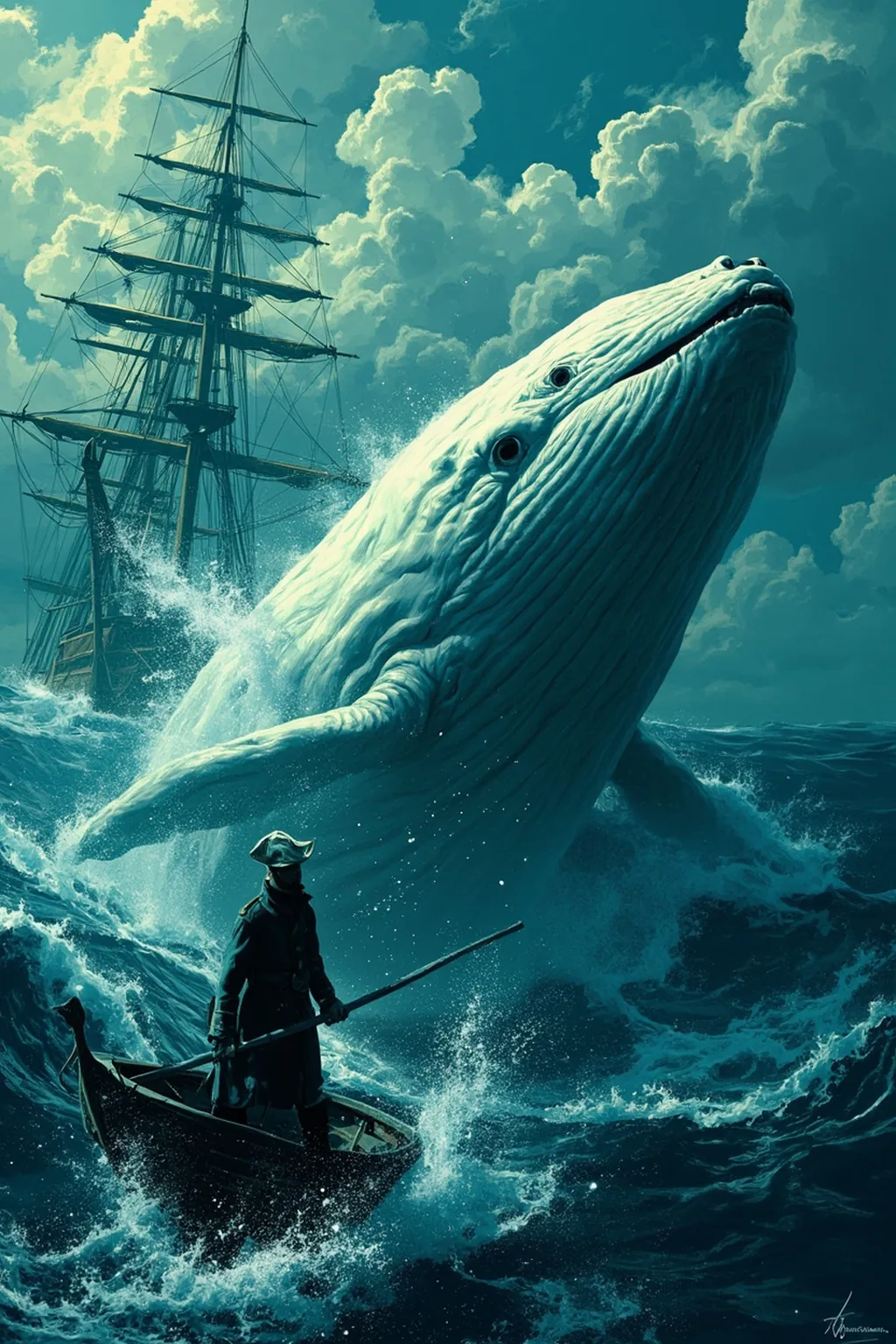
Bachelor’s Festive Decorations and Full Sperm Oil Hold
The Bachelor is decorated for her successful voyage: her three masthead crew members wear long red bunting streamers on their hats, a whaleboat hangs bottom-down from her stern, the jaw of her final slain whale hangs captive from her bowsprit, colored signals and flags fly from every part of her rigging, barrels of sperm oil are stowed in her three tops, slender breakers of the fluid sit in her top-mast cross-trees, and a brazen lamp is nailed to her main truck.
Bachelor’s Exceptional Whaling Success Amid Poor Industry Catches
The Bachelor’s whaling success is extraordinary, as most other vessels cruising the same seas had failed to catch a single whale for months at a time. The crew gave away barrels of beef and bread to make room for sperm oil, bartered for extra casks from other ships they encountered, and filled nearly every available container on board with the valuable fluid, from forecastle sailor chests to the cook’s largest boiler, the steward’s spare coffee pot, and the harpooneers’ iron sockets, with only the captain’s pantaloons pockets left intentionally unfilled for his own satisfaction.
Bachelor Crew’s Rowdy Celebratory Revelry
As the Bachelor nears the Pequod, her crew indulges in raucous revelry: barbaric drums boom from her forecastle, her mates and harpooneers dance with the Polynesian women they eloped with on her quarter-deck, three Long Island Black fiddlers play whale-ivory fiddles from a suspended boat secured between her foremast and mainmast, and other crew members tear down the brick and mortar of her now-unused try-works, hurling the debris into the sea with wild cries.
Contrasting Demeanors of Captains Ahab and Bachelor’s Commander
The two captains embody the full contrast between their two ships: the Bachelor’s commander stands erect on his elevated quarter-deck, overseeing the jubilant revelry as its undisputed master, while Ahab stands on the Pequod’s quarter-deck, shaggy and grim, radiating a stubborn, doom-laden gloom that stands in sharp opposition to the other vessel’s celebratory mood.
Tense Exchange Between the Two Captains
The Bachelor’s captain invites Ahab to come aboard for drink and merriment, but Ahab only asks if he has encountered the White Whale. When the other captain dismisses the whale as a myth he does not believe in, Ahab mutters that the man is a fool, then aloud rejects the invitation, notes the Bachelor is a full ship bound for home while the Pequod is an empty ship heading outward, and orders his crew to set all sail and keep the vessel to the wind.
Pequod and Bachelor Part Ways, Ahab Reflects on Nantucket Soundings
The two ships part ways, with the Pequod’s crew casting lingering, grave glances toward the receding Bachelor, while the Bachelor’s crew remains too caught up in their revelry to look back. As Ahab leans over the Pequod’s taffrail watching the homeward-bound craft, he pulls a small vial of Nantucket sand from his pocket, seemingly linking the departing successful vessel to his distant home and past life.
CHAPITRE 116. The Dying Whale.
This chapter follows the Pequod’s encounter with the Bachelor whaling ship, depicting the crew’s successful hunt of four whales—marked by Ahab personally slaying one. The narrative centers on the death of a whale at sunset, observed by Ahab from his boat, which triggers his philosophical soliloquy exploring themes of worship, mortality, and his turbulent relationship with nature and faith. The dying whale’s sunward turn becomes a catalyst for Ahab’s meditation on existence, spiritual transcendence, and the eternal sea.
Pequod’s Post-Bachelor Whale Haul
After parting ways with the gay Bachelor, the Pequod experiences a stroke of fortune. The crew successfully spots and kills four whales, with Captain Ahab personally claiming one kill. This post-encounter haul represents a rare moment of triumph and prosperity for the vessel, though the chapter quickly transitions from this achievement to more contemplative territory.
Sunset Dying Whale and Vesper Hymns
As the afternoon fades into evening, the crimson battle with the whales concludes. In the tranquil aftermath, both sun and whale expire together in a picturesque sunset scene. The atmosphere becomes filled with what the narrator describes as “such a sweetness and such plaintiveness, such inwreathing orisons,” evoking the imagery of vesper hymns. The sunset sea and sky create an almost sacred setting, as if the Spanish land-breeze had carried hymns from distant Manila isles to this solemn moment.
The original text of this work is in the public domain. This page focuses on a guided summary article, reading notes, selected quotes, and visual learning materials for educational purposes.