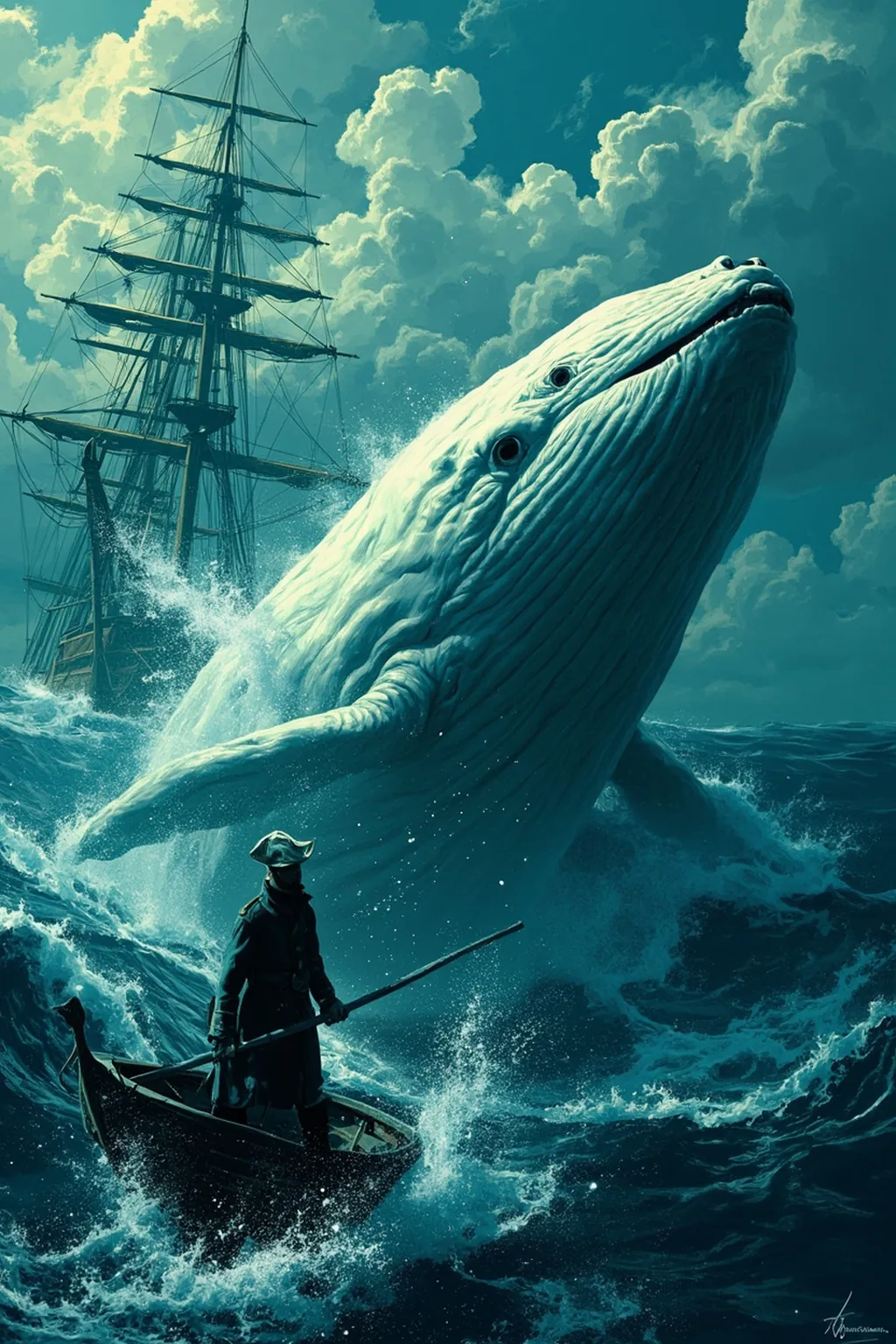
Iron Crown of Lombardy Meditation
Ahab confronts what he calls the “Iron Crown of Lombardy”—a metaphor for his burden of knowledge and destiny. Though bright with many gems, he sees not its far flashings; rather, he feels its confounded brilliance darkly. He identifies the crown as iron, not gold, and importantly, split—its jagged edge galls him so that his brain beats against solid metal. He claims this steel skull needs no helmet, even in the most brain-battering fight. The meditation reveals his sense of self-inflicted pain and mental torment.
Ahab’s Alienation from Lovely Light
Ahab reflects on his changed relationship with natural beauty. Once, the sunrise spurred him nobly and the sunset soothed him—but no more. This lovely light lights not him; all loveliness has become anguish since he cannot enjoy it. He believes himself cursed with “the high perception” while lacking “the low, enjoying power”—damned most subtly and most malignantly, damned in the midst of Paradise. This alienation from beauty and pleasure defines his existential suffering.
Ahab’s Dismemberment Prophecy
Ahab addresses the prophecy that commanded his dismemberment—clearly referencing his lost leg to the white whale. Yet rather than accepting this fate passively, he declares he will now dismember his dismemberer, becoming both prophet and fulfiller. He notes the difficulty of being the match that ignites others while oneself is wasted, having dared, willed, and determined to act. The prophecy has become a source of empowerment rather than mere doom.
Ahab’s Defiance of the Gods
The chapter culminates in Ahab’s furious challenge to the divine. He mocks what he perceives as divine weakness—comparing the gods to cricket players, pugilists, and blinded fighters (Burkes and Bendigoes)—and accuses them of knocking him down only to run and hide behind cotton bags. He rejects their authority entirely, declaring his path to his fixed purpose is laid with iron rails whereon his soul grooves to run. He will rush unerringly over unsounded gorges, through rifled mountain hearts, under torrent beds—nothing can swerve him, for to swerve him would be to swerve themselves. Man has advantage over the gods in this reckoning.
The original text of this work is in the public domain. This page focuses on a guided summary article, reading notes, selected quotes, and visual learning materials for educational purposes.