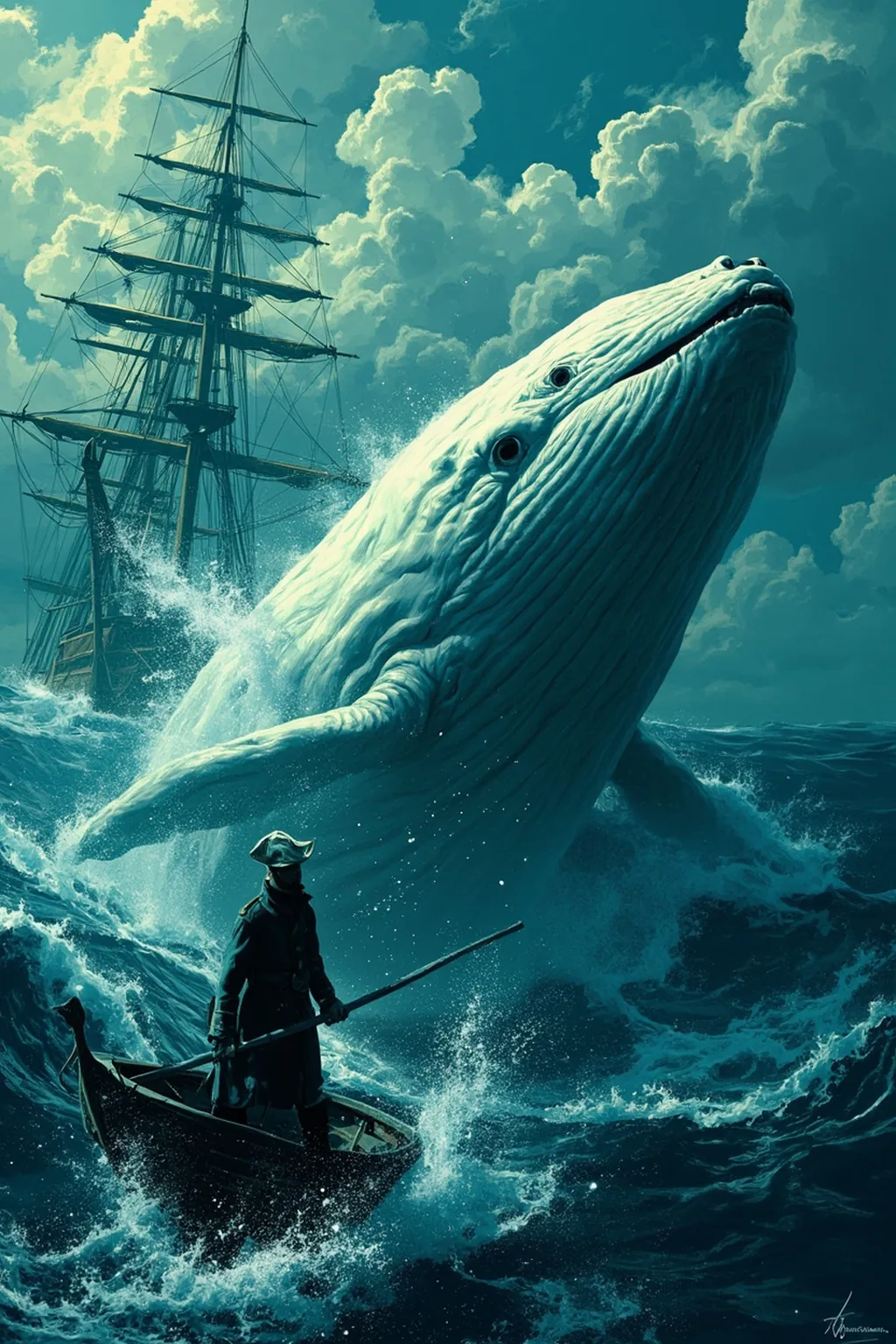
第四十二章 The Whiteness of the Whale.
This chapter, titled The Whiteness of the Whale, explores the paradoxical, multifaceted power of whiteness, examining its dual role as a symbol of divine spirituality and a trigger for primal, cosmic terror, alongside its connections to animal instinct, the structure of visible and invisible existence, and the deceptive nature of earthly color.
Demonism Instinct in Bison and Prairie Foal
Even non-human animals carry an instinctual awareness of the “demonism” present in the world: bison herds driven by savage musk may trample young wild prairie foals that share their range, a dynamic Ishmael likens to the instinctual terror evoked by vast white natural landscapes such as milky seas, frost-covered mountains, and windrowed prairie snows.
Ishmael’s View of Natural Phenomena as Omens
Ishmael frames muted natural phenomena—including the rolling of milky seas, the rustle of mountain frosts, and the shifting of prairie snow drifts—as ominous, mystical signs that carry unspoken hints of nameless, unknown forces, much like the frightening presence of a buffalo robe is to a skittish colt, even if neither can fully grasp the nature of the unseen things they sense.
Dual Nature of Visible and Invisible Spheres
The chapter establishes a dual framework for understanding existence: while many facets of the visible, earthly world appear to be formed in love, the invisible, spiritual spheres were formed in fright, laying the groundwork for the contradictory symbolism of whiteness explored in the following sections.
The original text of this work is in the public domain. This page focuses on a guided summary article, reading notes, selected quotes, and visual learning materials for educational purposes.