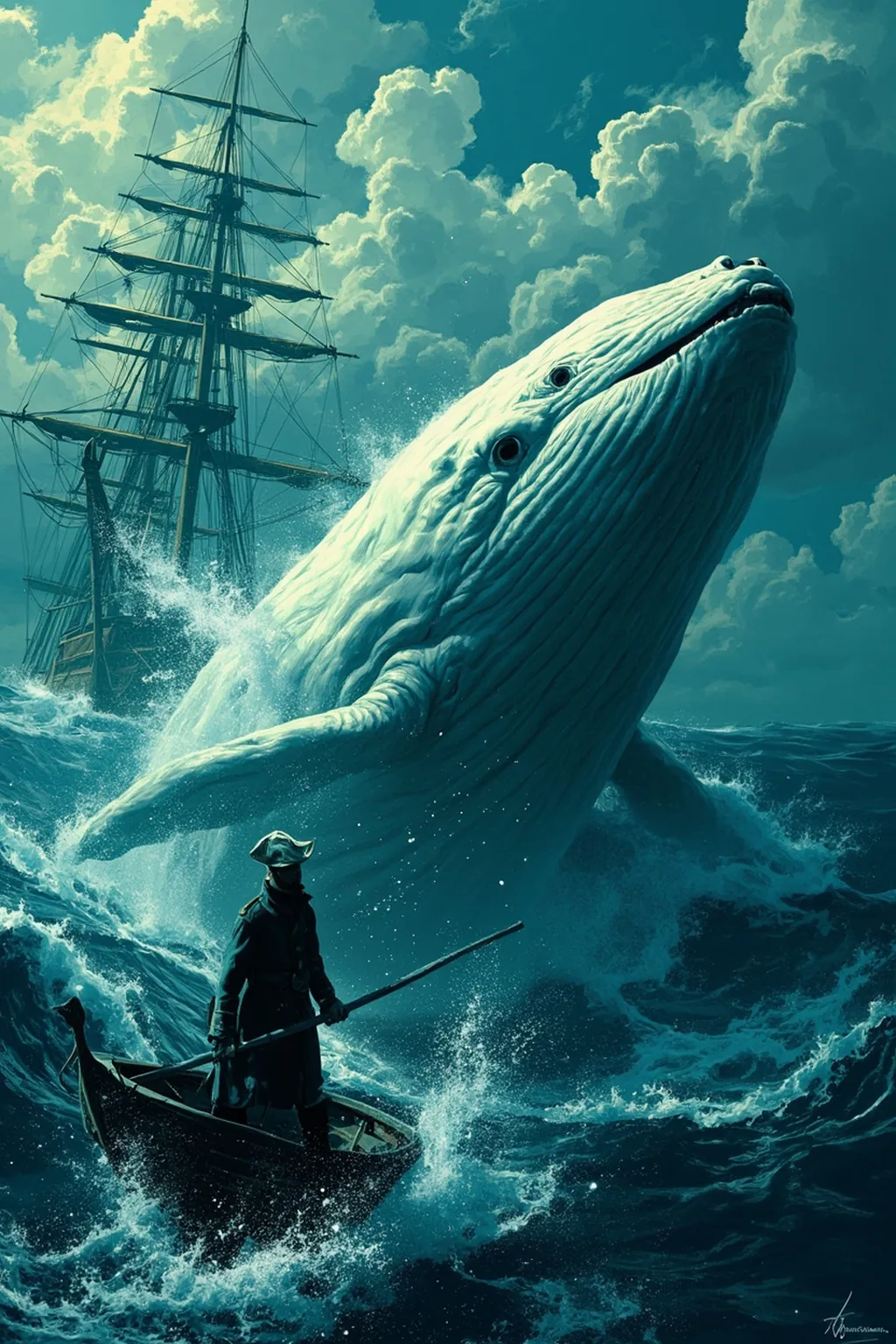
The Beggar’s Whale
The chapter opens with a striking portrait of a crippled beggar on Tower-hill near the London docks, commonly called a “kedger” by sailors. This man displays a painted board depicting the tragic scene in which he lost his leg—three whales pursue three boats, with one boat being crushed in a whale’s jaws, presumably containing his severed limb. For ten years, Melville reports, this beggar has displayed his stump to an incredulous world alongside this remarkable picture. Now, however, Melville vouches for the artistic merit of the painted whales, declaring them as fine as any published in Wapping, and the stump an unquestionable artifact of whaling’s violence. Yet the pathetic irony persists: though forever mounted on that stump, the former whaleman never delivers a stump-speech, instead standing with downcast eyes, contemplating his own amputation in silent rue.
Skrimshander
Melville introduces the whaleman’s art of “scrimshander”—the elaborate carving of whale teeth, whalebone, and other maritime materials into intricate keepsakes and decorative objects. Throughout the Pacific and at American whaling ports like Nantucket, New Bedford, and Sag Harbor, one encounters lively sketches of whales and whaling scenes carved by the fishermen themselves. Some scrimshanders possess specialized dental-like tool kits for their craft, though most work with nothing more than their jack-knives—the sailor’ most versatile implement. With this singular tool, the whaleman demonstrates remarkable ingenuity, transforming rough ocean materials into objects of maritime fancy that reflect both technical skill and artistic vision.
The original text of this work is in the public domain. This page focuses on a guided summary article, reading notes, selected quotes, and visual learning materials for educational purposes.