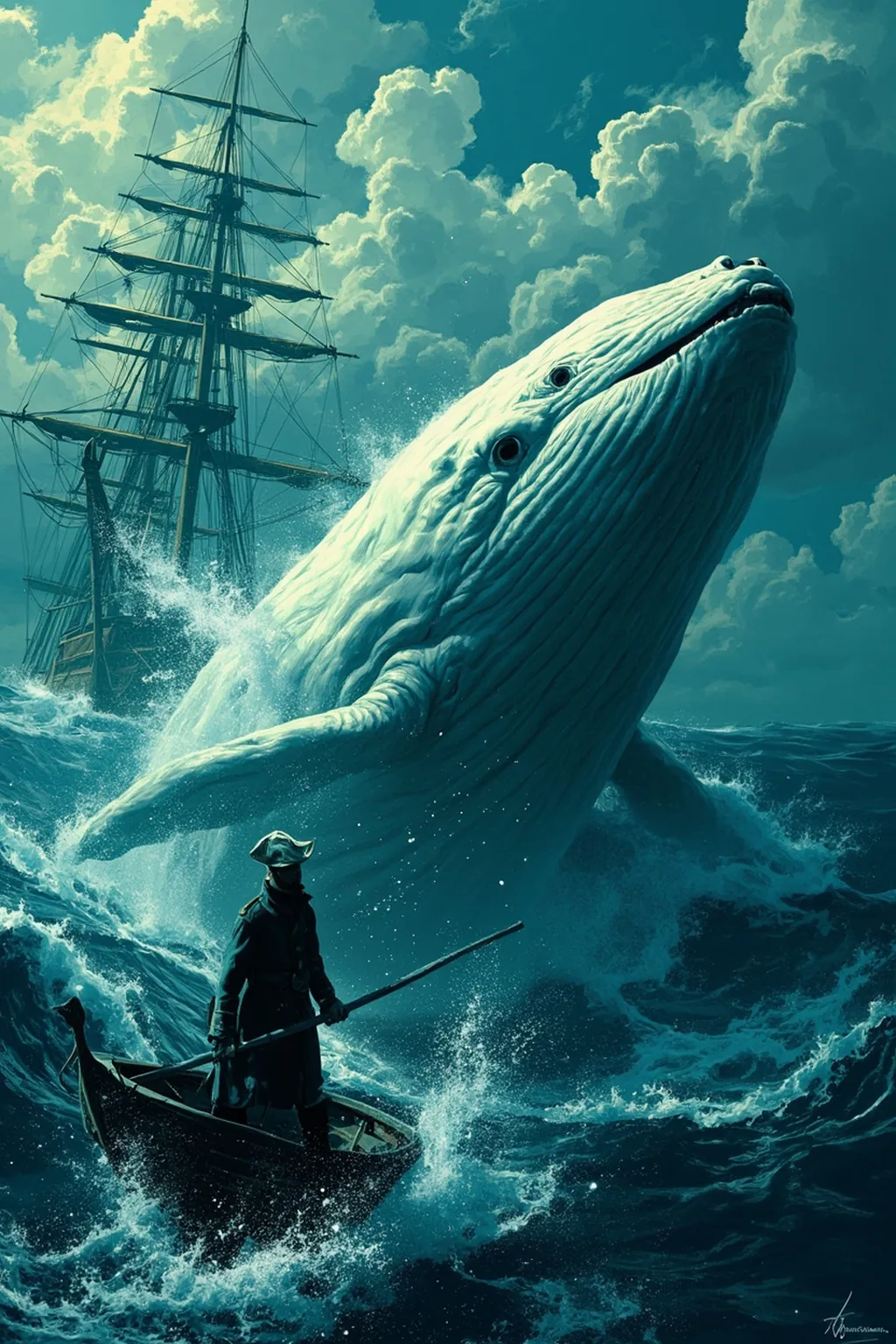
Legal Precedent for Royal Whale Division
Legal Precedent for Royal Whale Division The law originates from Bracton’s thirteenth-century treatise on the Laws of England, specifying that of all whales captured on English coasts, the King (as Honorary Grand Harpooneer) must receive the head and the Queen the tail. The narrator notes this division is “much like halving an apple; there is no intermediate remainder,” meaning the whale cannot be meaningfully separated between these two parts. This law remains in force in England during Melville’s era, and the chapter aims to provide curious proof of its continued existence.
Cinque Ports Mariners’ Seized Whale Case
Cinque Ports Mariners’ Seized Whale Case The narrator presents a recent incident involving honest mariners from one of the Cinque Ports (Dover or Sandwich) who successfully killed and beached a fine whale after a hard chase. The Lord Warden of the Cinque Ports—a position held directly from the crown and said to be “busily employed at times in fobbing his perquisites”—claimed the whale. Despite the mariners’ protests that they had borne all the trouble, peril, and expense, a learned gentleman seized the whale as the Lord Warden’s property. When asked repeatedly if the Duke (the Lord Warden at this time) might share even a quarter or half with them, the response was consistently “It is his.” The Duke of Wellington ultimately received all proceeds from the sale. A local clergyman interceded on the mariners’ behalf but was firmly rebuffed by the Duke, who stated he had already received the money and advised the clergyman to stop meddling.
The original text of this work is in the public domain. This page focuses on a guided summary article, reading notes, selected quotes, and visual learning materials for educational purposes.