A Fine Gam
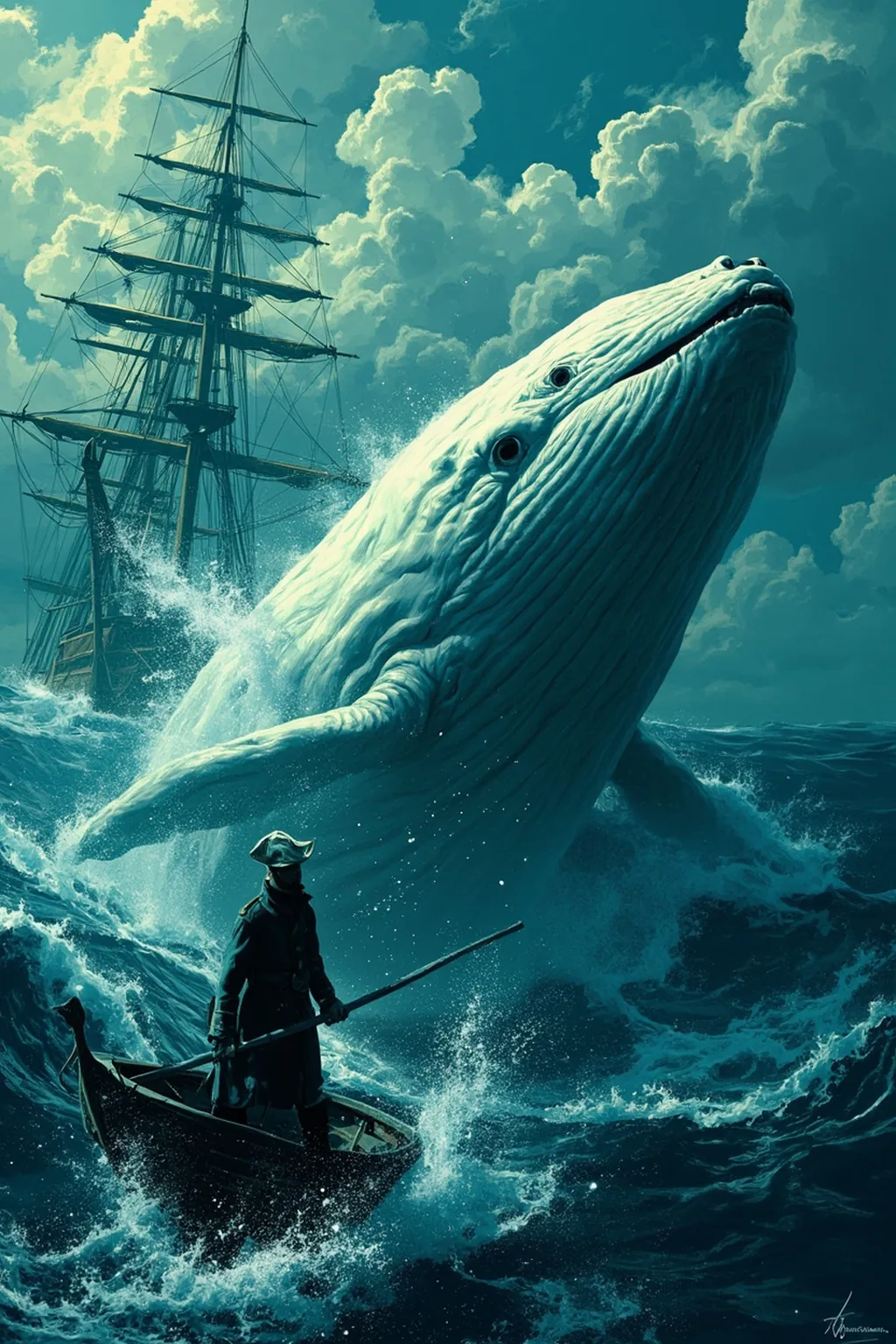
The Samuel Enderby was a fast-sailing and noble craft. The narrator boarded her at midnight off the Patagonian coast and enjoyed good flip in the forecastle. It was a fine gam (meeting between whalers), with every soul on board being “all trumps.” During a squall off Patagonia, all hands were called to reef topsails, and the crew became so top-heavy they had to swing each other aloft in bowlines, ignorantly furling their jacket skirts into the sails. After the gale passed and they scrambled down, they were so sober they had to pass the flip again.
English Whaler Hospitality
The narrator reflects on why the Samuel Enderby and certain other English whalers were so famously hospitable—passing around beef, bread, drink, and jokes without becoming weary. While English merchant ships typically skimp on crew provisions, English whalers do not. The narrator determines that this whaling good cheer is not normal or natural to the English but incidental and particular, having a special origin that requires historical research.
The Dutch Precedent
The English were preceded in the whale fishery by Hollanders, Zealanders, and Danes, from whom they derived many terms still extant in the fishery. More importantly, the English inherited the Dutch “fat old fashions” regarding plenty to eat and drink. The English whaling hospitality is not inherent to English character but was borrowed from Dutch precedent and must have some special origin.
Dan Coopman
During Leviathanic historical research, the narrator stumbled upon an ancient Dutch volume with a musty whaling smell. The title “Dan Coopman” led the narrator to believe it was the memoirs of an Amsterdam cooper, especially since every whale ship must carry a cooper. However, Professor Dr. Snodhead of Low Dutch and High German at the college of Santa Claus and St. Pott’s, when given the book plus a box of sperm candles for translation, revealed that “Dan Coopman” actually meant “The Merchant,” not “The Cooper.” This ancient Low Dutch book actually treated of Holland’s commerce and contained an interesting account of its whale fishery.
The original text of this work is in the public domain. This page focuses on a guided summary article, reading notes, selected quotes, and visual learning materials for educational purposes.