The Bottle Conjuror
The term “Bottle Conjuror” refers to the fatal incident that destroyed Perth’s happiness. One night, under cover of darkness, a desperate burglar infiltrated their home—though the blacksmith himself unknowingly guided this intruder into his family’s heart. The phrase evokes the legend of a con man who claims to have imprisoned a devil in a bottle, whose release upon opening the cork destroys everything. This event marked the beginning of their undoing.
The Ruin
At nearly sixty years old, Perth encountered ruin in life’s sorrows. The blows of his hammer grew fainter and more infrequent each day. His wife sat frozen at the window with tearless eyes, watching their children’s weeping faces. The bellows fell, the forge choked with cinders, and the house was sold. The mother descended into the churchyard grass, her children following her twice. The houseless, familyless old man staggered away in crape—a worse than useless figure, his grey head a scorn to flaxen curls.
The Call of the Ocean
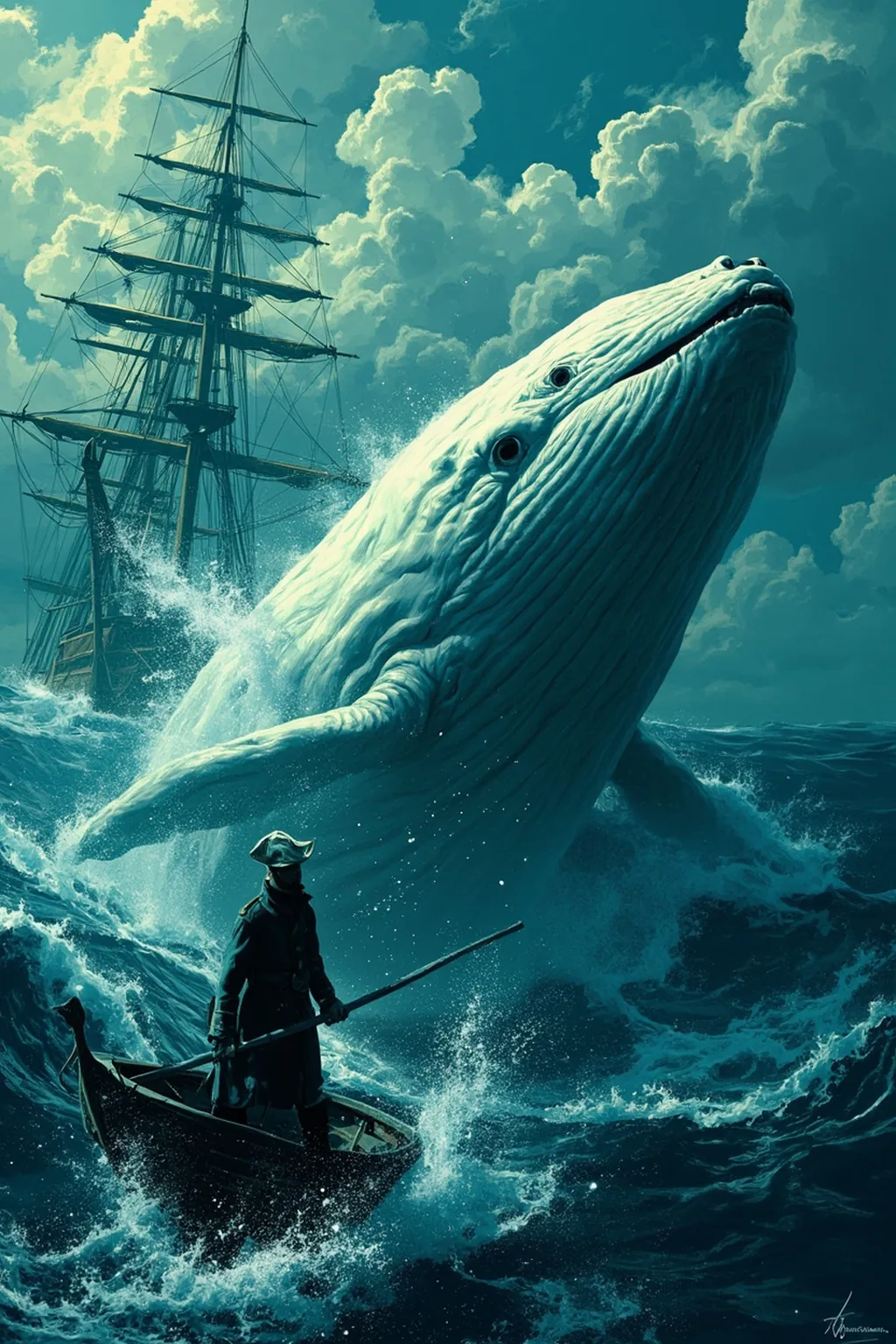
For men like Perth, whose interior compunctions prevent suicide, the ocean presents itself as an alluring alternative. Death is only the beginning of strange possibilities—the “Untried,” the “immense Remote, the Wild, the Watery, the Unshored.” From infinite Pacifics, a thousand mermaids sing invitingly: “Come hither, broken-hearted; here is another life without the guilt of intermediate death.” The sea promises supernatural wonders and oblivion from the landed world, offering marriage to the depths.
Perth Goes Whaling
East and West, by early sunrise and fall of eve, Perth’s soul answered the ocean’s call: “Aye, I come!” Thus Perth went a-whaling, drawn by the sea’s promise of escape from his earthly misery.
The original text of this work is in the public domain. This page focuses on a guided summary article, reading notes, selected quotes, and visual learning materials for educational purposes.