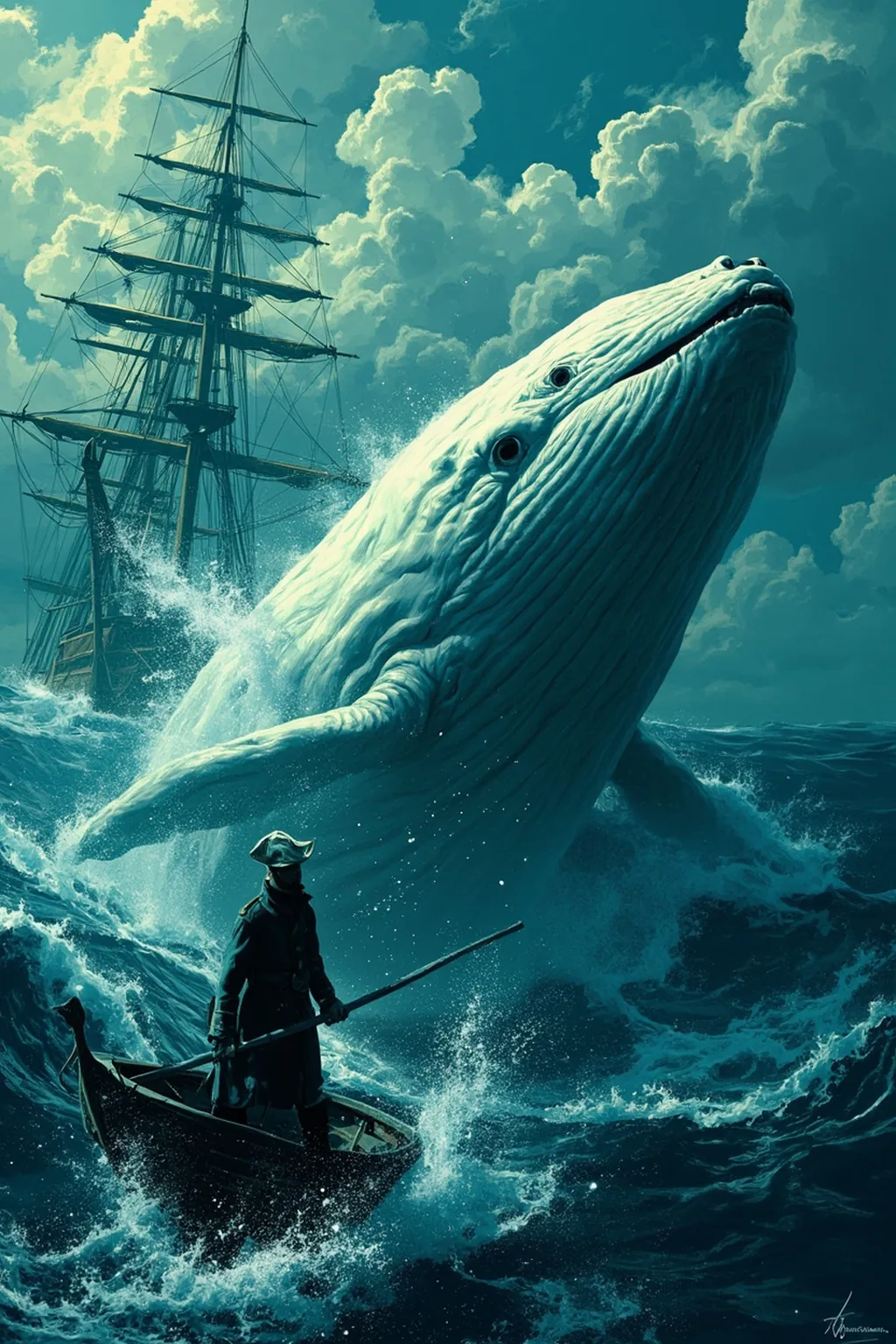
The White Whale Inquiry
As the ships approach within speaking distance, Captain Ahab puts his critical question to the hollow-cheeked captain of the Delight: “Hast seen the White Whale?” The stranger responds by pointing to the boat wreckage with his trumpet, a silent but eloquent testimony to his encounter with the leviathan. Ahab presses further with his second question: “Hast killed him?” The captain’s tragic answer reveals the futility of human effort against the great whale.
The Hollow-Cheeked Captain
The Delight’s captain is immediately distinguished by his gaunt appearance—hollow cheeks testament to grief and suffering. Standing at his taffrail, he delivers his devastating response to Ahab’s inquiry about killing the White Whale. His demeanor reflects the profound loss his crew has endured, his physical hollow-cheeked appearance matching the emptiness of any hope that the whale might be conquered by mortal means.
Ahab’s Vengeful Oath
Ahab reacts to the captain’s defeatist response with fierce determination. Snatching Perth the blacksmith’s leveled harpoon from its crotch, he holds it aloft and declares his absolute conviction that he holds the whale’s death in his hand. He swears an oath to temper the harpoon triply “in that hot place behind the fin, where the White Whale most feels his accursed life.” This dramatic moment crystallizes Ahab’s monomaniacal pursuit, as he claims both the power and the divine mandate to destroy Moby Dick.
The Captain’s Grief
The Delight’s captain reveals the full scope of his tragedy to Ahab. Only one of five stout men who were alive just yesterday survived until nightfall—and that sole survivor has now also died. His words establish that he buries but one man, while the rest “were buried before they died” in the sense that they met their end so suddenly that no burial was possible. He delivers the chilling pronouncement: “you sail upon their tomb,” marking the waters where his men perished as a sailors’ graveyard.
The original text of this work is in the public domain. This page focuses on a guided summary article, reading notes, selected quotes, and visual learning materials for educational purposes.