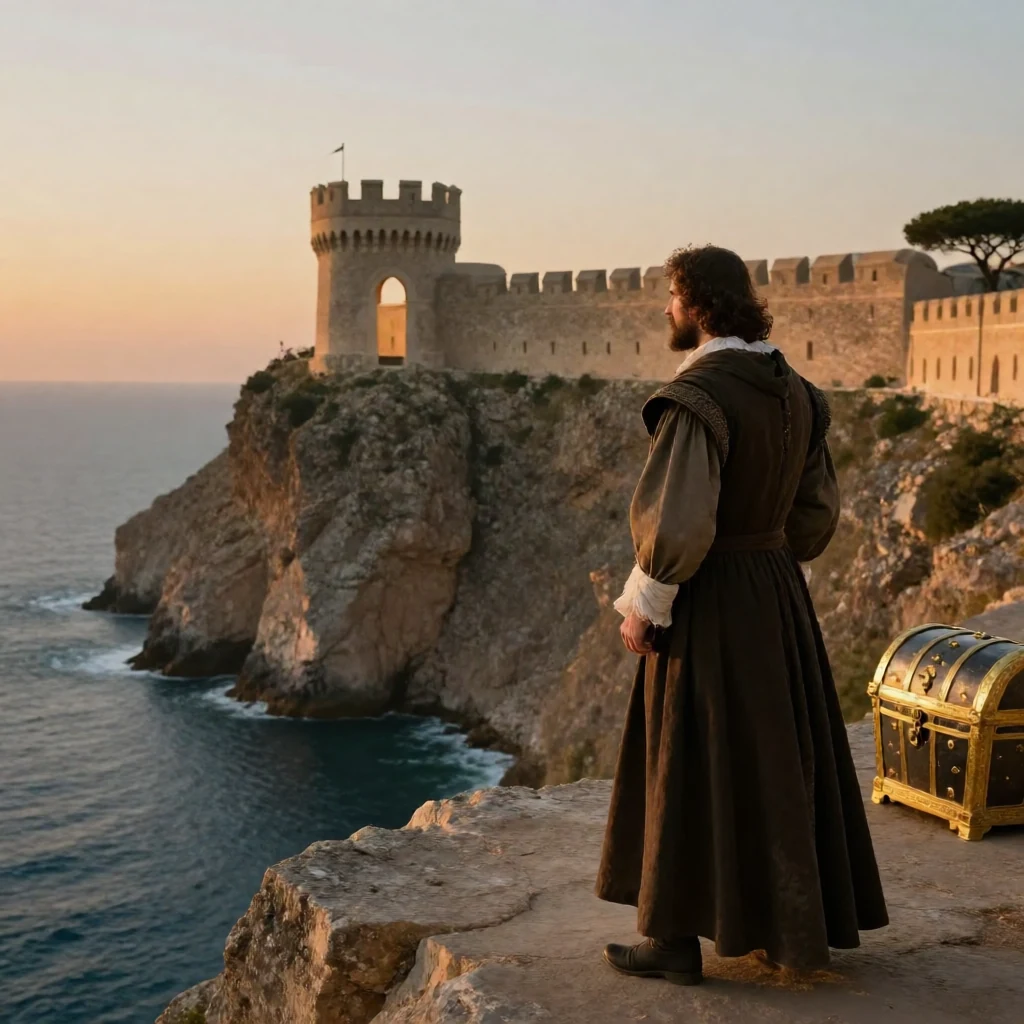
The Iron Casket
Dantès enters the lower, gloomier second grotto and advances toward a dark, deep corner on the left—the spot where the treasure must lie according to the will. After removing about two feet of earth, his pickaxe strikes an iron substance, producing a sound like a funeral knell or alarm bell. He strikes again and encounters wood. Believing he has found an iron-bound wooden casket, he becomes so pale he fears he might collapse. After a wild goat briefly startles him, he returns with a torch made from a resinous branch. By torchlight, he clears a space three feet long by two feet wide and uncovers an oaken coffer bound with cut steel. On the lid, a silver plate still untarnished bears the Spada family arms—a sword on an oval shield surmounted by a cardinal’s hat. Dantès recognizes them immediately from Faria’s many drawings. The treasure is here; no one would have taken such pains to conceal an empty casket.
Opening the Chest
Dantès attempts to lift the coffer but finds it immovable. He tries to open it, but the lock and two padlocks are firmly fastened. Inserting the sharp edge of his pickaxe between the coffer and lid, he applies all his force. The fastenings burst open, the hinges yield, and the chest lies revealed. Overwhelmed with vertigo, Dantès closes his eyes like a child wishing to see more stars, then reopens them to find the chest divided into three compartments. The first contains piles of golden coin; the second holds bars of unpolished gold; the third overflows with diamonds, pearls, and rubies that clatter like hail against glass as he grasps them.
The original text of this work is in the public domain. This page focuses on a guided summary article, reading notes, selected quotes, and visual learning materials for educational purposes.