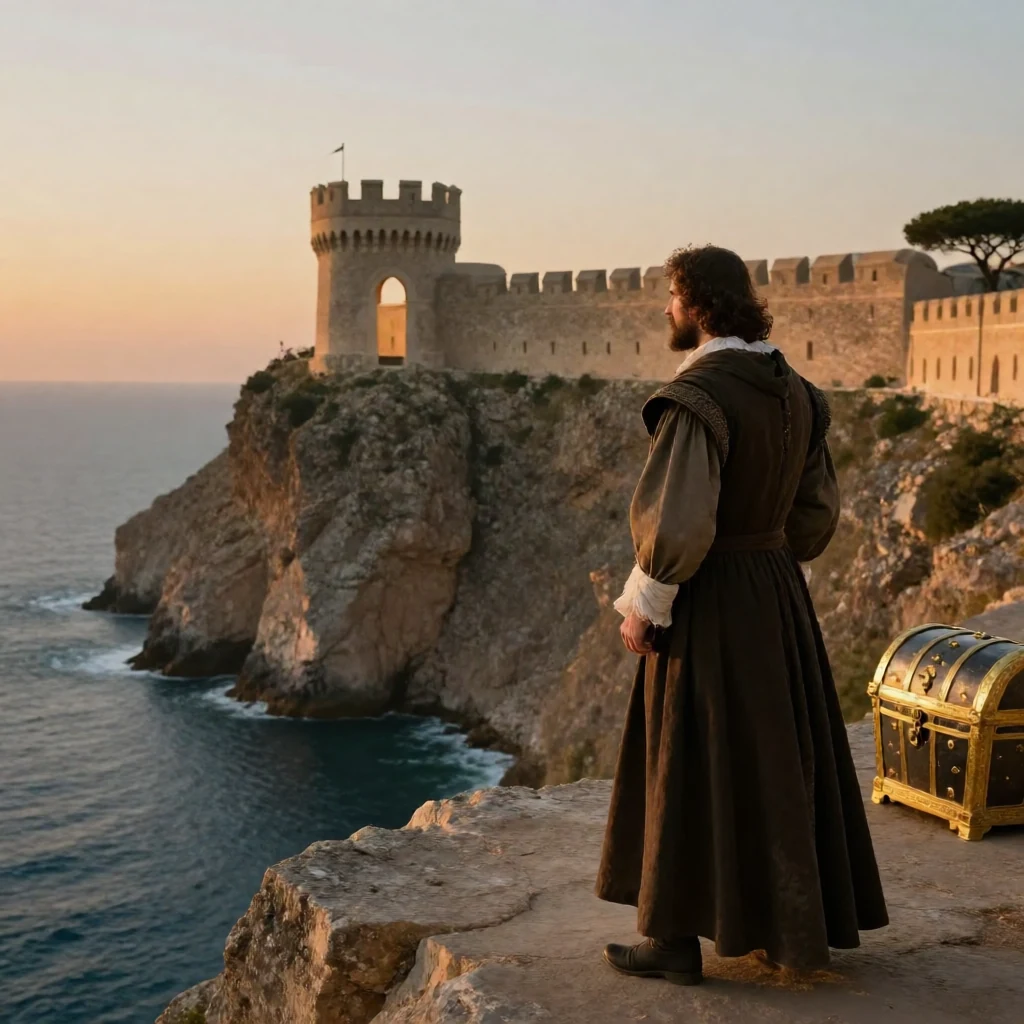
Dantès Arrives in Marseilles Disguised
Dantès enters the port of Marseilles aboard his yacht, anchoring opposite the very spot from which he had been taken to the Château d’If on that fateful night. Armed with an English passport obtained in Leghorn (which affords him greater standing than a French document would), he presents it coolly to the officers demanding his bill of health. The passport identifies him as Lord Wilmore, and he gains permission to debark without incident, though the approach of a nearbygendarm causes him to shudder.
Dantès Tests His Disguise with a Former Sailor
Among the first people Dantès encounters on the Canebière is a former crewman from the Pharaon. Seizing the opportunity to test how completely his appearance has changed, Dantès approaches the man and engages him in conversation, carefully observing his reactions. The sailor shows no recognition whatsoever. When Dantès gives him a coin in thanks for his civility, the man calls after him to return a “double Napoleon” that was mistakenly given instead of a two-franc piece. Dantès rewards this honesty with two more Napoleons, leaving the sailor exclaiming that he must be some “nabob from India.”
Dantès Visits His Father’s Old Home
Progressing through familiar streets that stir powerful memories, Dantès eventually reaches the end of the Rue de Noailles, where he can view the Allées de Meilhan. Overwhelmed by emotion, he steadies himself against a tree before proceeding to his father’s former home. Finding the nasturtiums and plants his father cultivated are gone, Dantès inquires about available rooms and, despite initial resistance, succeeds in visiting the fifth-floor apartment. Now occupied by a newlywed couple, the rooms retain only the original four walls; everything else has changed. Seeing the young couple’s bed positioned where his father once lay, Dantès weeps silently at the thought of the old man dying alone, calling for his absent son.
The original text of this work is in the public domain. This page focuses on a guided summary article, reading notes, selected quotes, and visual learning materials for educational purposes.