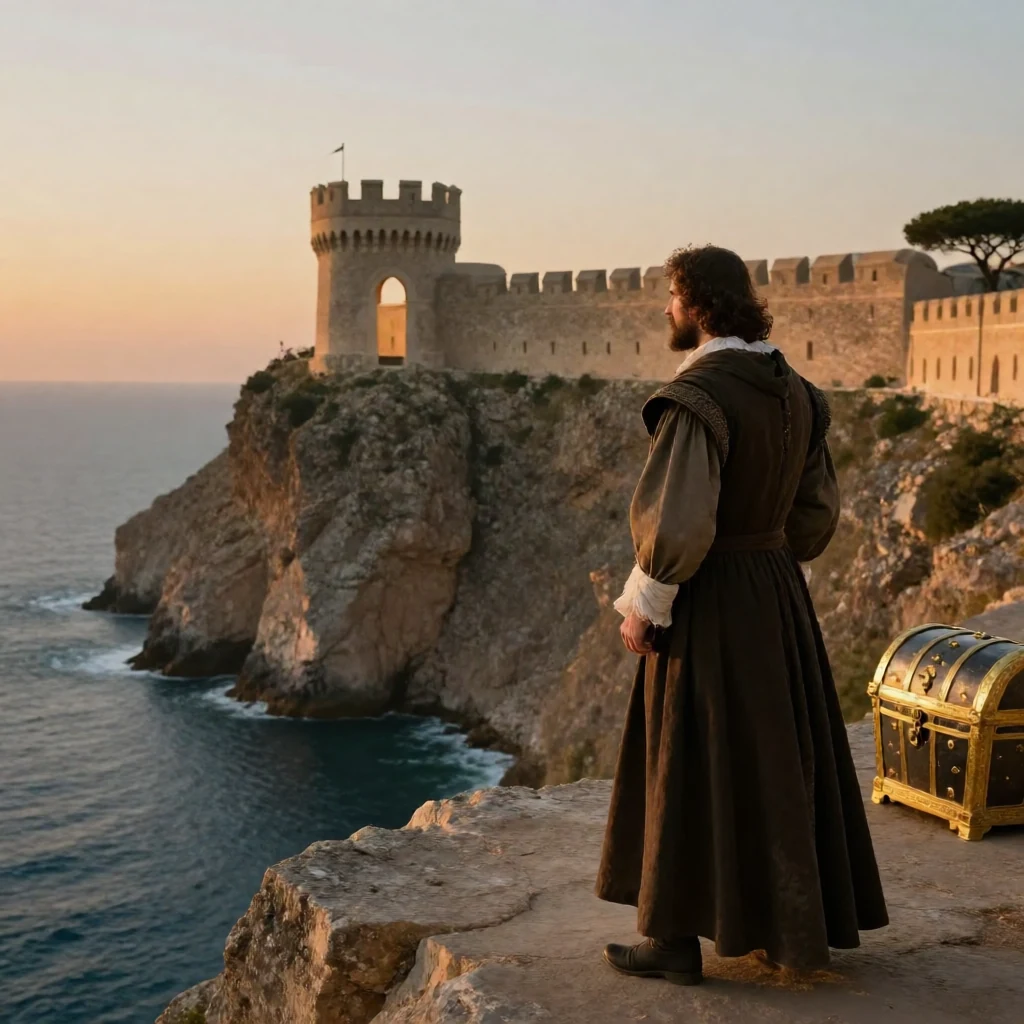
Monte Cristo’s Travel Proposal
Monte Cristo invites Albert to accompany him to sea, describing his deep connection to the ocean as both nursemaid and mistress. The Count claims to have been rocked in infancy by old Ocean himself, and he loves the sea’s soothing qualities. He emphasizes the trip will offer pure air, solitude, and the humiliation of nature that humbles even the proudest spirit. Beauchamp declines, explaining he must remain in Paris to watch over newspaper matters that require his attention. After Beauchamp departs, Albert expresses concern about whether his mother will permit the journey, prompting Monte Cristo to quote Francis I and Shakespeare on woman’s fickle nature. Albert defends his mother as exceptional among women, noting she takes deep interest in the Count and has encouraged Albert to gain his esteem. They settle on meeting at five o’clock, with Albert promising to inform his mother and return promptly.
Departure for Normandy
Albert is punctual to the appointment. Monte Cristo dispatches Bertuccio to notify grooms along the route, and express messengers coordinate horse changes across six stages between Paris and Normandy. Before departing, the Count visits Haydée to inform her of his plans and entrusts his affairs to her care. The journey commences with Albert’s initial anticipation of the expedition, establishing the framework for their rapid departure toward the seaside.
The Rapid Carriage Ride
The journey proves extraordinarily swift, with post-horses maintaining a pace of two leagues per hour. Monte Cristo explains his method bypasses frustrating traffic laws requiring travelers to request permission to pass one another, which would otherwise allow slow or ill-tempered riders to obstruct faster travelers. By maintaining his own postilion and horses, the Count avoids such delays. Ali drives the carriage, exhibiting remarkable skill that makes the horses appear to fly. Monte Cristo reveals the thirty-two horses are progeny of a Hungarian horse purchased six years prior, all black except for a star on the forehead. When Albert expresses amazement at such resources, the Count explains he travels with them and will sell them through Bertuccio for thirty to forty thousand francs, likely to Eastern viziers who will drain their treasuries to purchase them. The conversation turns to Bertuccio himself, whom Albert suspects must be the richest man in Europe after the Count. Monte Cristo corrects this assumption—Bertuccio possesses almost nothing—explaining that he keeps such servants through absolute power over their fates. When Albert questions whether Monte Cristo truly holds life-and-death power over Bertuccio, the Count answers simply: “Yes.”
The original text of this work is in the public domain. This page focuses on a guided summary article, reading notes, selected quotes, and visual learning materials for educational purposes.