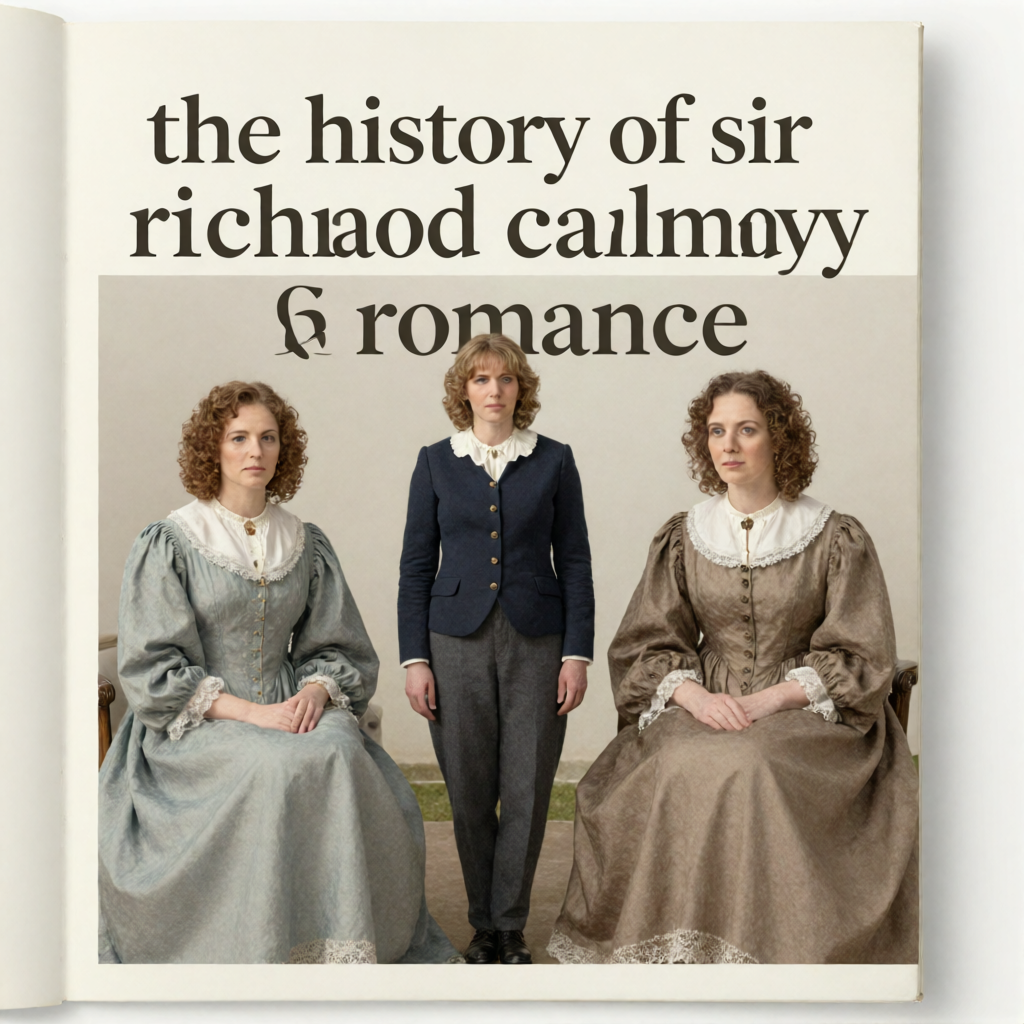
The following day, Helen spends in jealous agitation. Richard remains inaccessible, shut away in the dwarfed entresol rooms of the villa, and her curiosity curdles into mortification. She paces the noble rooms and walks the ilex grove beneath omens — a carrion crow, a black beetle, a funeral procession, the bleating laughter of Destournelle — each sharpening her sense of menace. She transforms herself for dinner into a resplendent crocus-yellow brocade trimmed with Flemish guipure and seed pearls, a costume of self-assertion against the nameless rival to whom Richard has dedicated the villa. The dinner conversation, ostensibly about the soprano Morabita’s appearance at the San Carlo, becomes a charged exchange. Helen confesses her jealousy, announces her intention to leave, and presses Richard about the woman he claims to love. Richard apologizes for his negligent hosting, but when Helen declares that the woman must surely be repelled by his proximity, he answers, with quiet irony, that perhaps she is here — and shuffles onto the balcony. Helen remains, savouring her triumph, yet beneath it a tremor of fear.
That night, in the cedar-scented, dwarfed library of the entresol, Richard broods in his fever until Helen comes to him barefoot, in a sea-blue dressing-gown, lamp in hand, offering herself as the sacrament of love. She does not leave until gray dawn, hurrying upstairs like a fear-driven ghost, and the household resumes as though nothing had occurred.
The following morning the rain descends upon Naples harbor, where Richard’s yacht Reprieve lies coaled and stripped of elegance. Amid the moral squalor of the port, Richard reads two devastating letters. The first, from Paul Auguste Destournelle, claims Helen as the inspiration of his genius and demands Richard either invite him to the villa or surrender his cousin. The second, from the Comte de Vallorbes himself, confides with ironic candor that Helen has long been serially unfaithful — Destournelle among her recent lovers — and entrusts her welfare to Richard, trusting his honor. The correspondence forces Richard to recognize that his own conduct constitutes a betrayal graver than any his deformity has inflicted: he has dishonored the cousin who trusted him. A third letter, from his mother Lady Calmady at Ormiston, tenders forgiveness and an open home, but Richard feels too branded to accept it. He composes a brief farewell to Helen, summons his valet Powell, and attempts to depart, only to be detained by a coal strike and the protests of Captain Vanstone, who urges him to seek a doctor. While stranded aboard, he learns that Helen has herself fled the villa with a French visitor — a final, sharp confirmation of his abandonment.
The original text of this work is in the public domain. This page focuses on a guided summary article, reading notes, selected quotes, and visual learning materials for educational purposes.