Gossip on Miss Lavish, the Emersons, and the Santa Croce Incident
Miss Alan reveals that Miss Lavish is writing a novel about modern Italy, having lost her first attempt in a landslip at the Grotto of the Calvary in Amalfi. The historical novel was nearly finished when the grotto collapsed, and Miss Lavish can no longer remember what she wrote. She subsequently took up cigarettes in despair. Mr. Beebe refers to her as “a good fellow” who should start a pipe instead.
The conversation turns to the Emersons, who have been socially unacceptable at the Bertolini. Old Mr. Emerson mentioned “S”—stomach acidity—to Miss Pole, causing embarrassment. At dinner, Miss Lavish, believing the Emersons to be commercial travelers (“drummers”), engaged them in conversation about commerce, claiming England rests on nothing but trade. Miss Alan, an early Victorian who defended Queen Victoria’s Irish visit, and Mr. Emerson, who agreed with her, caused further social confusion.
The Santa Croce incident involved the Emersons attempting to “annex” Lucy, showing her the world from their viewpoint and interesting her in their private matters—something Mr. Beebe found impertinent. Society has largely rejected the Emersons: Miss Lavish (intellect) is hostile, the Miss Alans (good breeding) follow suit, and Miss Bartlett is uncivil due to obligation. Only Mr. Beebe remains friendly, and Lucy admits she finds them nice though she rarely sees them now.
Lucy’s Tram Ride Plan and Mr. Beebe’s Concerns
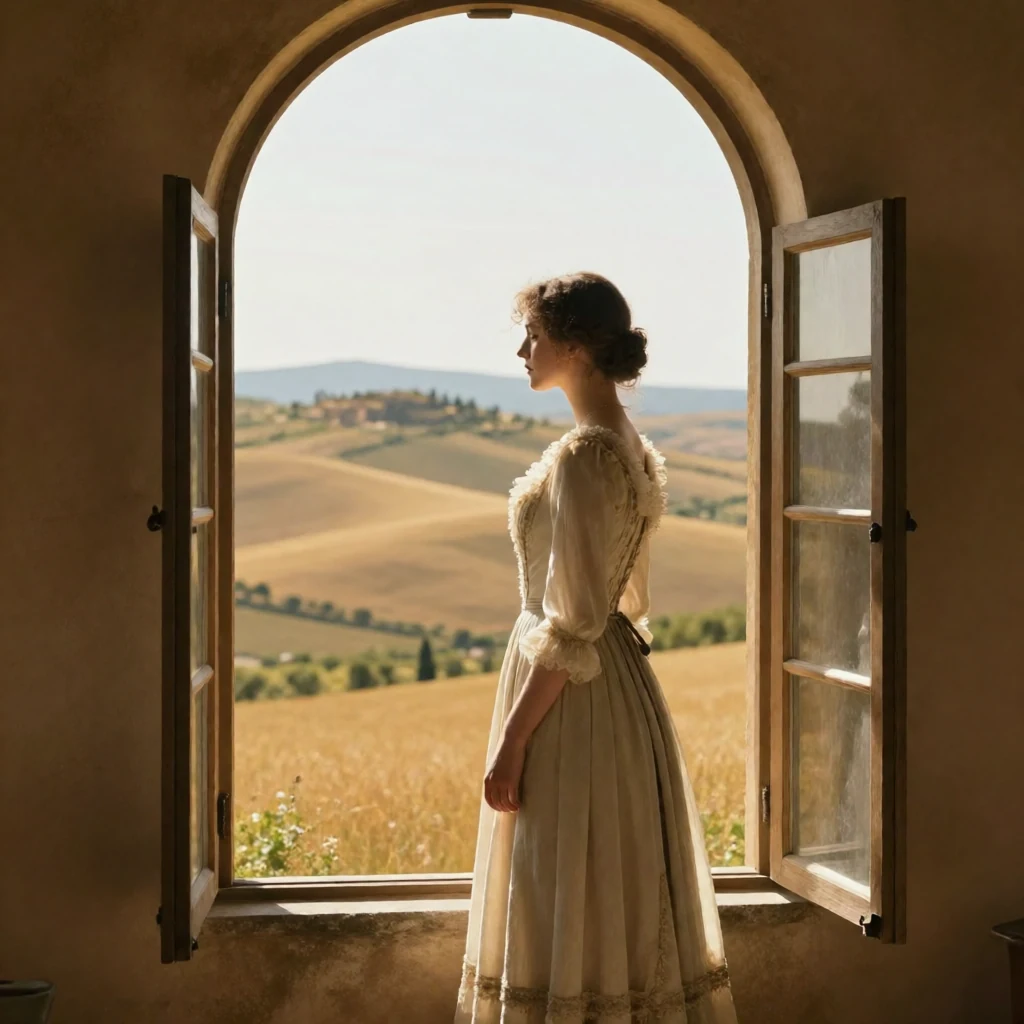
Lucy announces her intention to ride the circular tram around town, standing on the platform by the driver. Both Mr. Beebe and Miss Alan look grave at this proposal. Mr. Beebe, responsible for Lucy in Miss Bartlett’s absence, suggests she stay on her feet within tourist streets instead. Miss Alan invokes “Italians, dear, you know” as a warning. Lucy quips that perhaps she’ll meet someone who reads her through and through, but ultimately concedes to a short walk on frequented tourist streets.
After Lucy departs, Mr. Beebe observes to Miss Alan that she really shouldn’t go out alone at all—and that she knows it. He attributes this rebellious impulse to “too much Beethoven,” suggesting her musical passion is pushing her toward independence beyond what is socially acceptable for a young lady.
The original text of this work is in the public domain. This page focuses on a guided summary article, reading notes, selected quotes, and visual learning materials for educational purposes.