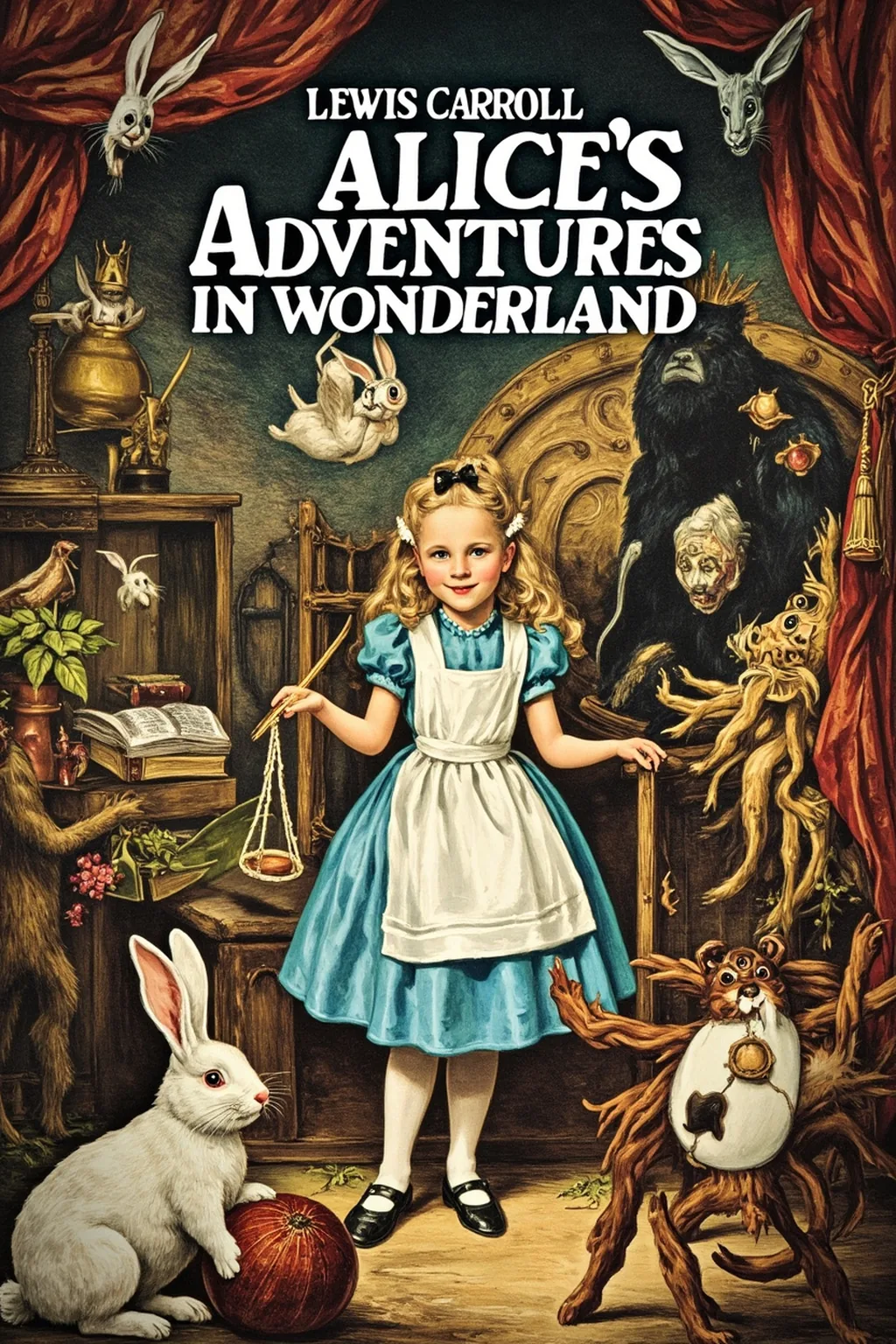
爱丽丝对现实世界的厌倦是她踏上旅程的催化剂,揭示了一个孩子更倾向于有趣的参与而非枯燥的说教。
“and what is the use of a book,” thought Alice “without pictures or conversations?”
but when the Rabbit actually took a watch out of its waistcoat-pocket, and looked at it, and then hurried on, Alice started to her feet, for it flashed across her mind that she had never before seen a rabbit with either a waistcoat-pocket, or a watch to take out of it, and burning with curiosity, she ran across the field after it, and fortunately was just in time to see it pop down a large rabbit-hole under the hedge.
展开解读
这是小说的激励事件,平凡的世界被不可能的事物所突破。背心口袋这一具体细节将兔子从单纯的动物转变为一个文明、守时的生物,点燃了驱动整个情节的“炽热的好奇心“。
爱丽丝鲁莽地跃入未知世界,标志着她义无反顾地离开了理性世界,毫不考虑后果。
In another moment down went Alice after it, never once considering how in the world she was to get out again.
展开解读
这句话捕捉到了童年时期那种鲁莽的天真与惊奇。爱丽丝跃入未知世界完全出于冲动,标志着她义无反顾地离开了理性世界。
当她缓缓坠落穿过大地时,爱丽丝试图用日常生活的视角来理解这种荒诞,在混乱中保持一种常态感。
“Well!” thought Alice to herself, “after such a fall as this, I shall think nothing of tumbling down stairs! How brave they’ll all think me at home! Why, I wouldn’t say anything about it, even if I fell off the top of the house!”
展开解读
在这场超现实的坠落中,爱丽丝的内心独白揭示了她试图用日常生活的视角来理解这种荒诞。这展现了她的韧性,以及她将非凡事件框定为能够打动同伴的成就的倾向,在混乱中保持一种常态感。
被体型所困,爱丽丝开始接受物理法则在仙境中是流动的,抛弃了不可能这一概念。
“Oh, how I wish I could shut up like a telescope! I think I could, if I only knew how to begin.” For, you see, so many out-of-the-way things had happened lately, that Alice had begun to think that very few things indeed were really impossible.
展开解读
这段话标志着爱丽丝心理上的一个关键转变。面对那扇小门的物理障碍,她调整了自己对现实的理解,接受物理法则在仙境中是流动的,而不可能是一个她必须抛弃的概念。
面对困境,爱丽丝拥抱务实的乐观主义,构建一个双赢的逻辑场景来推动自己朝着目标前进。
“Well, I’ll eat it,” said Alice, “and if it makes me grow larger, I can reach the key; and if it makes me grow smaller, I can creep under the door; so either way I’ll get into the garden, and I don’t care which happens!”
展开解读
面对困境,爱丽丝拥抱务实的乐观主义。这句话展现了她的适应能力;她没有恐惧蛋糕可能带来的未知后果,而是构建了一个双赢的逻辑场景,推动自己朝着目标前进。
爱丽丝对自身急速生长的震惊如此强烈,以至于暂时让她忘记了正确的英语语法,强调了她变形过程的超现实本质。
“Curiouser and curiouser!” cried Alice (she was so much surprised, that for the moment she quite forgot how to speak good English); “now I’m opening out like the largest telescope that ever was!”
展开解读
这句感叹捕捉到了爱丽丝变形的本质和仙境的超现实特质。她刻意误用语法强调了她压倒性的震惊,而望远镜的比喻则将她急速的身体生长与早先想要看到花园的愿望视觉化地联系在一起。
爱丽丝无法调节自己的情绪,导致她的悲伤以一种物理形式呈现,淹没了她的环境,将她困在自己制造的泪水池中。
“You ought to be ashamed of yourself,” said Alice, “a great girl like you,” (she might well say this), “to go on crying in this way! Stop this moment, I tell you!” But she went on all the same, shedding gallons of tears, until there was a large pool all round her, about four inches deep and reaching half down the hall.
展开解读
爱丽丝无法调节自己的情绪,导致她的悲伤以一种物理形式呈现,淹没了她的环境。这种“流了几加仑眼泪“的夸张表达为章节的核心冲突埋下了伏笔,将她和其他生物困在自己制造的泪水池中。
失去了熟悉的体型和环境,爱丽丝挣扎于自我的哲学性不稳定,这一主题在她的旅程中反复出现。
“I wonder if I’ve been changed in the night? Let me think: was I the same when I got up this morning? I almost think I can remember feeling a little different. But if I’m not the same, the next question is, Who in the world am I? Ah, that’s the great puzzle!”
展开解读
这一刻标志着一场深刻的身份危机的开始。失去了熟悉的体型和环境,爱丽丝挣扎于自我的哲学性不稳定,这一主题在她的旅程中反复出现,因为这个世界不断挑战着她对自我的认知。
爱丽丝试图用逻辑和比较来锚定自己的身份,但她的推理充满缺陷且显得绝望,凸显了她自我认知的脆弱性。
“I’m sure I’m not Ada,” she said, “for her hair goes in such long ringlets, and mine doesn’t go in ringlets at all; and I’m sure I can’t be Mabel, for I know all sorts of things, and she, oh! she knows such a very little! Besides, she’s she, and I’m I, and—oh dear, how puzzling it all is!”
展开解读
爱丽丝试图用逻辑和比较来锚定自己的身份,但她的推理充满缺陷且显得绝望。她依赖头发和知识等表面特征来区分自己与他人,凸显了在一个事实流动不定的世界中,她自我认知的脆弱性。
老鼠试图用一个语言双关语来解决被淋湿的物理问题,提供了一堂“干燥“的历史课,凸显了仙境的荒诞。
“Ahem!” said the Mouse with an important air, “are you all ready? This is the driest thing I know. Silence all round, if you please! ‘William the Conqueror, whose cause was favoured by the pope, was soon submitted to by the English, who wanted leaders, and had been of late much accustomed to usurpation and conquest. Edwin and Morcar, the earls of Mercia and Northumbria—’”
展开解读
老鼠试图用一个语言双关语来解决被淋湿的物理问题,提供了一堂“干燥“的历史课。这凸显了仙境的荒诞,在这里,学术上的迂腐被用来应对当下的身体不适,结果却滑稽地没能真正帮到任何人。
比赛以一种对竞争的颠覆结束,输赢的概念被废除以避免冲突,创造了一个荒诞公平的场景。
At last the Dodo said, “Everybody has won, and all must have prizes.”
展开解读
比赛以一种对竞争的颠覆结束,输赢的概念被废除以避免冲突。这种对体育赛事和人人有奖需求的讽刺性描写,创造了一个荒诞公平的场景,却把发奖品的后勤负担推给了爱丽丝。
卡罗尔运用一个经典的双关语,将老鼠的传记与其解剖结构联系起来,让老鼠感到沮丧,并展现了爱丽丝无法理解比喻性语言。
“Mine is a long and a sad tale!” said the Mouse, turning to Alice, and sighing. “It is a long tail, certainly,” said Alice, looking down with wonder at the Mouse’s tail; “but why do you call it sad?”
展开解读
卡罗尔运用一个经典的双关语,将老鼠的传记与其解剖结构联系起来。爱丽丝将“故事“(tale)一词字面理解为动物的“尾巴“(tail),这让老鼠感到沮丧,也展现了她无法理解这个世界比喻性语言的特点。
爱丽丝对仙境持续不可预测性的顺从,凸显了她对其规则的适应,带着一种疲惫的好奇心期待着变化。
“I know something interesting is sure to happen,” she said to herself, “whenever I eat or drink anything; so I’ll just see what this bottle does.”
展开解读
爱丽丝对仙境持续不可预测性的顺从,凸显了她对其规则的适应。她不再恐惧未知,而是带着一种疲惫的好奇心期待着它,这是她生存所必需的心态转变。
爱丽丝经历了一个罕见的真正思乡和后悔的时刻,但随即用她特有的好奇心削弱了这种情绪。
“It was much pleasanter at home,” thought poor Alice, “when one wasn’t always growing larger and smaller, and being ordered about by mice and rabbits. I almost wish I hadn’t gone down that rabbit-hole—and yet—and yet—it’s rather curious, you know, this sort of life!”
展开解读
爱丽丝经历了一个罕见的真正思乡和后悔的时刻,但随即用她特有的好奇心削弱了这种情绪。这种内心冲突定义了她的性格:她渴望已知世界的安全感,却又不可抗拒地被未知世界的混乱所吸引。
这一刻代表了爱丽丝运用逻辑来掌握仙境的规则,将曾经用来对付她的武器变成了逃脱的工具。
“If I eat one of these cakes,” she thought, “it’s sure to make some change in my size; and as it can’t possibly make me larger, it must make me smaller, I suppose.”
展开解读
这一刻代表了爱丽丝运用逻辑来掌握仙境的规则。通过推断魔法鹅卵石的功能,她第一次掌控了自己的体型,将曾经用来对付她的武器变成了逃脱的工具。
本章以故事中最具标志性的人物之一的登场作结,标志着从物理混乱向哲学停滞的转变。
She stretched herself up on tiptoe, and peeped over the edge of the mushroom, and her eyes immediately met those of a large blue caterpillar, that was sitting on the top with its arms folded, quietly smoking a long hookah, and taking not the smallest notice of her or of anything else.
展开解读
本章以故事中最具标志性的人物之一的登场作结。毛毛虫慵懒、冷漠的姿态与爱丽丝慌乱的动作形成鲜明对比,标志着从物理混乱向哲学停滞的转变。
毛毛虫以一个对爱丽丝身份的直接挑战开场,突显了变形与自我迷失这一核心主题。
“Who are you?” said the Caterpillar.
This was not an encouraging opening for a conversation. Alice replied, rather shyly, “I—I hardly know, sir, just at present—at least I know who I was when I got up this morning, but I think I must have been changed several times since then.”
展开解读
本章以一个对爱丽丝身份的直接挑战开场,突显了变形与自我迷失这一核心主题,这一直困扰着她的旅程。她无法给出确定的回答,标志着她存在主义危机的顶峰。
爱丽丝的同义反复式解释捕捉到了仙境的荒诞逻辑,在这里,身体的变化已经侵蚀了她的心理稳定。
“I can’t explain myself, I’m afraid, sir,” said Alice, “because I’m not myself, you see.”
展开解读
爱丽丝的同义反复式解释捕捉到了仙境的荒诞逻辑,在这里,身体的变化已经侵蚀了她的心理稳定。毛毛虫拒绝接受这一解释,只会加深她的困惑和沮丧。
爱丽丝的脖子像茎一样伸长的意象,说明了她身体变形的怪诞和超现实本质,模糊了人与动物之间的界限。
“Come, my head’s free at last!” said Alice in a tone of delight, which changed into alarm in another moment, when she found that her shoulders were nowhere to be found: all she could see, when she looked down, was an immense length of neck, which seemed to rise like a stalk out of a sea of green leaves that lay far below her.
展开解读
爱丽丝的脖子像茎一样伸长的意象,说明了她身体变形的怪诞和超现实本质。这种极端扭曲的时刻直接导致了与鸽子的冲突,模糊了人与动物之间的界限。
鸽子对爱丽丝的攻击制造了一个紧张的局面,她的身体形态决定了他人对她的看法,迫使她不得不根据视觉证据来捍卫自己的身份。
“Serpent!” screamed the Pigeon.
“I’m not a serpent!” said Alice indignantly. “Let me alone!”
展开解读
鸽子对爱丽丝的攻击制造了一个紧张的局面,她的身体形态决定了他人对她的看法。尽管她抗议,鸽子仍坚持以外表来定义她,迫使爱丽丝不得不根据视觉证据来捍卫自己的身份。
这句话标志着眼前混乱的解决,以及爱丽丝回归她的主要动机:进入花园。
“Come, there’s half my plan done now! How puzzling all these changes are! I’m never sure what I’m going to be, from one minute to another! However, I’ve got back to my right size: the next thing is, to get into that beautiful garden—how is that to be done, I wonder?”
展开解读
这句话标志着眼前混乱的解决,以及爱丽丝回归她的主要动机:进入花园。它意味着秩序和目的的暂时恢复,让她能够专注于目标,而不是迷失的自我。
鱼脸仆人的迂腐逻辑成为爱丽丝前进的障碍,凸显了仙境的荒诞,在这里,社会规范和物理法则被扭曲成毫无意义的谜语。
“There’s no sort of use in knocking,” said the Footman, “and that for two reasons. First, because I’m on the same side of the door as you are; secondly, because they’re making such a noise inside, no one could possibly hear you.”
展开解读
鱼脸仆人的迂腐逻辑成为爱丽丝前进的障碍,凸显了仙境的荒诞,在这里,社会规范和物理法则被扭曲成毫无意义的谜语。他拒绝协助她,为接下来混乱的互动奠定了基调。
爱丽丝试图运用理性的科学知识来纠正公爵夫人,但对话却从
展开解读
这句开场白确立了爱丽丝的性格,以及本书对枯燥说教式学习的主题性拒绝,转而推崇想象力和参与感。它突显了她对一个视觉刺激和互动性强的世界的渴望,为即将展开的奇幻冒险奠定了基础。
平凡的世界突然被不可能的事物打破,点燃了一种压倒常识的好奇心。