第三十一章 – CHAPTER XXXIV
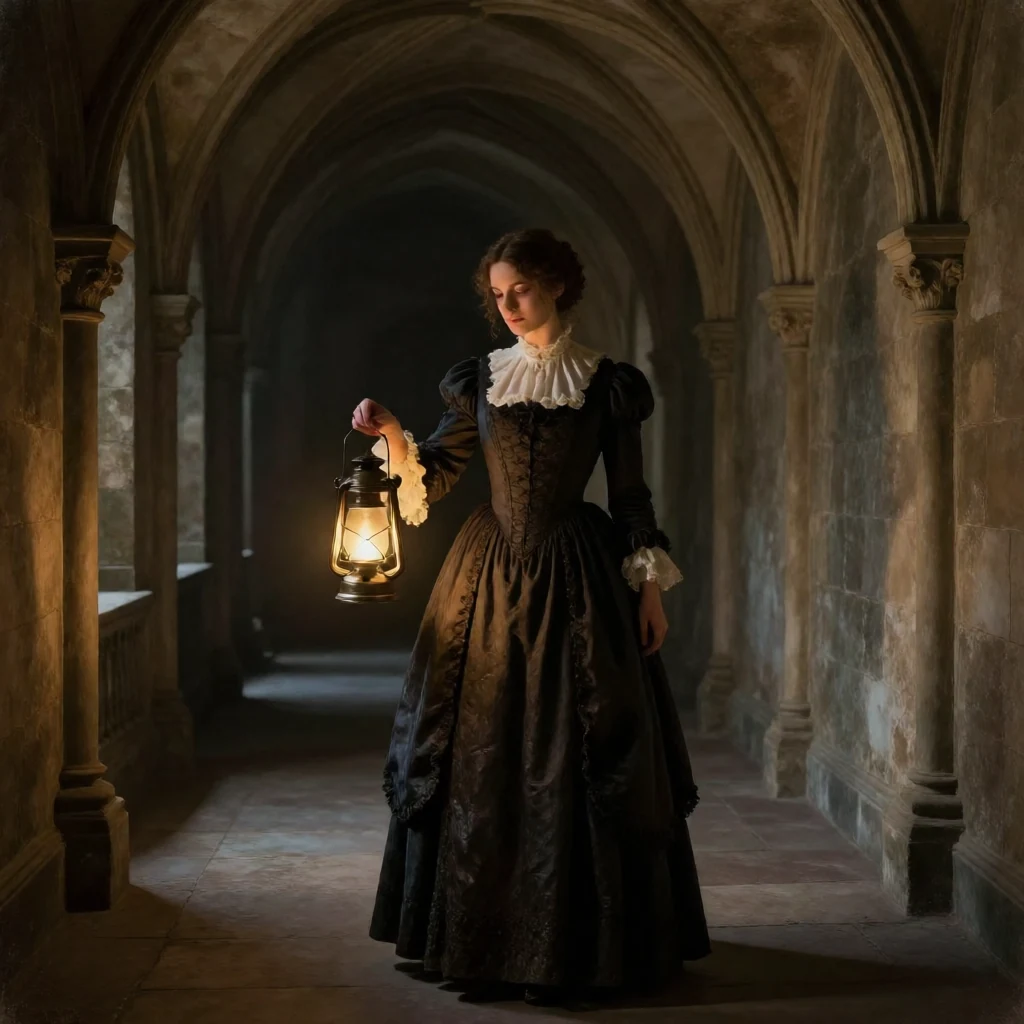
Settled at last in her modest Morton cottage after fleeing Thornfield Hall, Jane Eyre throws herself into her new role as village schoolmistress, greeting her first class of twenty scholars—most unable to read or write, some rough and intractable, others eager to learn—with quiet determination. In the quiet of her first evening alone, she wrestles with the weight of her choice: she could have given in to Rochester’s plea to become his mistress in France, living a life of passionate, shame-ridden luxury, but she chose instead the hard, honest dignity of independent work in England. She still grieves for Rochester, convinced no other man will ever love her as he did, but reaffirms that adherence to principle was the only right path, even as the loneliness of her small, sparsely furnished cottage presses in on her.
That first week, St. John Rivers visits to deliver art supplies from his sisters, and for the first time opens up about his own inner conflict: a year prior, he had burned for worldly glory as a writer, orator, or soldier, stifled by the uniform duties of his curacy, until he felt a clear call to missionary work in the East, and has been waiting for a successor to take over his Morton parish ever since. Their quiet talk is interrupted by the arrival of Rosamond Oliver, the beautiful, wealthy heiress of nearby Vale Hall, who stops by to meet the new schoolmistress. Jane watches, pained, as St. John’s austere composure cracks at her presence—his cheeks flush, his eyes soften with unspoken longing, but he cruelly restrains himself, refusing her invitation to visit her ailing father and barely touching her outstretched hand. Jane recognizes the quiet agony of his sacrifice: he loves her, but has consecrated his life to his mission, and will not trade eternal purpose for earthly happiness.
Days later, a brutal multi-day blizzard drifts the valley nearly impassable. Jane is alone in her cottage, securing the door against blowing snow and reading Marmion by the fire, when St. John appears, his cloak white with snow, having braved the storm to reach her. It is then he reveals the life-changing secret that ties them together: a slip of paper with her name, Jane Eyre, torn from the edge of the Rosamond Oliver portrait she had painted, matched the name on a letter from solicitor Mr. Briggs, who had been searching for the heir to her uncle John Eyre of Madeira, who had recently died leaving her a fortune of 20,000 pounds. The bigger revelation, however, is familial: St. John’s mother was Jane’s aunt, making him, Diana, and Mary her first living blood relatives. Jane is ecstatic, not for the money, but for the family she has spent her whole life longing for, and insists on splitting the inheritance equally, giving each of her cousins 5,000 pounds, a decision they eventually accept after arbitration.
The original text of this work is in the public domain. This page focuses on a guided summary article, reading notes, selected quotes, and visual learning materials for educational purposes.