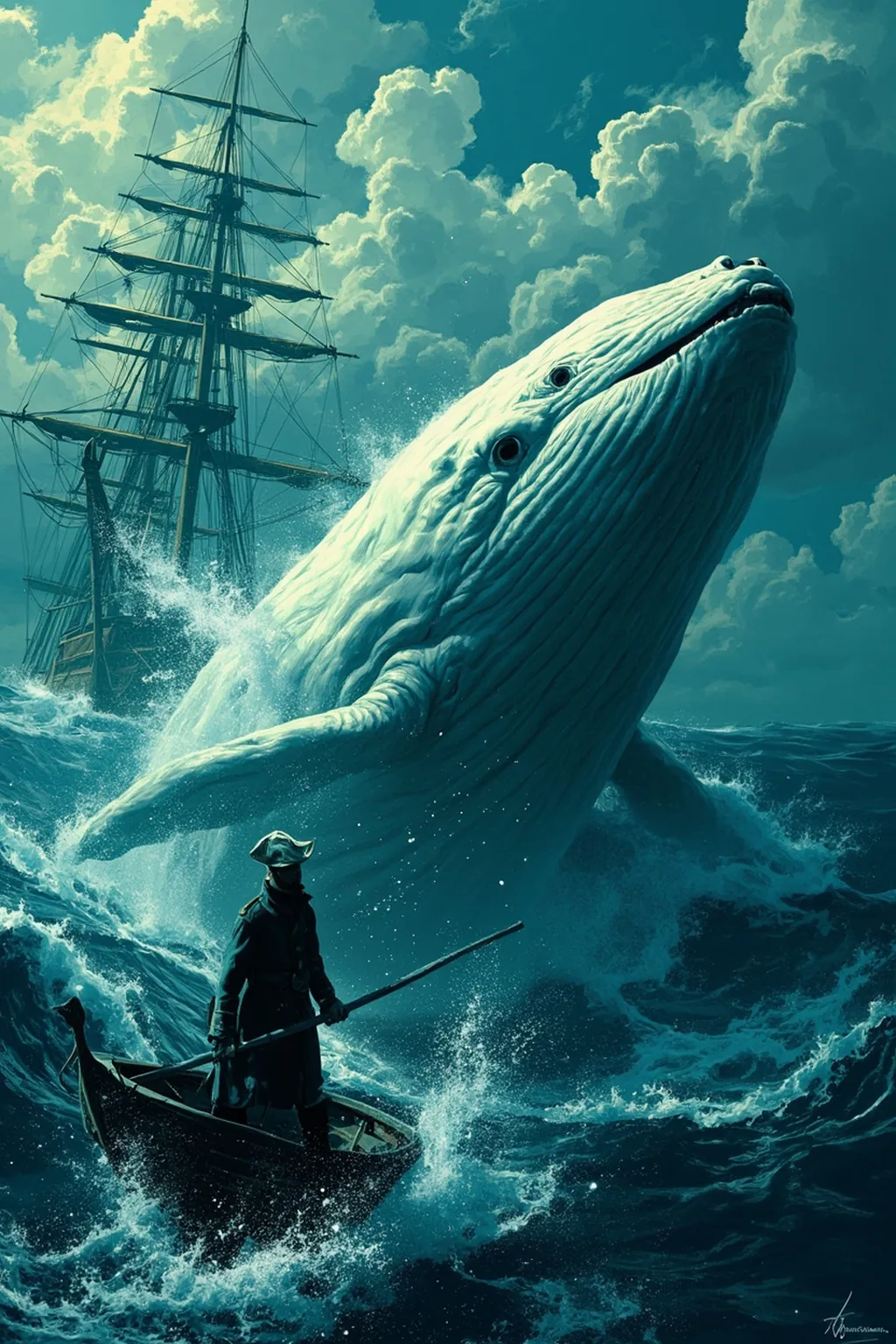
Superstitious Legends of Moby Dick
Whalers who first encountered Moby Dick initially faced him as readily as any other sperm whale, but repeated catastrophic attacks — which included fatal injuries, dismemberment, and destroyed boats — spread widespread terror through the community. Rumors amplified these real accounts, and the isolated, superstitious context of life at sea allowed these stories to grow to include supernatural elements, making Moby Dick a figure of such widespread dread that few hunters were willing to pursue him.
Whalemen’s Fear of Sperm Whales
Even outside of Moby Dick’s specific legend, sperm whales were widely feared across the global whaling community. Many non-American whalers, who had only hunted less dangerous right whales, regarded sperm whales with superstitious awe, and longstanding accounts from naturalists described the species as exceptionally ferocious, with claims that even sea creatures fled in terror at their approach. These longstanding beliefs about the inherent danger of sperm whales continued to shape whalers’ fears even as modern experience challenged some of the more extreme claims.
Moby Dick’s Distinctive Physical Appearance
Moby Dick’s unusual physical appearance made him instantly recognizable and inherently terrifying to whalers, even beyond his reputation. His most prominent distinguishing features were a snow-white wrinkled forehead and a tall, pyramidical white hump, while the rest of his body was streaked and marbled with white, earning him his common name. When he swam through dark seas at noon, he left a distinct milky, foam-streaked wake that further set him apart from other sperm whales.
The original text of this work is in the public domain. This page focuses on a guided summary article, reading notes, selected quotes, and visual learning materials for educational purposes.