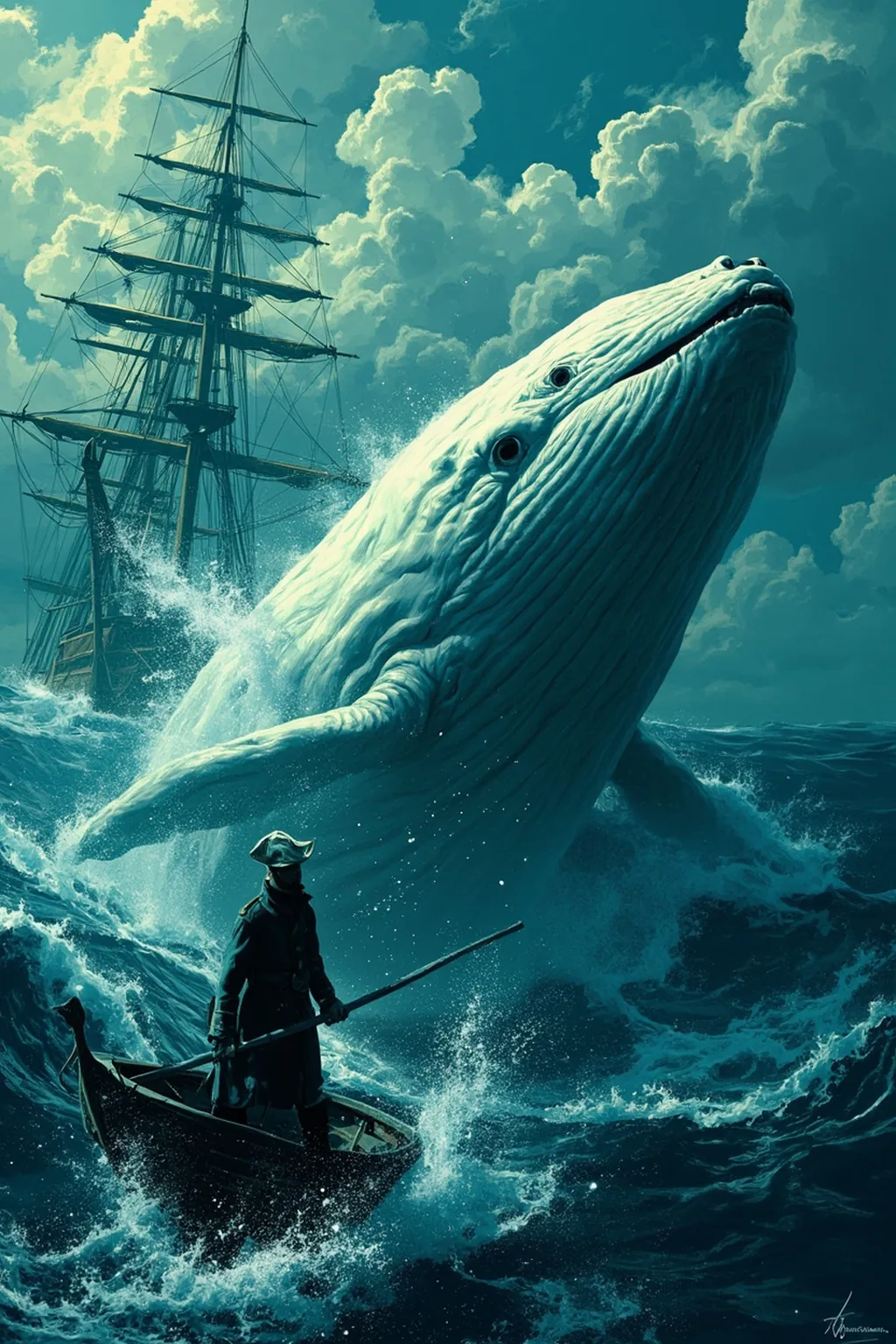
Between Feeding Grounds
Ahab’s expertise allows him to position himself not only at substantiated feeding grounds but also during the wide crossings between them. Through his art and knowledge of currents, he places and times himself so as not to be wholly without prospect of encountering his prey even while traversing the expanses between known whale territories.
The Shifting Herds
While sperm whales have regular seasons for particular grounds, the same herds do not necessarily return to the same locations each year. Although some instances prove otherwise, in general the whales found at a given latitude or longitude one season differ from those found there the preceding season. Moby Dick’s appearances at places like the Seychelle ground or Volcano Bay were merely casual stopping-places, not prolonged abodes.
Season-on-the-Line
The critical time and place in Ahab’s calculation is what mariners call the “Season-on-the-Line”—the equatorial Pacific where, for several consecutive years, Moby Dick had been periodically descried. There, most deadly encounters with the white whale had occurred, and there Ahab himself had lost his leg. The waves themselves are storied with his deeds at this location.
The Pequod’s Schedule
The Pequod sailed from Nantucket at the very beginning of the Season-on-the-Line, making it impossible to arrive at the equatorial Pacific in time. Ahab must wait for the next season, but the intervening year serves his purposes—allowing him to hunt opportunistically should Moby Dick turn up in other waters like the Persian Gulf, Bengal Bay, or China Seas, carried by any wind except the Levanter and Simoon.
The original text of this work is in the public domain. This page focuses on a guided summary article, reading notes, selected quotes, and visual learning materials for educational purposes.