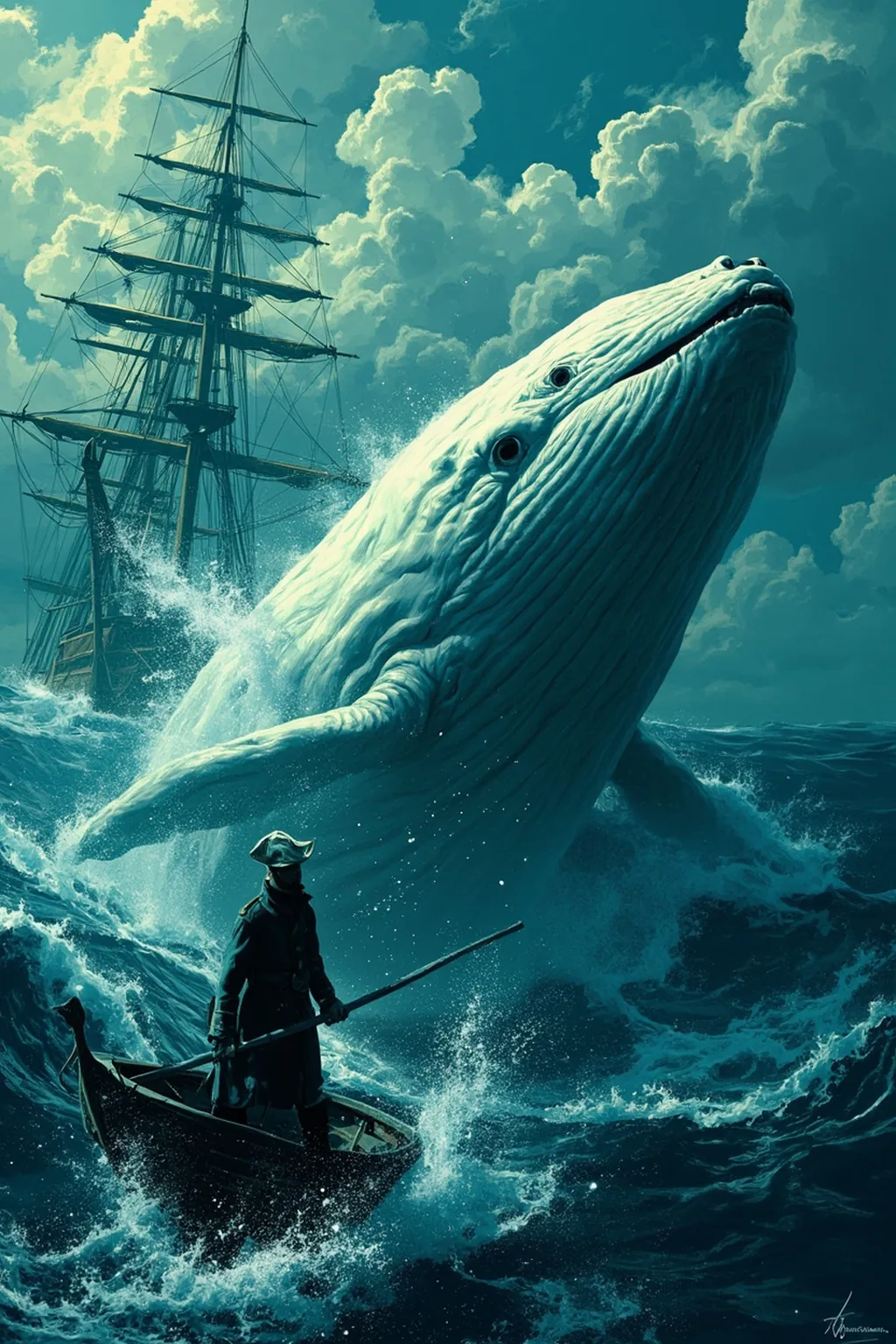
Pencil and Log-Books
With slow but steady pencil, Ahab traces additional courses over spaces that were previously blank. Beside him, piles of old log-books contain records of seasons and places where sperm whales had been captured or seen on former voyages of various ships. These documents serve as his reference materials for calculating the whale’s movements.
The Maze of Currents
With charts of all four oceans spread before him, Ahab threads a maze of currents and eddies. He calculates the driftings of the sperm whale’s food and studies the regular, ascertained seasons for hunting in particular latitudes. His methodical approach transforms what might seem an absurdly hopeless task—finding one solitary creature in the unhooped oceans—into a calculated pursuit grounded in maritime knowledge.
Whale Migrations
The chapter emphasizes the remarkable periodicity of sperm whale migrations, comparable to herring-shoals or the flights of swallows. Hunters have attempted to construct elaborate migratory charts, and notably, Lieutenant Maury of the National Observatory issued a circular in 1851 describing such a chart dividing the ocean into five-degree squares with twelve monthly columns and lines tracking whale sightings.
The Veins of the Ocean
When migrating between feeding grounds, sperm whales swim in what sailors call “veins”—ocean paths of remarkable precision. These whales continue along given ocean-lines with undeviating exactitude, surpassing even the most carefully plotted ship courses by a fraction. Though each whale travels in a straight line, the vein it follows generally encompasses several miles in width, never exceeding the visible range from a whale-ship’s mast-heads.
The original text of this work is in the public domain. This page focuses on a guided summary article, reading notes, selected quotes, and visual learning materials for educational purposes.