Symbolism of the Pulpit as a Spiritual Stronghold
The act of drawing the ladder up symbolizes the preacher’s withdrawal from worldly ties; the pulpit is portrayed as a self‑contained spiritual stronghold—a lofty fortress with an ever‑flowing source of nourishment.
Maritime-Themed Pulpit and Chapel Decor
The chapel’s décor emphasizes the sea: a large painting behind the pulpit shows a ship battling a storm, illuminated by an angelic face whose light falls on the deck like the spot where Nelson fell. The pulpit’s front is panelled to resemble a ship’s bluff bows, and the Holy Bible rests on a scroll work shaped like a ship’s fiddle‑headed beak.
Metaphor of the Pulpit as the World’s Ship Prow
The chapter frames the world as a ship on its passage, with the pulpit as its prow that first bears the brunt of God’s storms and first invokes divine favour. This metaphor underscores the pulpit’s role as the leading force guiding humanity through life’s voyage.
第九章 The Sermon.
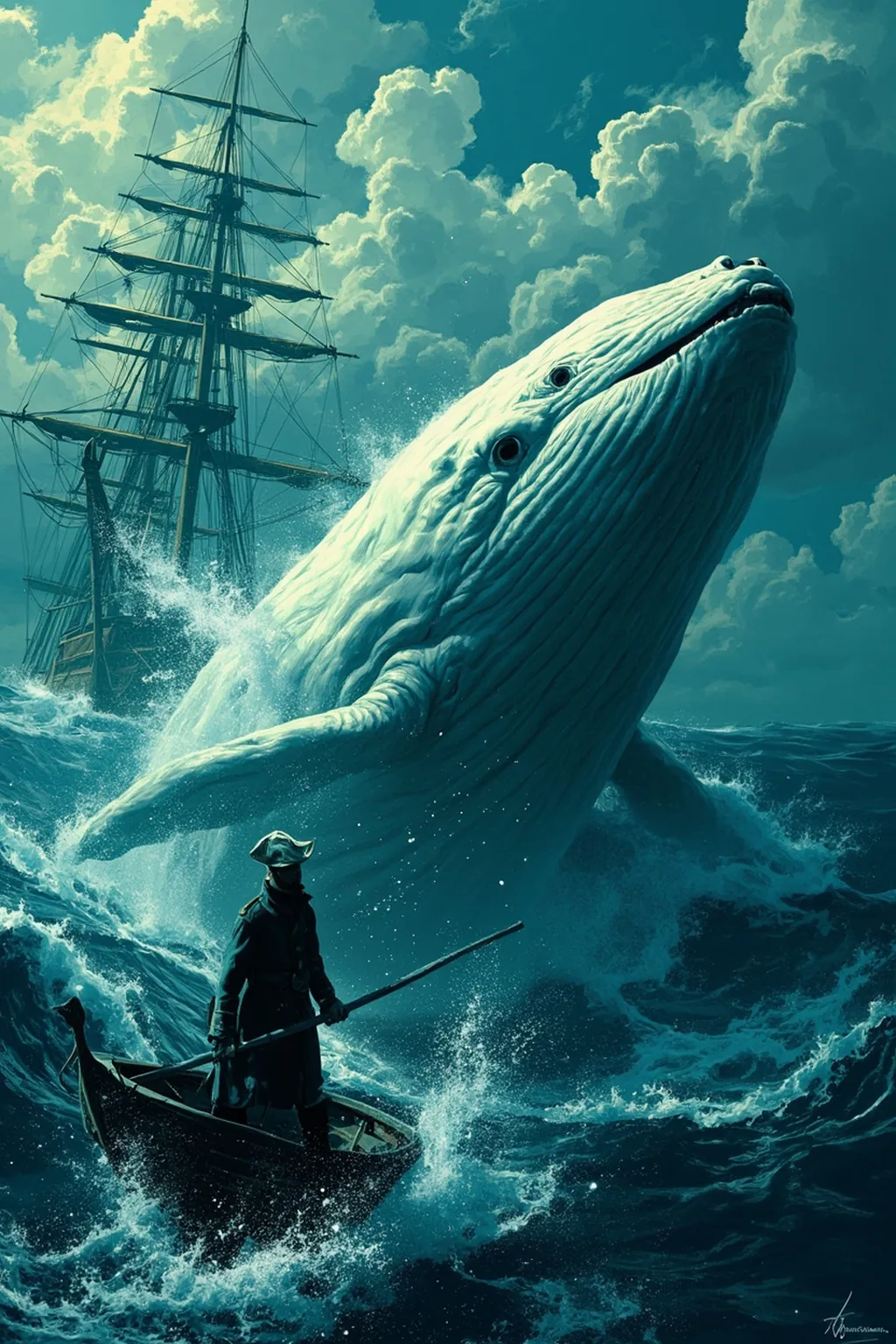
Chapter 9 of Moby-Dick, titled “The Sermon,” takes place aboard the Pequod in a whaleman’s chapel, where Father Mapple delivers a sermon on the Book of Jonah. The chapter opens with the congregation gathering, followed by the preacher’s devout prayer and a stirring hymn. Father Mapple then interprets Jonah’s story as a two-stranded lesson: one for all sinful men, and a more personal one for himself as a pilot of the living God. He traces Jonah’s disobedience, his flight from God by boarding a ship bound for Tarshish, his encounter with a suspicious ship’s captain, his tormented sleep during a terrible storm, the casting of lots that reveals him as the cause, his confession, his being cast into the sea, and his repentance from the belly of the whale. The sermon culminates in Father Mapple’s acknowledgment of his own greater sin as one who, like Jonah, has fled from preaching truth to falsehood, and his recognition that the divine duty is to deliver unwelcome truths in the face of hostility. The sermoner begins with a fierce litany of woes directed at any pilot of the living God who neglects gospel duty, who would pour oil on waters God has brewed into a gale, who values his good name above true goodness, or who, like the great Pilot Paul, preaches to others while being himself a castaway. Lifting his face with a deep joy, he then cries out that on the starboard hand of every woe there is a sure delight, a far upward and inward gladness reserved for the man who, against the proud gods and commodores of the earth, stands forth his own inexorable self, acknowledges no law or lord but the Lord his God, and can never be shaken from the sure Keel of the Ages by the billows of the boisterous mob. Concluding his prayer, the preacher yields his soul to the Father, preferring to be Thine rather than this world’s or his own, and then slowly waves a benediction, covers his face with his hands, and remains kneeling alone in the empty place long after the congregation has departed.
The original text of this work is in the public domain. This page offers a compressed quick-read summary for educational purposes.