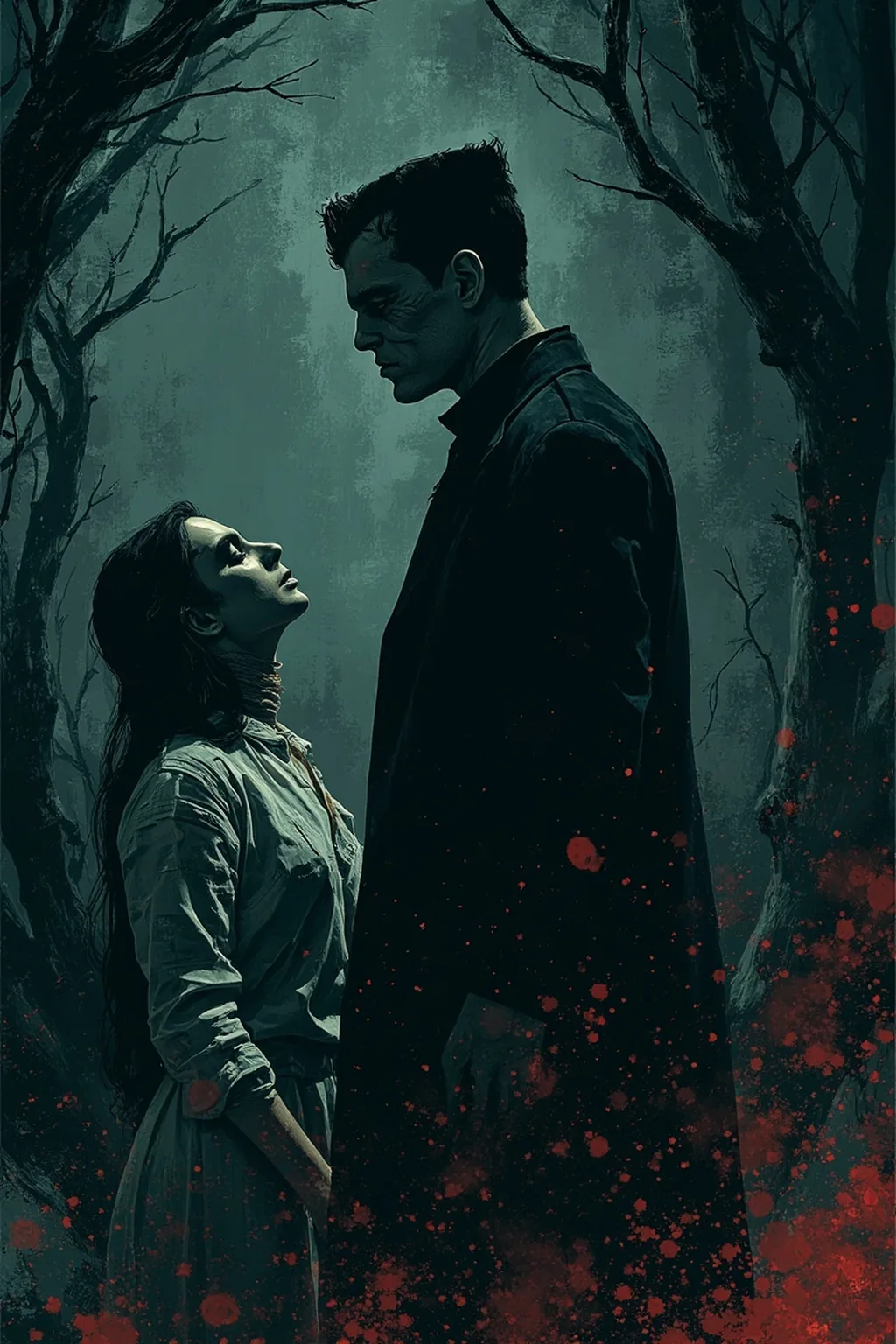
Victor Frankenstein, driven by a desire to transcend natural limits, assembles a humanoid creature from dead matter. Horrified by his creation, he abandons it, prompting the being to seek revenge for its isolation. The narrative follows the catastrophic fallout of this broken bond, moving from the icy Arctic to the serene Swiss Alps, as creator and creation are locked in a mutual pursuit of ruin.
The treacherous Turk, learning of Felix’s ruin, betrayed his promise and fled Italy with Safie, sending Felix an insulting pittance of money. When Safie learned of Felix’s poverty and exile, her father commanded her to forget her lover and prepare to return to Turkey. Outraged, Safie stole jewels and money, hired an attendant, and fled to Germany. After her attendant died, Safie was left alone and helpless, but through the kindness of strangers, she was guided to the cottage of her lover.
Having learned the history of his protectors, the creature now turned to the books he discovered in the forest, which would deepen his understanding of human nature and his own wretched position. These readings, combined with the papers from Victor’s laboratory, hardened his resolve to seek acceptance from the family whose story he had come to know so well.
While gathering firewood in the woods, the creature discovered a leathern portmanteau containing clothing and three books that profoundly shaped his intellect: Paradise Lost, Plutarch’s Lives, and The Sorrows of Werther. Reading Werther introduced him to high sentiments and despondency, yet he felt a deeper isolation than the hero, for he had no relations to lament his annihilation. In contrast, Plutarch’s Lives elevated his mind above his wretched reflections, teaching him of ancient heroes and inspiring an ardent love for virtue and abhorrence for vice. However, it was Paradise Lost that struck the deepest chord; he read it as true history and compared himself to Adam. Unlike the happy creation of God, he was wretched, helpless, and alone, often identifying more with Satan as he viewed the bliss of the cottagers.
This sense of isolation was compounded when he finally deciphered the papers he had stolen from Victor’s laboratory. The journal detailed the four months preceding his creation, describing the “disgusting circumstances” of his birth and the “odious” nature of his form in language that painted his creator’s revulsion. Overwhelmed by the knowledge that he was a filthy type of man, abandoned by the very hands that made him, the creature cursed his existence. Yet, despite this crushing self-knowledge, he clung to the hope that the De Laceys’ virtue would allow them to overlook his deformity. As autumn passed into winter, he watched the family enjoy their happiness and plenty, while his own internal turmoil grew. He endeavored to crush his fears, sometimes allowing his thoughts to ramble in fields of Paradise, but every glimpse of his reflection in water or moonshine reminded him of his isolation. He resolved to approach the blind old man alone, believing that if he could gain the old man’s mediation through his voice, the younger family members might tolerate him.
The original text of this work is in the public domain. This page focuses on a guided summary article, reading notes, selected quotes, and visual learning materials for educational purposes.