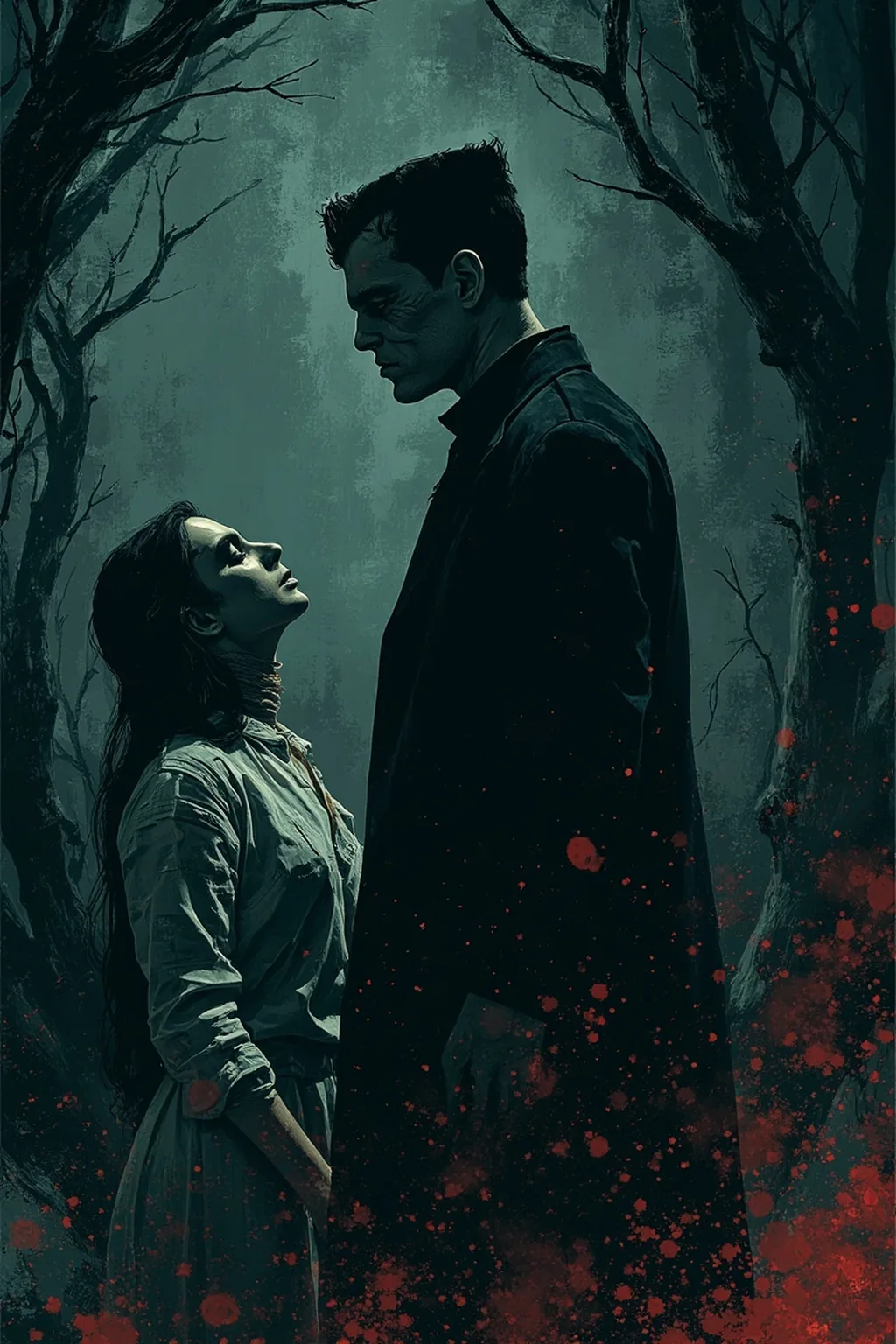
Victor Frankenstein, driven by a desire to transcend natural limits, assembles a humanoid creature from dead matter. Horrified by his creation, he abandons it, prompting the being to seek revenge for its isolation. The narrative follows the catastrophic fallout of this broken bond, moving from the icy Arctic to the serene Swiss Alps, as creator and creation are locked in a mutual pursuit of ruin.
Victor resolved that he must absent himself from his family to complete the engagement safely. He expressed a wish to visit England, concealing his true motives behind a guise of scientific curiosity, and urged the request with such earnestness that his father readily agreed. It was understood that his marriage to Elizabeth would take place immediately upon his return. Alphonse, seeking to ensure Victor’s safety and companionship, had arranged for Henry Clerval to join him at Strasburgh. Although Victor initially resented the intrusion on his solitude, he ultimately rejoiced, hoping Henry’s presence would shield him from the creature’s maddening reflections and serve as a barrier against his foe.
As the departure date approached in late September, Victor was consumed by agonizing fears. He dreaded leaving his family unprotected and vulnerable to the creature’s attacks, yet he clung to the hope that the fiend would follow him to England, sparing his friends. Elizabeth, filled with disquiet, bade him a tearful farewell, sensing his suffering. Victor threw himself into the carriage, his mind fixed only on the bourne of his travels and the dreadful work that awaited him. He ordered his chemical instruments to be packed, a bitter reminder of his slavery.
After arriving at Strasburgh and reuniting with Henry, the stark contrast between the two friends became immediately apparent. Henry was alive to every new scene, pointing out the shifting colors of the landscape and the beauties of the sun with joy, while Victor remained despondent, his eyes fixed and unobserving. They descended the Rhine by boat, passing willowy islands, beautiful towns, and ruined castles perched on precipices. Henry, transported to what he called fairy-land, quoted Wordsworth and delighted in the vineyards and the songs of labourers. Even Victor, lying at the bottom of the boat, found a slight tranquillity as he gazed at the cloudless blue sky, drinking in a calm long strange to him. However, his internal torment remained, and he viewed the scenery through a lens of gloom, contrasting Henry’s ecstatic appreciation of nature with his own cursed existence.
Their journey continued through Holland and across the sea. It was on a clear morning in late December that they first saw the white cliffs of Britain. They passed Tilbury Fort and Gravesend, places marked by history, until finally the steeples of London appeared, St. Paul’s towering above all, marking the end of their journey and the beginning of Victor’s dark labors.
The journey’s end in London brought Victor face to face with the obligation he had traveled so far to fulfill. While Henry eagerly sought the society of brilliant minds, Victor moved through the city with a single, tormenting purpose: to gather the materials necessary for creating the female creature.
The original text of this work is in the public domain. This page focuses on a guided summary article, reading notes, selected quotes, and visual learning materials for educational purposes.