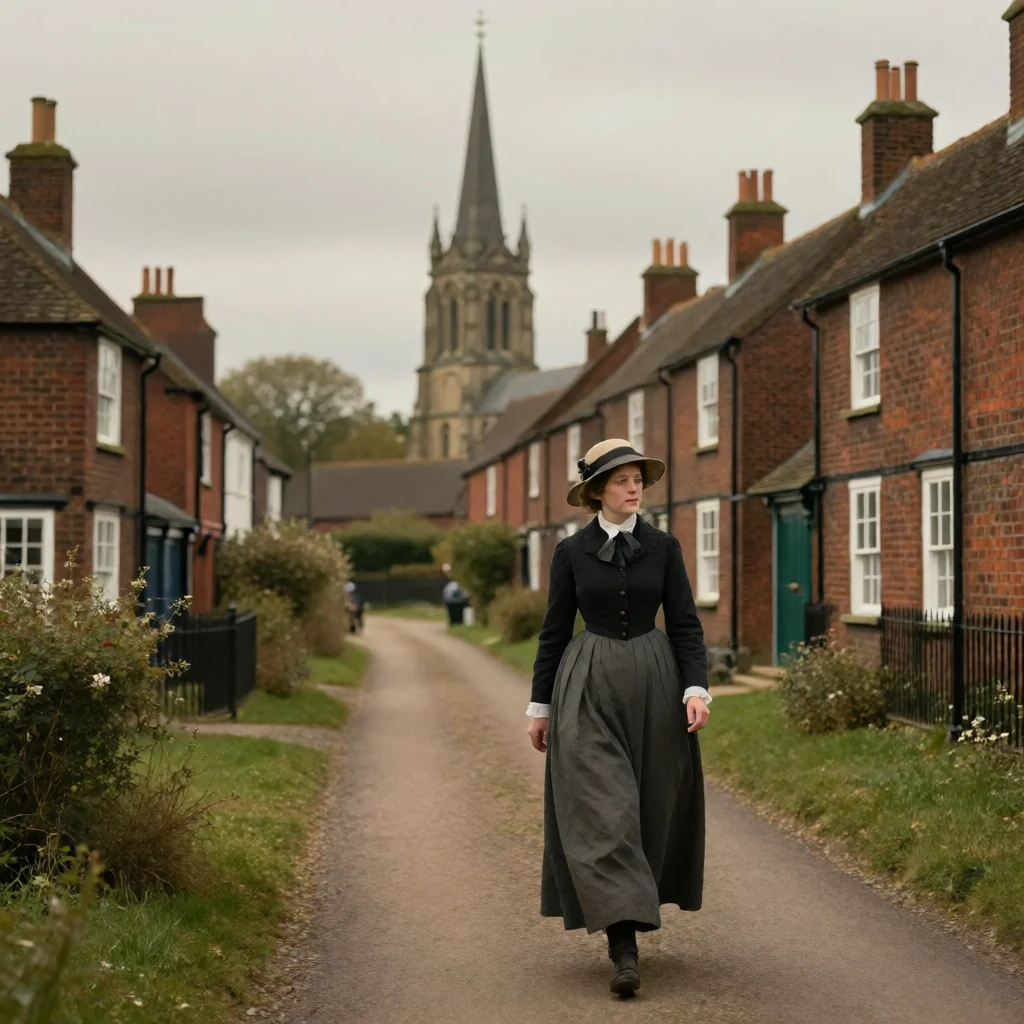
Middlemarch cover
Bildungsromans

Middlemarch

Middlemarch is George Eliot’s sweeping 1871–1872 Victorian novel set in the fictional rural Midlands town of Middlemarch between 1829 and 1832, weaving the interconnected personal, social, and political lives of the town’s diverse residents, led by idealistic young Dorothea Brooke, to explore the constraints of gender and class, the tension between individual ambition and social convention, and the slow, uneven pace of moral and political progress in pre-Victorian England.

Eliot, George · 1994 · 27 min

CHAPTER LXXVI. – CHAPTER LXXXII.

Opening with an epigraph from William Blake’s Songs of Innocence celebrating mercy, pity, love, and peace as the divinely human virtues of compassion, this stretch of the novel opens with Dorothea Casaubon summoning Tertius Lydgate to Lowick Manor, spurred by a letter from Nicholas Bulstrode reminding Lydgate of his prior plans for a new independent hospital, which Bulstrode insists must be finalized with Dorothea’s approval before he flees Middlemarch. Dorothea has long been haunted by Lydgate’s unjust public smearing, tangled up in Bulstrode’s own disgrace, and seizes this as her long-awaited chance to act. Waiting for him in her sunlit library, she replays every memory of Lydgate, from their early conversations about his grand medical ideals to vague rumors of unhappiness in his marriage to the beautiful, fragile Rosamond Vincy, and is shocked by the haggard, resentful cast of his face when he arrives. Their conversation is frank and raw from the start. Lydgate admits he expects to be driven from Middlemarch by the scandal, and refuses to let Dorothea fund the new hospital, insisting his future is too uncertain to justify her investment. Dorothea cuts him off, declaring she knows the accusations against him are lies, that he has never acted dishonorably, and begs him to tell her his full side of the story. Moved by the first unconditional belief he has heard since the rumors spread, Lydgate unfolds his tale: he took Bulstrode’s loan under crushing financial pressure, never accepted a bribe, the rumors that he colluded to kill a patient are baseless, rooted only in the public’s willingness to believe he had motive. He calls himself “blighted, like a damaged ear of corn,” convinced his reputation is permanently ruined, and that he must leave Middlemarch to rebuild his career elsewhere, even if it means taking degrading work just to earn a living. Dorothea offers to use her personal fortune—her seven hundred a year of independent income, the nineteen hundred a year left to her by Casaubon, and thousands in savings she has no use for—to support him, to clear his name, to let him stay and finish his medical work. Lydgate is deeply moved, but refuses: he cannot let her resources be wasted on a man who may have to flee at any moment, and his marriage to Rosamond has left him powerless to make long-term plans; she has made clear she wants to leave Middlemarch, and he cannot bear to make her miserable by staying. Dorothea is heartsick but undeterred: she resolves to visit Rosamond to convince her to support Lydgate, and writes Bulstrode a letter enclosing a thousand pound check to pay off Lydgate’s debt to him, freeing him from the banker’s grip entirely. The next day, Dorothea arrives at the Lydgate house to deliver a letter for Tertius, only to walk in on a scene that shatters her quiet hope: Will Ladislaw, seated on the sofa with Rosamond, holding her hands and speaking to her with urgent, intimate fervor. For a frozen instant Dorothea stands paralyzed, then composes herself, lies about delivering a letter for Lydgate, and flees the house, her shock curdling into cold, furious indignation. She drives straight to Freshitt Hall to tell Sir James Chettam and her uncle Mr. Brooke what she has seen, her usual softness hardened by the perceived betrayal of the man she has loved in secret since their parting in Rome. Back at the Lydgate home, Will is furious with Rosamond for the scene, lashing out at her with uncharacteristic cruelty: he tells her he never cared for her, only ever loved Dorothea, that she has ruined his standing with the only woman who ever believed in him. Rosamond, whose shallow dreams of winning Will’s affection have just been shattered, collapses into fainting when he leaves. Lydgate comes home to find her ill, assumes the agitation is from the stress of the Bulstrode scandal, and tends to her through the night, unaware Will was ever there. That evening, Dorothea dines at the Farebrother parsonage, but when the conversation turns to Will’s gift of a tortoiseshell lozenge box to Miss Noble, her repressed emotions surge; she leaves abruptly, goes home, and spends the night sobbing on her library floor, mourning the loss of her faith in Will’s love, furious that he would betray her trust. By dawn, her innate sense of justice reasserts itself: she realizes she only saw a sliver of the truth, that Rosamond is also a victim of her own empty dreams, and that she has an obligation to help all three people caught in the mess—Lydgate, Rosamond, Will—rather than wallow in her own grief. She resolves to visit Rosamond again. When Dorothea returns to the Lydgate house the next morning, Lydgate tells her he has accepted her offer to pay off the Bulstrode debt, and the check has already been sent. He brings her to Rosamond, who is pale and withdrawn, still reeling from Will’s rejection and Dorothea’s first visit. Dorothea speaks gently, telling Rosamond how Lydgate has refused to leave Middlemarch unless she wants him to, how all their mutual friends believe in his innocence, and how he blames himself for not being open with her about the scandal. Rosamond, softened by Dorothea’s unanticipated kindness, breaks down and confesses the truth: Will only came to tell her he loved Dorothea, not her; the intimate scene Dorothea walked in on was Will rejecting her advances, not returning them. She admits she told Will she had explained everything to Dorothea to free herself of his blame. Dorothea’s anger at Will melts away, replaced by sharp sympathy for both Rosamond and Will, and she gently urges Rosamond to support Lydgate, to not let his sacrifices be wasted. Lydgate returns to find his wife calmer, more open to him, and is deeply grateful for Dorothea’s intervention. That same evening, Will arrives at the Lydgates’, still tormented by guilt over his cruel outburst to Rosamond. He had fled Middlemarch earlier that day on the Riverston coach, but turned back, unable to leave Lydgate to struggle alone, or to give up the faint hope of seeing Dorothea. Rosamond gives him a note confirming she has told Dorothea the truth, that he has nothing to reproach her for now. Will is relieved but still anxious, unsure if Dorothea will ever see him the same way after the scene she witnessed. Two days later, Dorothea is trying to distract herself by studying maps of Asia Minor when Miss Noble arrives with a message: Will is waiting at the parsonage, begging to see her. Dorothea agrees, and when Will arrives, he confesses he rejected Bulstrode’s offer of hush money, that he originally came back to Middlemarch to try to convince Bulstrode to fund his planned western settlement scheme, but mostly because he could not stay away from her. He fears she thinks him dishonorable after the scene with Rosamond. Dorothea tells him she no longer doubts him, that his refusal of Bulstrode’s money only makes her admire him more. As they talk, a thunderstorm breaks, and they stand at the window, hands clasped, confessing their long-hidden love. Will protests they can never be together: he is poor, has no prospects, cannot offer her the life she deserves. But Dorothea declares she does not care about wealth, that she would rather share his poverty than live without him, that she has more than enough money for both of them. They share a trembling kiss, but Will still insists their future is impossible, that he must go away to build a life worthy of her. The section closes at Freshitt Hall, where Mr. Brooke arrives to tell Sir James, Celia, and Mrs. Cadwallader the news: Dorothea is going to marry Will Ladislaw in three weeks. Sir James is furious, calling the match scandalous, insisting Will is unworthy, has tainted blood, will ruin Dorothea’s life. Mr. Brooke says he will not oppose the marriage, even if it means cutting off the entail to give Dorothea her full inheritance. Celia is upset but loyal, and when she visits Dorothea, she finds her sister calm and resolute. Dorothea tells her she is moving to London to marry Will, that she has never been able to live up to everyone else’s expectations anyway. Celia, after a moment of quiet acceptance, asks if Will loves her, and Dorothea smiles, saying she hopes so, that she is very fond of him. (Word count: 1,028)

CHAPTER LXXXV.

Opening with a passage from Pilgrim’s Progress listing the jury of persecuting passions—Blindman, No-good, Malice, and their cruel cohort—that unanimously condemns Faithful to death, the chapter establishes its core theme of internal moral judgment. It notes the rarest blessed lot is to know oneself guiltless before a condemning crowd; the far pitier fate belongs to the man who knows he is reviled not for his goodness, but for failing to be the person he claimed to be. This is the torment plaguing Bulstrode as he plots his flight from Middlemarch, intending to disappear among strangers who will never learn his secrets. His wife’s loyal constancy spared him public exposure, but her quiet presence remains a tribunal he shrinks from, terrified she will name his acts around Raffles’s death murder. He longs to confess on his deathbed, but his habit of concealment stops him. Grieving, she has sent their daughters to a coastal boarding school to hide the family’s crisis, her once-blooming face now lined with sorrow, hair streaked white with daily weeping. When she begs to make amends to her brother’s family, specifically to the ruined Rosamond and Tertius Lydgate, who must abandon Middlemarch with barely any money, Bulstrode rejects the plea: Lydgate spurned his aid, returned his thousand-pound loan, and paid it back with funds from Mrs. Casaubon, a public snub that leaves her in tears. To soothe her, he proposes a different plan: let Caleb Garth manage Stone Court for her nephew Fred Vincy, sharing profits in place of rent, a strong start for the young man already apprenticed to Garth. He insists she must propose the plan to Garth herself, framing the land as hers alone with no ties to him, and gives her the draft terms Garth once drew up, sure Garth will agree for her sake.

The original text of this work is in the public domain. This page focuses on a guided summary article, reading notes, selected quotes, and visual learning materials for educational purposes.

Project Gutenberg