Guardian Plea for a Gentle Maiden
Sir James Chettam visits Mr. Cadwallader at the Rectory, troubled by Dorothea’s engagement to Casaubon. Seeking someone who might speak to Mr. Brooke, Sir James expresses concern that Dorothea is too young to understand what she truly wants in a husband, arguing that her guardian should intervene to prevent a foolish decision. He appeals to Cadwallader’s role as a father of daughters and his reputation for having a kind heart, requesting that he speak seriously about the matter rather than dismiss the concern with indifference.
Sir James Chettam’s Response to Dorothea’s Engagement
Despite recognizing that Dorothea has chosen Casaubon, Sir James finds he cannot be entirely passive about the engagement. While he believes he has resigned himself to losing her, his mortification is tempered by compassion rather than jealousy—he does not feel eclipsed by Casaubon as a rival. Instead, he feels mainly shocked that Dorothea is under what he sees as a melancholy illusion. He considers whether Mr. Brooke, as her guardian, should have hindered the match, and wonders if something might still be done, perhaps to defer the marriage at least.
Sir James Consults the Cadwalladers on the Upcoming Marriage
Sir James explains his concern to Mr. Cadwallader, who listens while arranging his fishing reels. Cadwallader admits he has no particular objection to Casaubon if Dorothea likes him, prompting Sir James to probe whether Casaubon possesses any genuine warmth of heart. When Cadwallader points out Casaubon’s kindness to his poor relations—pensioning female relatives and educating a young cousin at considerable expense—Sir James acknowledges this reflects well on Casaubon’s character, though he still worries that a young woman might not find happiness with such a man.
Debate Over the Brooke-Casaubon Marriage
Mrs. Cadwallader joins the conversation, humorously noting that Casaubon has a trout-stream and doesn’t care about fishing in it himself. When pressed, she jokes that Casaubon has “no good red blood” in his body, describing him as all semicolons and parentheses. Sir James expresses disgust that Casaubon does not publish his book instead of marrying, but Cadwallader defends Casaubon as “a scholarly clergyman, and creditable to the cloth.” He declines to interfere, noting that Brooke is “pulpy” and unlikely to change course, and that Casaubon may indeed make Miss Brooke happier than other options.
Sir James Focuses on the Cottages and Shifts Attention to Celia
Acknowledging that no intervention will come through the Cadwalladers, Sir James accepts that Dorothea will have liberty of misjudgment. He persists with the cottage-improvement plans, recognizing that this perseverance reflects well on his own dignity. Dorothea appreciates his dedication to a landlord’s duty, finding pleasure in his constancy even amid her happiness with Casaubon. During subsequent visits, Sir James finds himself increasingly talking with pleasure to Dorothea, discovering the delight of frank kindness and companionship between a man and woman who have no passion to hide—while also beginning to pay small attentions to Celia.
CHAPTER IX.
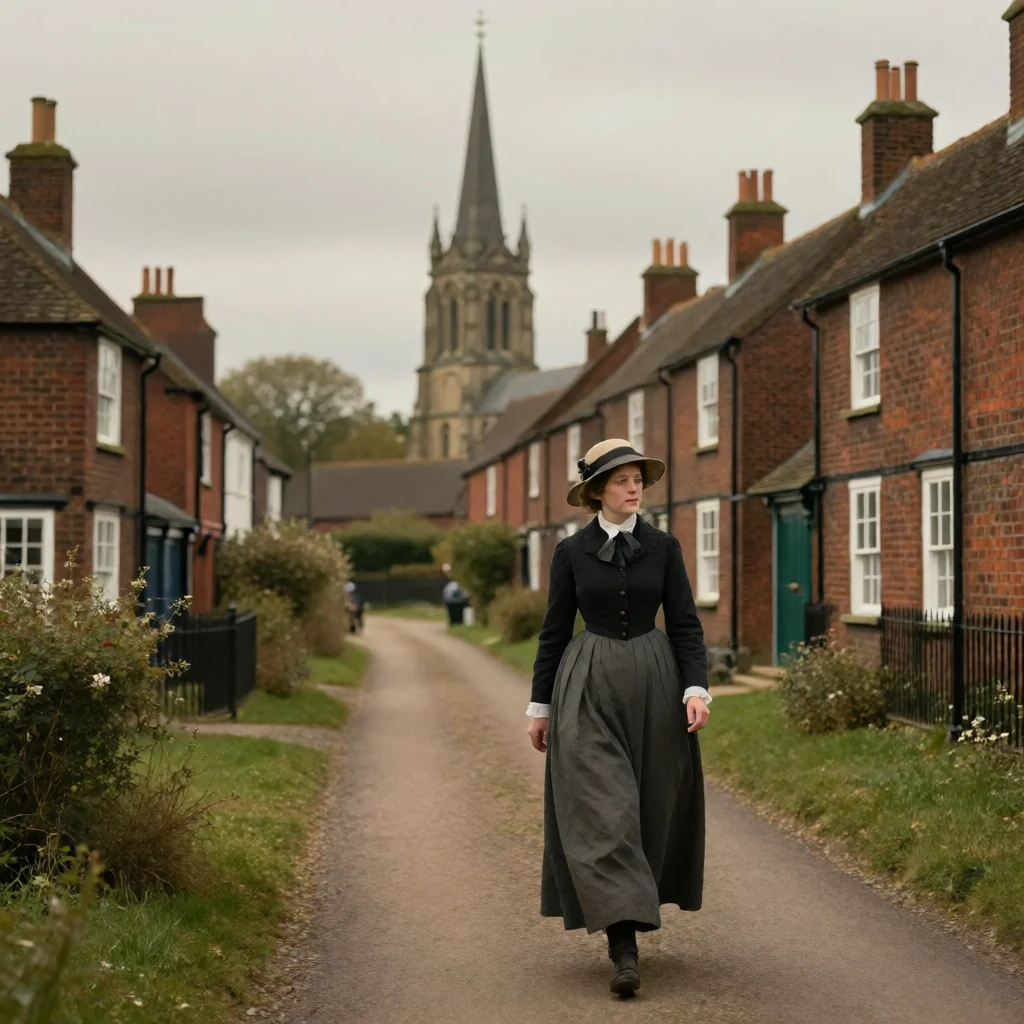
On a gray November morning Dorothea, Celia, and Mr. Brooke visit Lowick Manor so that Dorothea can see her future home before her marriage to Mr. Casaubon, and while Celia finds the old greenish stone house melancholy compared with Freshitt Hall, Dorothea is delighted by its dark bookshelves, subdued colors, and old maps, seeing nothing she would wish to alter even when shown the faded blue bow-windowed room that was once her future husband’s mother’s. As they walk through the grounds toward the little church and village with the curate Mr. Tucker, Dorothea confesses a quiet disappointment that the Lowick parishioners are so comfortably off she can find no active duties to claim her, but Mr. Casaubon reassures her that her position as mistress of Lowick will bring its own corresponding duties. Their tour concludes with the unexpected appearance of Will Ladislaw, Mr. Casaubon’s young second cousin and the grandson of the unfortunate Aunt Julia, who has been sketching a yew tree and who, despite forming a hasty unfavorable opinion of Dorothea for choosing to marry Casaubon, is struck by the remarkable quality of her voice.
The original text of this work is in the public domain. This page offers a compressed quick-read summary for educational purposes.