CHAPTER 9. The Sermon.
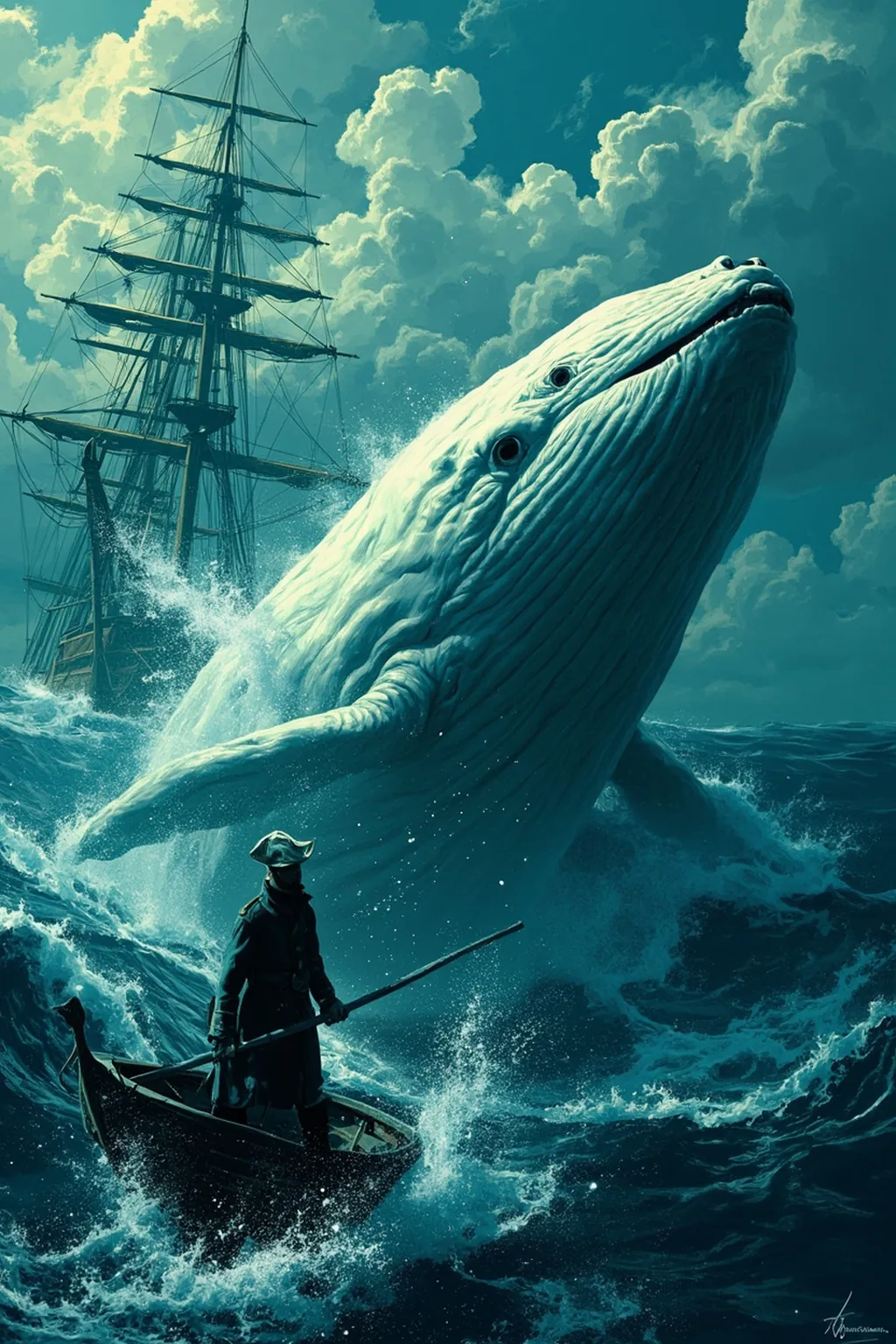
Chapter 9 of Moby-Dick, titled “The Sermon,” takes place aboard the Pequod in a whaleman’s chapel, where Father Mapple delivers a sermon on the Book of Jonah. The chapter opens with the congregation gathering, followed by the preacher’s devout prayer and a stirring hymn. Father Mapple then interprets Jonah’s story as a two-stranded lesson: one for all sinful men, and a more personal one for himself as a pilot of the living God. He traces Jonah’s disobedience, his flight from God by boarding a ship bound for Tarshish, his encounter with a suspicious ship’s captain, his tormented sleep during a terrible storm, the casting of lots that reveals him as the cause, his confession, his being cast into the sea, and his repentance from the belly of the whale. The sermon culminates in Father Mapple’s acknowledgment of his own greater sin as one who, like Jonah, has fled from preaching truth to falsehood, and his recognition that the divine duty is to deliver unwelcome truths in the face of hostility. The sermoner begins with a fierce litany of woes directed at any pilot of the living God who neglects gospel duty, who would pour oil on waters God has brewed into a gale, who values his good name above true goodness, or who, like the great Pilot Paul, preaches to others while being himself a castaway. Lifting his face with a deep joy, he then cries out that on the starboard hand of every woe there is a sure delight, a far upward and inward gladness reserved for the man who, against the proud gods and commodores of the earth, stands forth his own inexorable self, acknowledges no law or lord but the Lord his God, and can never be shaken from the sure Keel of the Ages by the billows of the boisterous mob. Concluding his prayer, the preacher yields his soul to the Father, preferring to be Thine rather than this world’s or his own, and then slowly waves a benediction, covers his face with his hands, and remains kneeling alone in the empty place long after the congregation has departed.
CHAPTER 9. The Sermon.
Chapter 9 of Moby-Dick, titled “The Sermon,” takes place aboard the Pequod in a whaleman’s chapel, where Father Mapple delivers a sermon on the Book of Jonah. The chapter opens with the congregation gathering, followed by the preacher’s devout prayer and a stirring hymn. Father Mapple then interprets Jonah’s story as a two-stranded lesson: one for all sinful men, and a more personal one for himself as a pilot of the living God. He traces Jonah’s disobedience, his flight from God by boarding a ship bound for Tarshish, his encounter with a suspicious ship’s captain, his tormented sleep during a terrible storm, the casting of lots that reveals him as the cause, his confession, his being cast into the sea, and his repentance from the belly of the whale. The sermon culminates in Father Mapple’s acknowledgment of his own greater sin as one who, like Jonah, has fled from preaching truth to falsehood, and his recognition that the divine duty is to deliver unwelcome truths in the face of hostility.
The Congregation Gathers
Father Mapple rises in the pulpit and, in a mild yet authoritative voice, directs the scattered congregation to condense, calling them starboard, larboard, and midships. The benches resound with the shuffling of heavy sea-boots and lighter women’s shoes, and the assembly falls silent, every eye fixed upon the preacher.
Father Mapple’s Prayer
Kneeling in the pulpit’s bows, Father Mapple folds his large brown hands across his chest, uplifts his closed eyes, and offers a prayer of such profound devotion that he seems to be kneeling and praying at the bottom of the sea.
The Hymn of Jonah
In prolonged solemn tones, like the continual tolling of a bell in a foundering ship, Father Mapple begins reading a hymn about Jonah’s experience in the whale. As he reaches the concluding stanzas, his manner shifts, and he bursts forth with pealing exultation and joy, singing of the ribs and terrors of the whale, the opening maw of hell, his cry to God in black distress, and his joyful deliverance, ending with praise for God’s mercy and power. Nearly all the congregation joins in, their voices swelling high above the howling of the storm.
The original text of this work is in the public domain. This page offers a compressed quick-read summary for educational purposes.