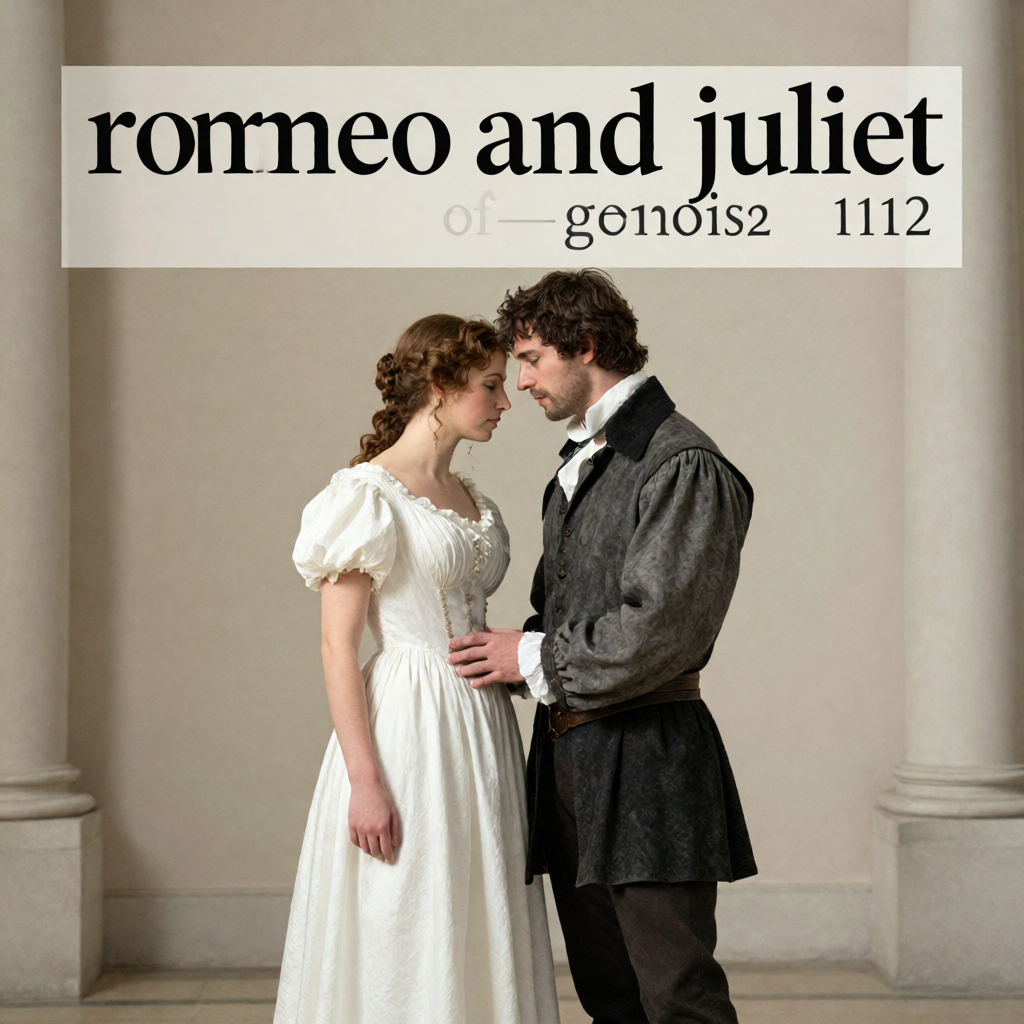
Part 8
Left alone in her chamber the night before the wedding, Juliet whispers her farewell to the world. A cold fear thrills through her veins. She imagines the potion might be true poison, brewed by the friar to shield his honor. She fears waking too soon in the tomb and suffocating before Romeo comes. She pictures the dark vault, the festering corpse of Tybalt, the shrieks of mandrakes, and herself driven mad among her ancestors’ bones. But she lies down, drinks the liquor, and falls into a deathlike trance.
Before dawn, the household stirs in chaotic preparation. Capulet bellows for cooks and logs, his wife bustles, and the Nurse is sent to wake the bride. Finding Juliet cold and still, dressed in her robes, the Nurse shrieks. Lady Capulet collapses, Capulet arrives and finds his daughter stiff, her blood settled, her lips long separated from life. “Death lies on her like an untimely frost / Upon the sweetest flower of all the field,” he laments. When the friar arrives with Paris, he confirms the household’s worst horror: the bride is a corpse. Yet he counsels them gently, calling her “best married, that dies married young,” and urges them to bear her in her best array to the churchyard.
Meanwhile, in Mantua, Romeo wakes from a joyful dream in which Juliet kissed him back to life. His man Balthazar arrives with ill news: Juliet is dead and laid in the Capulet tomb. Romeo, wild with grief, hires post-horses and sets out that night for Verona. He remembers a poverty-stricken apothecary whose shop, he once thought, could supply a desperate man with poison. He finds him, pays forty ducets for a dram of swift-acting death, and heads for the tomb.
Back in Verona, Friar Laurence learns that his letter never reached Romeo. Friar John, the messenger, was quarantined in a house of plague and sealed inside, unable to deliver the message. Realizing the catastrophe unfolding, Laurence rushes to the Capulet tomb to be there when Juliet wakes. He reaches it three hours before she is due to stir, and what he finds turns his blood cold: masterless swords, gore staining the entrance, and inside, Romeo pale and dead, Paris slain beside him.
Part 9
Moments earlier, Romeo arrived at the tomb with Balthazar, whom he sent away with threats of tearing him joint from joint. He opened the vault, caught sight of Paris in the dark, and the two fought. Romeo killed the young count, who asked only to be laid beside Juliet. Then, gazing upon his wife’s still face, Romeo marveled that death had not conquered her beauty. He pried a ring from her finger, laid Paris among the dead, and wrote his last words to his father. Taking the apothecary’s vial, he toasted his love and drank. “Thus with a kiss I die.”
Juliet stirred moments later, awakening in the dark to find Friar Laurence at her side and the watch approaching. He urged her to flee with him to a sisterhood of holy nuns. But when she saw Romeo dead beside her, she would not go. She searched his hand, found the empty cup, kissed his lips hoping some poison lingered, and heard the watch outside. Drawing his dagger, she cried “O happy dagger” and fell upon it.
The watch discovered the carnage: Paris slain, Romeo dead, Juliet bleeding and warm. The Prince arrived with both households in tow. Lady Capulet wept that this sight was as a bell warning her to her own grave; Lord Montague revealed his wife had died of grief that very night for Romeo’s exile. Friar Laurence confessed the entire tragic story: the secret marriage, the potion, the undelivered letter, Romeo’s desperate return. The Prince pronounced judgment upon the feuding houses. Capulet reached for Montague’s hand; Montague vowed to raise Juliet’s statue in pure gold. Capulet promised Romeo should lie beside her in equal honor. “A glooming peace this morning with it brings,” the Prince said. “Some shall be pardoned, and some punished. For never was a story of more woe than this of Juliet and her Romeo.”
The original text of this work is in the public domain. This page offers a compressed quick-read summary for educational purposes.